Acting Superintendent Choi Yoonhong Focuses on Strengthening Key Policies Based on Last Year's Achievements
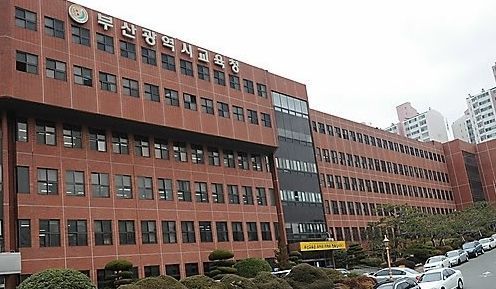
The Busan Metropolitan Office of Education (Acting Superintendent Choi Yoon-hong) held a press briefing at 2 p.m. on the 7th at the Busan Education Office annex to announce the major tasks to be pursued this year.
The Busan Office of Education revealed plans for 27 detailed tasks centered around six key initiatives: ▲Character education to cultivate proper values ▲Academic achievement enhancement to build a solid foundation ▲Sustainable community-centered future education ▲Educational welfare that empowers everyone ▲Safe and healthy安心 education ▲Communication and empathy-driven inspiring education.
First, the Office plans to operate the Starlight Library, where families can read books together in the school library in the evening, through the Reading Change (體仁智) project involving families. To this end, the Office will open school libraries at 20 schools, including Bosu Elementary School, during evening and weekend hours this year to support family-based reading activities.
Following the positive effects observed in the first half of 2024 policy monitoring?such as maintaining and developing physical fitness and improving peer relationships?the morning change program will be expanded to mandatory implementation in all schools. The Office also plans to develop and disseminate various models and enact related ordinances.
To expand character education experiential opportunities, new agricultural and rural experience programs and student marine and fisheries education programs will be launched, and the Student Character Education Center will be remodeled to expand experiential spaces.
The Busan Office of Education will undertake a groundbreaking policy to support student mental health by aiming to assign professional counselors to 100% of all schools.
To this end, additional counselor positions will be allocated to private high schools without assigned counselors, and temporary and new or vacant positions will be supplemented to enable early detection and prevention of worsening emotional and behavioral issues among students.
Through the Busan-style academic achievement change program without gaps during after-school, weekends, and vacations, a support system for seamless academic improvement from kindergarten through high school will be established.
First, the free learning-type Neulbom program will be expanded from only first graders to include up to third graders in elementary school, and distinctive learning-type Neulbom programs linked with universities, related institutions, and libraries will be provided. To ensure solid foundational academic skills for elementary students, a foundational academic support instructor system and university student learning support tutors will operate, offering tailored supplementary guidance to guarantee and enhance basic academic skills.
Additionally, character and core subject camps for middle school students, as well as the We Can Do seasonal school, will be expanded. A new math and science intensive We Can Do seasonal school will be introduced, and the Busan-style online lecture target will be expanded from first-year middle school students to first-year high school students.
For high school students, the We Can Do weekend school for first- and second-year students will be strengthened to support subject deepening and self-directed learning. Last year, the introduction of cafe-style study rooms and immersive reading rooms received over 80% positive evaluations from students and parents. Support for remodeling and purchasing supplies necessary for creating self-directed learning environments will be expanded, and 10 student-tailored dedicated study rooms will be established in education office libraries such as Gupo Library.
The Busan-style Academic Achievement Assessment (BEST) and Busan Academic Achievement Support System (BASS) will have their targets and functions improved by reflecting the opinions of teachers, experts, and users. The 2023 implementation of BEST confirmed a significant improvement in the academic levels of middle school students who used it.
In preparation for the full implementation of the high school credit system, systematic support for its execution will be provided to all high schools. Simultaneously, the Busan Online School will open in March with a goal of offering about 40 courses. Through agreements with Pusan National University and Busan University of Foreign Studies, a high school-university credit recognition system will be established, and courses with simultaneous credit recognition will be operated.
Efforts will also be made to establish an educational environment suitable for the digital era and strengthen user education. By establishing a SW·AI education hub center utilizing closed schools, experience- and practice-centered information education will be supported to contribute to digital-based educational innovation. Digital literacy education will be enhanced by mandating deepfake prevention education in the regular curriculum.
As part of last year’s vocational high school system reform, Busan Aviation High School, an institution specializing in training aviation professionals, was opened. This year, Haeundae Technical High School will be converted and reopened as Busan Naval Science and Technology High School to support the naval non-commissioned officer personnel system reform. Preparations are also underway to convert the existing Busan Electronics Technical High School into the (tentative name) Busan Semiconductor Meister High School to establish a workforce training system in the power semiconductor field.
Full attention will be given to operating the Neulbom School, a national policy project, and the integration of early childhood education and care. Accordingly, the free Neulbom School target, previously limited to first graders, will be expanded to third graders, and six dedicated Busan Neulbom schools will be operated to diversify program operations in educationally balanced development areas and small schools.
In preparation for the 2025 integration of early childhood education and care, an Early Childhood Education and Care Integration Promotion Officer will be appointed to oversee the transfer of integration tasks and plan pioneering integration projects.
Support measures for students with special educational needs, multicultural education, and out-of-school youth have also been prepared. The establishment of the (tentative name) Busan Parent Education Center and Busan Special Education Center will expand special education institutions. To alleviate long-distance commuting to special schools, additional school buses will be provided, and the deployment of special education assistants will be increased so that two assistants can be assigned to vehicles with multiple passengers.
To foster a multicultural educational environment where diversity coexists, more than two hours of multicultural understanding education will be conducted annually, and the Multicultural Education Support Center will be activated to support the adaptation of multicultural and North Korean defector students to public education.
The Dream Connection project will be promoted to support learning for preschool and school dropout students in compulsory education stages, ensuring that learning support services for out-of-school youth are managed without neglect.
Efforts to reduce educational disparities between regions will continue. To this end, the types of educational disparity reduction projects will be diversified, ongoing management of projects by type will be maintained, and a contest for distinctive educational disparity reduction projects by support offices will be promoted. Based on results, budget sizes for each support office will be finalized.
To establish institutional measures protecting the educational community?including students, parents, and staff?the “Busan Metropolitan Office of Education Ordinance on the Rights and Responsibilities of the Educational Community” will be enacted and implemented from March 2025. This ordinance includes provisions for protecting learning rights, safeguarding educational activities, and fostering a school culture of mutual respect and cooperation through collaborative communication within the educational community.
To strengthen the educational activity protection system, legal support for teachers will be enhanced, and functions such as teacher protection insurance enrollment, safe number services, and prior application systems for parent visit consultations will be improved to build a safe educational environment.
The Busan Office of Education has also prepared policies to support private schools. To reduce the proportion of temporary teachers in private secondary schools, a target ratio will be set to reach the level of regular teachers in public schools within the next three years, encouraging the expansion of regular teacher recruitment.
Efforts will be made to establish a student commuting safety network and improve meal service environments. A research project on safe commuting routes for all elementary schools will be completed by this year, and support for commuting safety guardians will be expanded for schools with commuting risks.
To improve working conditions for food service workers, 100 additional food service workers will be hired by 2026. Appropriate safety and health education for on-site work and lung cancer screenings will be conducted. Furthermore, efforts will be actively made to improve meal facility environments through modernization of cafeterias and complete replacement of ventilation systems.
The Busan Office of Education will also expand school-tailored administrative support and strengthen protection and support for civil complaint handlers. An investigation into the establishment and operation of the School Administrative Support Headquarters confirmed effectiveness, including an average reduction of 53.6 minutes in work hours and a 96.7% decrease in work burden. Accordingly, in 2025, the support target of the School Administrative Support Headquarters will be expanded, and new support tasks will be identified.
Measures to protect civil complaint handlers will include introducing recommended call times for telephone complaints to block malicious calls and blocking repeated calls with the same content more than three times.
© The Asia Business Daily(www.asiae.co.kr). All rights reserved.

















