Priority on Livelihood Stability... No Price Increase
Expansion of Free Provision of Volume-Based Waste Bags
Focus on 'Universal Welfare'
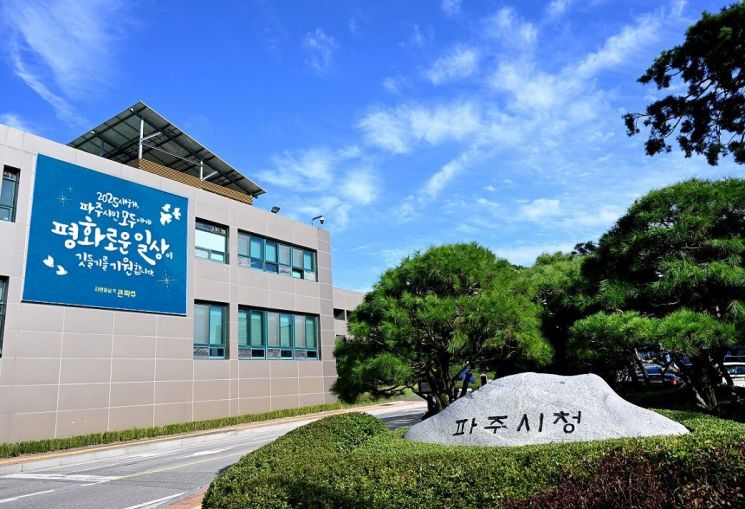
Gyeonggi Paju City (Mayor Kim Kyung-il) announced on the 7th that it will freeze the fees for volume-based waste bags, non-combustible waste sacks, and large waste stickers again this year, following last year. Paju City explained that freezing the volume-based waste bag fees for 11 consecutive years, despite the Ministry of Environment's continuous demands to increase the resident burden rate in waste disposal, is a declaration of its policy stance prioritizing the alleviation of citizens' burdens and the stabilization of livelihoods.
So far, the city has made efforts to secure financial independence for the cleaning budget by gradually raising fees over two years from 2013 to 2015, and has led proactive administration by reducing the amount of waste generated per person by an average of 10kg annually. These efforts resulted in the commendation from the Minister of Environment in 2024.
Additionally, since 2023, Paju City has expanded the free provision of volume-based waste bags to basic livelihood security recipients, low-income single-parent families, and social welfare facilities (children, disabled, elderly), increasing the amount provided to 60ℓ per person, focusing on universal welfare for vulnerable groups.
Currently, the volume-based waste bag fee in Paju City is 800 KRW for 20ℓ, which is the second highest among 31 cities and counties in Gyeonggi Province, but the resident burden rate is 25.6%, ranking 7th in Gyeonggi Province. This means that out of the 3,200 KRW waste disposal cost for 20ℓ, citizens pay 800 KRW, and the rest is covered by Paju City's general budget. Due to this structure, other local governments such as Uijeongbu City, Goyang City, and Naju City in Jeollanam-do have either pushed for or are pushing for fee increases.
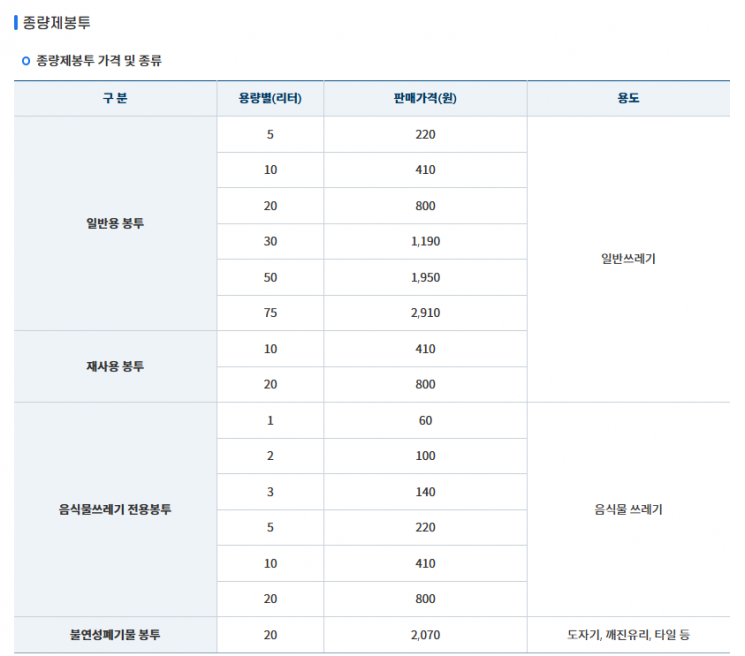
Meanwhile, regarding criticisms that "Paju City is the most expensive based solely on the volume-based waste bag price," the city stated that this is a simplistic view that does not consider government policies and the financial soundness of local government cleaning budgets. If the fee were lowered to the Gyeonggi Province average of 600 KRW (a 25% reduction), Paju City's resident burden rate would drop to a maximum of 19.17% or return to the pre-increase level, and to meet the resident burden rate level required by the Ministry of Environment, a significant price increase would be inevitable later.
In fact, the Ministry of Environment continuously emphasizes expanding the resident burden rate according to the basic principle of waste disposal, the 'polluter pays principle.' According to Ministry of Environment guidelines, the resident burden rate in city areas should gradually increase to 35% by 2026, 40% by 2028, and 50% or more by 2030. This policy direction aims for sustainable environmental management through waste reduction and realistic waste disposal costs.
Nevertheless, if the volume-based waste bag price is lowered, the resident burden rate would fall to about 16%, which is the lowest level recommended by the Ministry of Environment's volume-based waste guidelines (based on 'county areas' in 2026), and would be more than 20% lower than the 40% nationwide average resident burden rate recommended for 2026, making it difficult to lower the price easily.
Shim Jae-woo, head of the Resource Circulation Division, said, “The volume-based waste bag price is set considering the financial soundness and the level citizens can bear, so it is not something that can be easily lowered. At present, freezing the volume-based waste bag price is the best measure to reduce citizens' burdens and stabilize livelihoods, and through this, we will try to contribute even a little to the low-income economy.”
© The Asia Business Daily(www.asiae.co.kr). All rights reserved.
![Clutching a Stolen Dior Bag, Saying "I Hate Being Poor but Real"... The Grotesque Con of a "Human Knockoff" [Slate]](https://cwcontent.asiae.co.kr/asiaresize/183/2026021902243444107_1771435474.jpg)

















