4 Major Financial Holding Company Chairmen New Year Relay Interview②
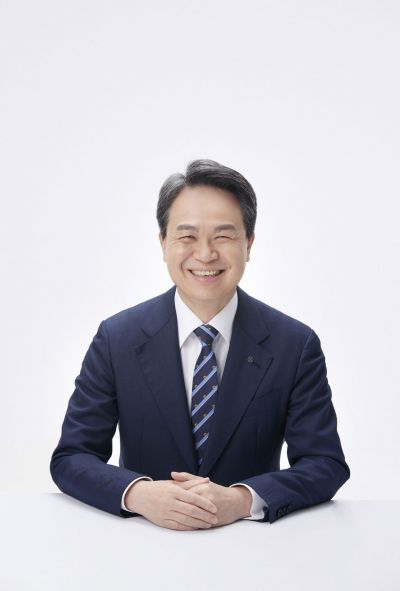
Jin Ok-dong, Chairman of Shinhan Financial Group
Jin Ok-dong, Chairman of Shinhan Financial Group, stated on the 7th, “This year, we will shift away from a strategy focused on quantitative growth and pursue proactive portfolio adjustments for efficient growth considering the cost of capital,” adding, “We plan to respond mainly by expanding fee businesses such as personal asset management.”
In a written New Year interview with Asia Economy on the same day, Chairman Jin said, “This year, domestic demand sluggishness and household debt issues may hamper economic growth, and exports, which have supported economic growth so far, may also be restricted due to the policies of the new U.S. administration.”
“Uncertainty Increasing... Banking Sector to Slow Down Earnings Forecasts”
Regarding this year’s performance, Chairman Jin plans to maintain asset growth at about 3.5-4%, which is the nominal GDP growth rate level, and aims for profit in the mid-40 trillion won range, consistent with last year’s ordinary profit forecast. This reflects consideration of domestic recession and political crises internally, and increased uncertainty externally due to the emergence of the Trump administration’s second term.
He diagnosed, “This year, economic uncertainty following last year remains a constant, and due to cooling in the real economy including real estate, corporate investment and household consumption capacity are expected to decrease simultaneously. The regulatory level on household loans, pointed out as a potential trigger for our economy, is expected to increase, limiting banks’ asset growth.”
Chairman Jin continued, “Considering limited asset growth and downward pressure on the economy, if the Bank of Korea makes additional interest rate cuts, the banking sector’s net interest margin is expected to decline somewhat. Along with reduced interest burden, concerns such as an increase in marginal companies and deterioration of existing assets are expected to somewhat slow earnings forecasts.”
In response, Shinhan Financial Group recently conducted a large-scale personnel reshuffle replacing CEOs of nine subsidiaries. These leaders were tasked with fundamentally improving internal structures to enhance each company’s market competitiveness and discovering future growth engines. For some affiliates such as securities, capital, and asset trust companies, the focus was on swiftly resolving current issues and normalizing operations.
Regarding the exchange rate, a “high in the first half, low in the second half” trend was anticipated. Specifically, it is expected to be in the 1,470?1,480 won range in the first half and 1,400?1,420 won range in the second half. Chairman Jin said, “The current exchange rate situation is influenced by concerns over the domestic economy’s fundamental weaknesses and political uncertainties such as impeachment. If trade disputes intensify during Trump’s second term, the won-dollar exchange rate may rise further. However, if domestic political uncertainties ease somewhat after mid-year and economic recovery becomes visible, the exchange rate may decline gradually.”
New Year Management Strategy: “Internal Control, Innovation, Coexistence... Zero Scandals”
Entering his third year in office, Chairman Jin presented this year’s management slogan as “Customer-Centered First-Class Shinhan Humanitas, Communitas.” It embodies the meaning of having excellent expertise, valuing customer trust as the highest priority, and encouraging all members to strive for the community including colleagues, organizations, and customers.
Accordingly, this year’s main strategies include establishing effective internal controls, creating differentiated customer value, and solving social issues through finance. He emphasized, “The most important topics in the financial sector this year are financial consumer protection and strengthening internal controls, promoting innovation inherent to the financial industry, and expanding win-win finance such as overcoming low birth rates and supporting small business owners. In particular, we will implement innovative efforts to establish internal control as the group’s core competitiveness by strengthening employees’ ethical awareness.”
Regarding the introduction of the accountability system, which is scheduled to be fully implemented this year, Chairman Jin said, “Shinhan Financial Group and the bank participated in the pilot operation of the accountability system by the authorities, and all financial companies of Shinhan Financial have established a system from this year where all executives’ internal control management duties for their respective tasks can be monitored by the CEO and the board of directors. We will strengthen internal controls so that the accountability system operates as a driving mechanism to achieve the group’s zero scandal goal.”
To this end, Shinhan Financial plans to expand internal controls beyond the narrow concept centered on compliance to a broader concept including consumer protection, operational risk, and information security. Additionally, to proactively prevent financial accidents, they will increase internal control-related rewards up to 2 billion won, operate external whistleblowing channels, and enhance the effectiveness of the internal whistleblower system. They are also reviewing the introduction of a conflict-of-interest prevention system to prevent employees’ self-serving behaviors.
Furthermore, as financial accidents become more complex and diverse, Shinhan Financial is digitizing high-risk manual tasks within the group for systematic inspection and management, and is in the process of building a monitoring system using digital technologies such as artificial intelligence (AI) for proactive prediction before financial accidents occur.
Chairman Jin stated, “Shinhan Financial, learning from past investment product incidents, conducts proactive inspections if there are signs of accidents and immediately takes action on necessary improvements. Also, to internalize ethical compliance awareness as a culture, which is the foundation of internal control activities, leaders take the lead and employees frequently and routinely engage in internal control activities.”
On Value-Up: “Well Started... Will Be Recognized as a Value Investment Stock”
Regarding last year’s implementation of Shinhan Financial’s corporate value enhancement plan, Chairman Jin evaluated, “Based on solid financial performance and stable Common Equity Tier 1 (CET1) capital ratio management, we believe we have well started the first step of the value-up plan.” He added, “To enhance execution capability, we are reflecting value-up performance in subsidiary evaluations and CEO compensation systems, and are reviewing overall group operations including profitability improvement of existing businesses and restructuring of business and workforce to achieve a mid- to long-term return on equity (ROE) target of 10%.”
He also expressed his ambition to have Shinhan Financial recognized as a “value investment stock” with stable growth in net profit and dividend payout ratio. Shinhan Financial’s net profit has already increased by nearly 10% annually over the past 10 years, and the total shareholder return ratio has steadily increased to 26% in 2021, 30% in 2022, and 36% in 2023.
Chairman Jin said, “The value-up plan announced last year is not the end but the beginning. We plan to disclose a new value-up plan this year, including an evaluation of last year’s implementation through the annual performance announcement. We will monitor economic conditions, regulatory environment, and company management environment after 2027, the mid-term goal of the value-up plan, and work with the board of directors to reset total shareholder return targets and further develop the value-up plan.”
© The Asia Business Daily(www.asiae.co.kr). All rights reserved.

















