First Central Regional Policy Council Meeting... Discussion on Livelihood Recovery
Accelerating Fiscal Execution... Adjustment of Public Utility Fee Increases
Planned Payment of Largest Ever Special Grant Incentives
The government is undertaking the largest level of fiscal spending in the first half of the year to revive the livelihood economy. The central government plans to exceed 67%, and local governments 60%, with the fiscal execution rate of central and local public institutions also set to be raised to nearly 60%. This strategy aims to inject warmth into the regional economy by accelerating local fiscal spending amid continued domestic demand sluggishness following the martial law situation.
On the 3rd, the Ministry of the Interior and Safety held the '1st Central-Local Policy Council' at the Government Sejong Complex, chaired by Acting Minister Ko Gi-dong. The Central-Local Policy Council is a forum to discuss matters related to the execution of national policies concerning local administration and areas requiring consultation between central and local governments.
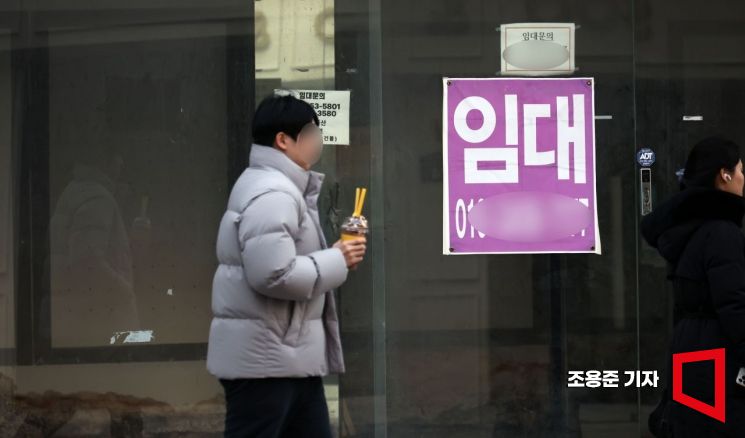 Amid domestic and international adverse factors such as economic recession and sluggish domestic demand, the number of store closures among small business owners is rapidly increasing. On the 26th, vacant stores lined a commercial area in Sinchon, Seoul. Accordingly, the amount of closure compensation for small business owners exceeded 1.3 trillion won this year, marking an all-time high. Photo by Jo Yongjun
This year’s meeting was held in a different atmosphere from last year, when measures for Lunar New Year price stabilization and promotion plans for national policy tasks were discussed. To boost consumption, which has been depressed due to the impeachment political situation, the focus was on rapid execution plans for local fiscal spending centered on the 2025 economic policy direction.
First, the Ministry of the Interior and Safety plans to actively manage spending from the beginning of the year in cooperation with the Ministry of Economy and Finance to revitalize domestic demand. They intend to push for the fastest execution in the first half of the year at a historic high level, targeting around 67% for the central government and 60.5% for local governments. Central and local public institutions will also execute more than 57%. In particular, to inject vitality into the regional economy through local finances, a separate rapid execution target for the first quarter has been set, and a 'special support measure' has been prepared, including the provision of the largest-ever special grant incentives to fully focus on rapid local fiscal execution.
Detailed measures to restore consumer sentiment have also been prepared. Additional income deductions (20%, with a separate limit of 1 million KRW) will be applied to additional consumption in the first half of the year, and various consumption promotion measures such as distributing accommodation coupons and supporting vacation projects will be implemented. Furthermore, to stabilize living costs, price management projects such as discounts on agricultural, livestock, and fishery products and energy vouchers will be actively promoted, and the timing of public utility fee increases will be adjusted as much as possible.
To this end, the Ministry of the Interior and Safety requested local governments to establish early business execution plans at the beginning of the year and to promptly carry out administrative procedures. Additionally, they agreed to actively collect difficulties and opinions from local governments during the execution process. Acting Minister Ko said, "I hope local governments cooperate with related ministries to ensure that policies are implemented solidly at the local level and actively discover and promote livelihood measures tailored to regional circumstances."
Meanwhile, as the winter safety management period will be in effect until March, each ministry and local government plans to thoroughly check cold wave preparedness and protection measures for vulnerable groups. This will involve frequent inspections of relevant facilities and regions and checking and supplementing the status of personnel and resources secured for cold wave response. This includes cold wave protection facilities, heating cost support, and energy voucher assistance.
© The Asia Business Daily(www.asiae.co.kr). All rights reserved.

















