Concerns Over Threats to National Security
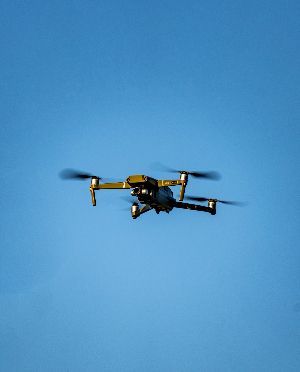
The United States has begun pushing for regulations on Chinese drone (unmanned aerial vehicle) components and technology. This move is based on the assessment that drones, dominated by China in the global market, could be used for purposes harmful to the U.S.
The U.S. Department of Commerce's Bureau of Industry and Security (BIS) announced on the 2nd (local time) that it is reviewing regulations related to the supply chain of essential "Information and Communication Technology and Services (ICTS)" for drones. The regulation targets drone ICTS designed, developed, manufactured, or supplied by individuals and companies owned or controlled by hostile governments such as China and Russia. The Commerce Department explained that examples of regulated items could include computers installed on drones for information processing and flight control, controllers, transceiver equipment, and Global Navigation Satellite System (GNSS) sensors.
The BIS cited national security concerns as the rationale for these drone ICTS regulations. It stated that hostile governments could use drone ICTS to monitor critical U.S. infrastructure or leak sensitive data. Commerce Secretary Gina Raimondo noted, "This will be an essential step to protect the United States from problems caused by foreign companies."
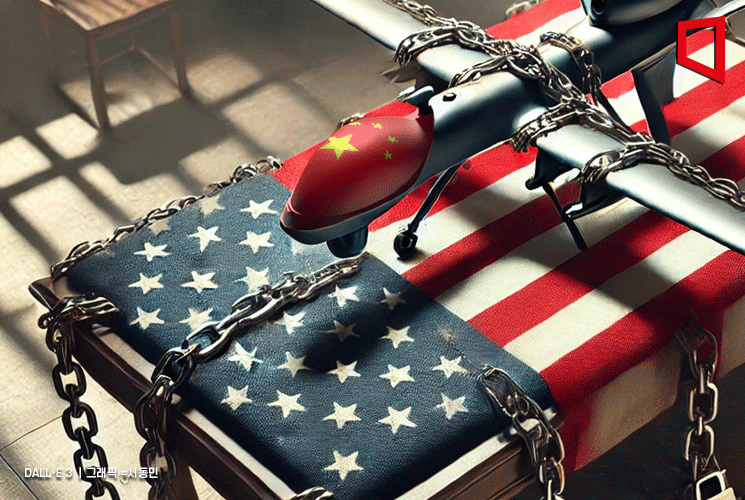
This regulatory review is analyzed as being aimed specifically at China, which effectively dominates the drone market. According to the BIS, as of 2021, drones developed by Chinese companies accounted for at least 75% of the U.S. civilian drone market.
The New York Times (NYT) reported that as reliance on drones for critical infrastructure in the U.S. increases, concerns about national security vulnerabilities have grown. Accordingly, the U.S. House of Representatives passed a bill last September banning the use of new products from DJI, the world's largest unmanned aerial vehicle manufacturer based in China, within the United States. Since November last year, unidentified drones have appeared in groups in New Jersey, causing airspace control issues and delays in airplane takeoffs.
The BIS plans to collect corporate feedback on this regulatory measure until March 4. Consequently, the specific details and implementation of this regulation will be decided by the second Trump administration, which is set to take office on the 20th.
Meanwhile, on the same day, China announced sanctions preventing its companies from exporting dual-use goods (items used for both civilian and military purposes) to 28 U.S. defense companies. These Chinese sanctions take effect immediately. However, the Chinese Ministry of Commerce did not specify the exact dual-use items subject to export restrictions.
© The Asia Business Daily(www.asiae.co.kr). All rights reserved.


















