Future Outlook by Australian Futurist Who Coined the 'Alpha Generation'
Refers to Those Born 2025-2039... Expected to Account for 16% of Population in 10 Years
Those born from this year until 2039 have been given the label 'Beta (β) Generation.' As the children of the MZ Generation, they are expected to live in an era where AI and automation are fully integrated into everyday life?from education and jobs to healthcare and entertainment?being familiar with artificial intelligence (AI) use from birth.
Mark McCrindle, an Australian population economist and futurist, recently named this group the 'Beta Generation' on the website of his research firm, McCrindle Research, stating that "2025 marks the beginning of a new generation." McCrindle is also the person who first coined the term 'Alpha (α) Generation' for those born between 2010 and 2024.
The Beta Generation is projected to make up 16% of the global population by 2035. Considering that a child born in 2025 will be 76 years old in 2101, most of the Beta Generation is expected to live into the 22nd century. During this time, they will likely face major global challenges such as technological innovation, climate change, global population shifts, and rapid urbanization.
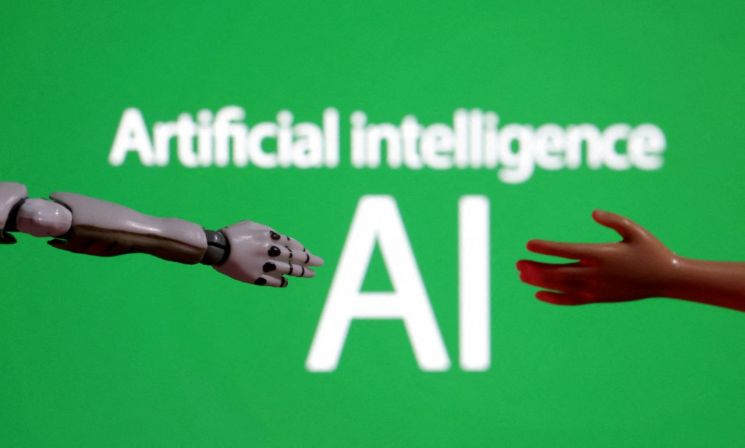
The defining characteristic of the Beta Generation is that they are 'AI natives,' adept at using AI freely. McCrindle explained, "As the Beta Generation comes to represent about 20% of the global workforce around 2035, AI and automation technologies will replace existing jobs, leading to the emergence of new types of occupations." He emphasized, "Unlike previous generations, they will experience the full normalization of AI and automation in daily life."
In particular, since AI technology will already be widespread from the moment Beta Generation members are born, they are expected to grow up experiencing it throughout education and daily life. McCrindle predicted, "They will be the first generation to extensively use large-scale autonomous vehicles, wearable health technology, and immersive virtual environments," adding, "AI algorithms will be customized to support learning, shopping, and social interactions." This implies that receiving personalized services through AI algorithms during education or shopping will become commonplace.

The preceding Alpha Generation was also highly dependent on technology, often called 'iPad kids,' but the Beta Generation is expected to further solidify this trend. McCrindle noted, "They will make friends, receive education, and find jobs in an era where digital interaction is fundamental."
They are the children of the Millennial Generation, born from the late 1980s to early 1990s, and Generation Z, born from the late 1990s to early 2000s, and are expected to live in a world completely different from that of their parents. However, since the MZ Generation is aware of the problems arising from technology use, McCrindle anticipates that measures to partially limit the Beta Generation's digital usage will likely be implemented. He analyzed, "They recognize the potential risks of technology and will try to balance outdoor activity time, interpersonal interactions, and digital device usage."
Beyond the technological aspect, since the MZ Generation has experienced economic and social hardships unlike previous generations, it is expected that the values shaped by these experiences will influence the growth of the Beta Generation. Accordingly, it is anticipated that the MZ Generation will prioritize adaptability, equality, and environmental awareness in raising the Beta Generation.
However, some question the significance of generational classifications from Baby Boomers to Generation X, Millennials, Generation Z, Alpha, and Beta, arguing that such divisions are not very meaningful. Michael Dimock, president of the global research firm Pew Research Center, stated in 2019, "Generational labels can reinforce inaccurate stereotypes or oversimplify complex individual lives," and Pew Research Center has announced that it will not use generational classifications.
© The Asia Business Daily(www.asiae.co.kr). All rights reserved.


















