Royal Mint of the UK Seeks New Business Amid Decline in Cash Usage
Focuses on Business by Launching Jewelry Brand '886'
The Royal Mint of the United Kingdom, with a tradition spanning 1,139 years, is exploring and promoting a business that recovers precious metals such as gold from electronic waste and sells them as high-end jewelry. In an era where cash usage is steadily declining due to advances in payment technology, this institution, which issued the first coin in the UK in 886, is seeking a new role and undergoing transformation.
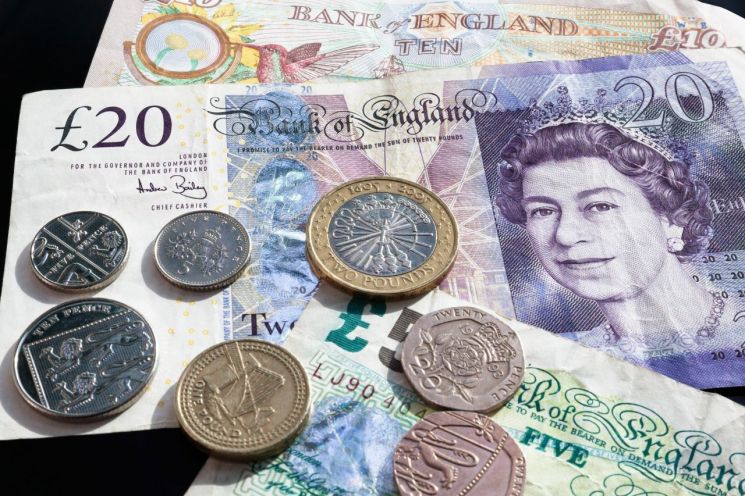
Recent articles by The Guardian and The New York Times (NYT) have highlighted the changes at the Royal Mint. The Royal Mint was established in 886 by consolidating several mints within the Kingdom of England. It is currently the institution responsible for producing British coins and is a government-owned corporation wholly owned by the UK Treasury. Simply put, it is the UK equivalent of the Korea Minting and Security Printing Corporation, responsible for minting British currency.
The reason this national coin-producing institution has attracted foreign media attention is that it has suddenly ventured into the fashion business. In 2022, the Royal Mint launched its own jewelry brand called '886' and began producing and selling jewelry collections, steadily expanding the business. The brand name commemorates the year the Mint was first established.
When starting the jewelry business, the Royal Mint focused on electronic waste. With millions of tons of electronic waste such as TVs, computers, and medical equipment being generated worldwide every year and increasing, the Mint concentrated on finding ways to transform this waste into jewelry. The Royal Mint reportedly examines about 40 million tons of electronic waste annually.
The Royal Mint uses chemical agents to separate components containing gold, silver, and other precious metals from circuit boards in electronic waste, then refines them into precious metals. It also separates metals like iron, copper, and nickel, and collects the remaining waste separately. According to foreign media, the Mint secures up to 0.5 tons of gold, 1,000 tons of copper, 2.5 tons of silver, and about 50 kilograms of palladium annually.
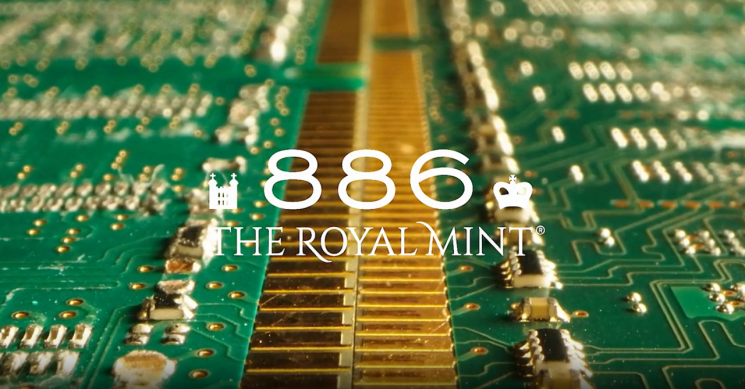 Screenshot from the promotional video of '886', the jewelry brand of the Royal Mint of the United Kingdom
The institution uses gold and silver to create precious metal products, sells metals like copper on the metal market, and sells some of the remaining waste as construction materials to building companies. In September last year, the Royal Mint showcased recycled gold necklaces and gold buttons from its 886 brand for the first time at Paris Fashion Week in France.
The Royal Mint's interest in the jewelry business stems from a significant decline in cash usage, which has shaken its core operations. Last year, the number of British coins issued by the institution was 15.8 million, a 90% decrease compared to 2023. As demand fell, the need to produce new coins diminished. This situation increased the necessity for the Royal Mint to find new business opportunities, leading to its focus on the electronic waste issue.
According to data released by the United Nations (UN), as electronic device usage increases, the volume of electronic waste is also growing, but recycling rates remain low, causing environmental problems. The global volume of electronic waste was 62 million tons in 2022, an 82% increase compared to 2010, and is expected to rise by 32% to 82 million tons by 2030. The UK ranks second after Norway in per capita electronic waste generation.
Anne Jessop, CEO of the Royal Mint appointed in 2018, told The Guardian, "We did not want the Royal Mint to disappear," adding, "We had to come up with new business ideas and formed a team to explore what opportunities might exist." The Mint explained that its engineers, who had built, maintained, and managed coin production machines, discovered methods to extract gold from circuit boards and have been developing new businesses based on this technology.
CEO Jessop emphasized, "We have obtained international licenses to operate similar factories worldwide," and stated, "We have become leaders in a new industry." She added, "We continue to invest in new businesses, and although we will face crossroads in the coming years, we will undoubtedly move forward step by step."
© The Asia Business Daily(www.asiae.co.kr). All rights reserved.


















