From the AI rally to electric vehicle growth and the luxury market, the fortunes of various industries are analyzed to depend on Donald Trump, the President-elect of the United States, who will take office this month.
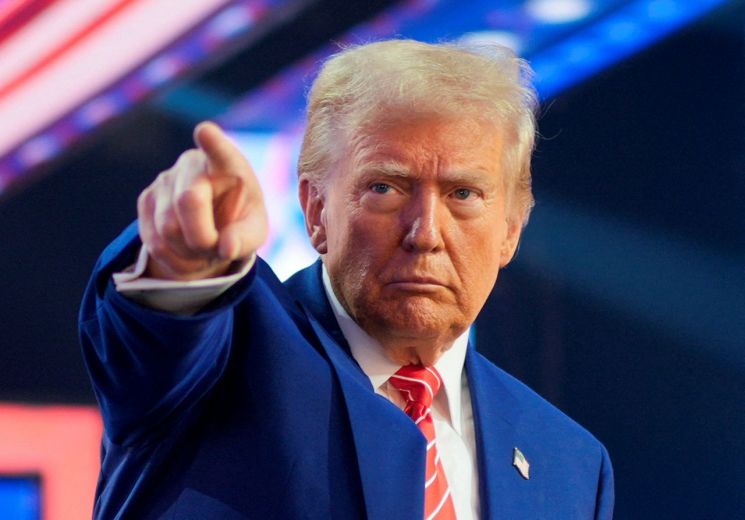
The Financial Times (FT) daily diagnosed this in an article titled "Business Trends, Risks, and Companies to Watch in 2025" on the 1st (local time). First, FT predicted that in the technology sector, the generative AI competition centered on some big tech companies will now spread not 'deeper' but 'wider.' In this process, open AI models are expected to become increasingly powerful, and regulations against generative AI are also expected to expand.
The company to watch in the technology sector was not OpenAI, which launched ChatGPT, but the latecomer xAI. With Elon Musk, CEO of Tesla, who leads xAI, emerging as the 'first buddy' and a key figure in the next administration, it is expected that xAI will also play a crucial role. However, the market risks include the uncertainty of when AI-related profitability will be secured, the continuation of massive expenditures, and the fact that stock prices have already risen significantly.
In the automotive sector, opinions are divided on whether electric vehicle growth will accelerate this year. Last year, electric vehicles accounted for an estimated 20% of global car sales. FT pointed out that the future growth of the electric vehicle market ultimately depends on whether government subsidies are withdrawn. In particular, it is known that the Trump transition team is considering abolishing the electric vehicle tax credit under the Inflation Reduction Act (IRA), causing the automotive industries of various countries to be on high alert. Tesla, led by CEO Musk, was named as a company to watch in the automotive field.
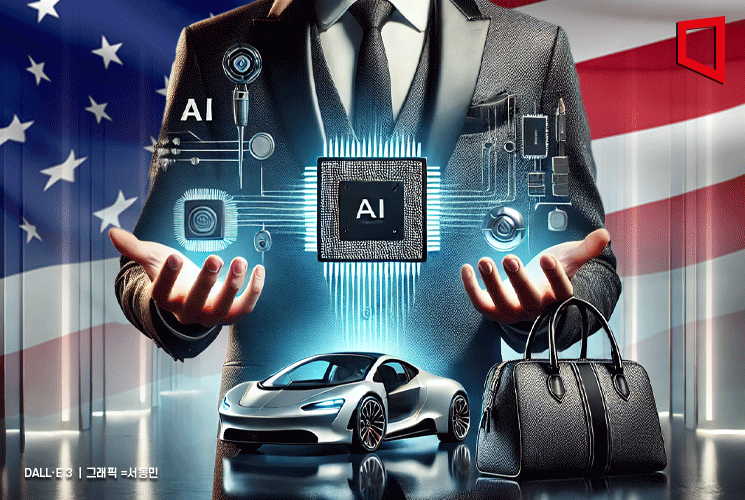
In the luxury industry sector, including luxury goods, attention is focused on China, which has been the 'growth engine' so far. Last year, global luxury market sales remained flat. Consulting firm Bain & Company predicted that this year, sales of personal luxury goods will record a slowdown in growth for the first time since the 2008 global financial crisis (excluding immediately after the 2020 pandemic). FT reported, "If China recovers due to stimulus measures, it will provide great relief to industry executives, but this cannot be guaranteed." Furthermore, uncertainty is increasing as Trump’s re-election is expected, with the assessment that "his return has significantly increased the risks of tariffs and trade wars." If the so-called Trump tariffs escalate into retaliatory tariff wars triggering a global economic recession, the luxury market, including luxury bags and champagne, is inevitably expected to be adversely affected.
In addition, in the capital markets, Trump’s re-election is expected to increase mergers and acquisitions (M&A) and lead to deregulation measures. However, Trump’s pledges related to tariffs and illegal immigration are criticized as potentially causing inflation that could 'ruin the party.' In the renewable energy sector as well, Trump’s return to the White House is expected to have a significant impact.
© The Asia Business Daily(www.asiae.co.kr). All rights reserved.
![From Bar Hostess to Organ Seller to High Society... The Grotesque Con of a "Human Counterfeit" [Slate]](https://cwcontent.asiae.co.kr/asiaresize/183/2026021902243444107_1771435474.jpg)

















