Refund Lines Stretch After Muan Disaster
Jeju Air Promises Unconditional Full Refund
Following the Jeju Air passenger plane disaster at Muan Airport, cancellations of Jeju Air flight reservations are continuing. As a result, Jeju Air is expected to face liquidity deterioration since it must refund a significant portion of the advance payments it received in cash. Moreover, Jeju Air had already been struggling to improve liquidity due to the COVID-19 pandemic before the disaster, so the burden is likely to increase further.
According to the Financial Supervisory Service's electronic disclosure system on the 1st, the amount of advance payments Jeju Air received from customers for flight tickets is approximately 260.6 billion KRW. This is the largest scale among domestic low-cost carriers (LCCs), 41.6% higher than the second-largest, T'way Air (184.3 billion KRW). Most of the airline's advance payments include ticket sales revenue collected in advance when customers reserve flight tickets. These are recognized as contract liabilities until the airline provides the flight service, then converted to revenue after the customer uses the ticket. The amount received as advance payments can be utilized as liquid assets by the airline.
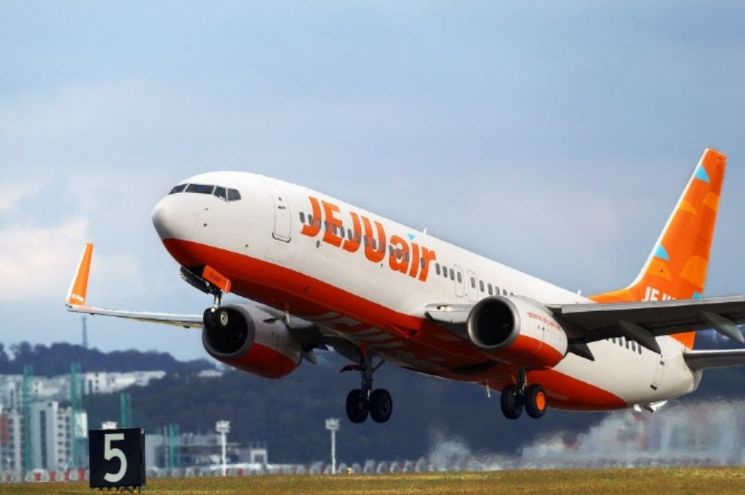
However, following the disaster, the wave of flight ticket refunds may instead increase cash outflows due to the large amount of advance payments. Although these amounts are not recognized as sales, their nature as liquid assets means refunds must be processed using available cash. Jeju Air reported that from the 29th to 1 PM on the 30th of last month, approximately 68,000 Jeju Air flight ticket cancellations occurred. Most cancellations reportedly happened after 9 AM on the 29th, when the Jeju Air passenger plane disaster occurred.
In particular, since Jeju Air announced unconditional refunds after the disaster, the burden of cash outflows is inevitably greater. If cancellation fees or voucher replacements had applied as usual, the scale of cash outflows due to refunds could have been reduced, but Jeju Air promised full refunds. Additionally, it announced that cancellation fees would be waived on all routes for customers who booked by the 29th of last month.
A bigger problem is that a boycott movement against Jeju Air and its parent group, Aekyung, is emerging among some consumers after the disaster. If the boycott continues, a decrease in liquidity ratio due to direct cash outflows from refunds and a slowdown in operating cash flow are expected to be unavoidable. As of the end of the third quarter this year, Jeju Air's separate liquidity ratio was 39.4, which is far below the appropriate level of 150%. Operating cash flow in the third quarter recorded a net inflow of 93.9 billion KRW but decreased by 68.9% compared to the same period last year (301.6 billion KRW).
© The Asia Business Daily(www.asiae.co.kr). All rights reserved.

















