Global Temperatures Expected to Reach 'All-Time High'
Last year, the average annual temperature in South Korea exceeded 14 degrees Celsius for the first time.
According to the Korea Meteorological Administration's Open Weather Data Portal on the 1st, last year's average temperature was 14.5 degrees Celsius, breaking the record for the highest annual average temperature since 1973 for the second consecutive year, following 13.7 degrees Celsius the year before. The year 1973 marks the significant expansion of the meteorological observation network and serves as the baseline for various weather records.
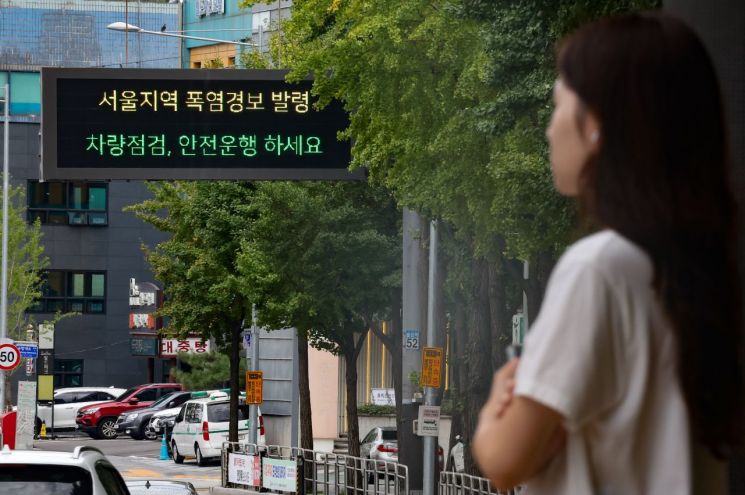
Last year's average minimum temperature was 9.9 degrees Celsius, nearly reaching 10 degrees, and the average maximum temperature was 19.7 degrees Celsius, close to 20 degrees, both ranking first historically. The summer saw extreme heatwaves, with temperatures reaching 40 degrees Celsius (on August 4th in Jeomdong-myeon, Yeoju-si, Gyeonggi Province). Particularly, September, when the late summer heat lingered persistently, had an average temperature of 24.7 degrees Celsius, which was 4.2 degrees higher than the normal average of 20.5 degrees Celsius.
The only month that maintained near-normal temperatures was May, but even then, the average temperature (17.7 degrees Celsius) was 0.4 degrees higher than the normal average (17.3 degrees Celsius). Since there was no 'cool month' last year, temperature records were set. The fundamental cause of last year's heat was climate change. Looking at the rankings of South Korea's annual average temperatures, except for 1998 (5th) and 1990 (10th), all of the top 10 years occurred after 2000.
The years 2024 (ranked 1st), 2023 (2nd), 2021 (4th), and 2020 (7th) were among the hottest on record, ranking within the top ten. Even the relatively 'cool' year of 2022 ranked 11th in average annual temperature.
In fact, last year was hot not only on the Korean Peninsula but across the entire globe. According to the Copernicus Climate Change Service (C3S), the European Union's climate change monitoring agency, the average global surface temperature from January to November last year was 0.72 degrees Celsius higher than the 1991?2020 average.
This was 0.14 degrees Celsius higher than the same period in the year before last, which was the hottest year since industrialization. The agency pointed out that last year's global temperature exceeded 1.5 degrees Celsius above pre-industrial levels for the first time in history.
The '1.5-degree increase' is a kind of threshold set by humanity, and it has now been surpassed. In 2015, the world agreed through the Paris Agreement to strive to limit the rise in global temperature to below 1.5 degrees Celsius compared to pre-industrial levels.
© The Asia Business Daily(www.asiae.co.kr). All rights reserved.

















