Top 10 Food Industry News
Apple and Cabbage Prices Surge Due to Abnormal Climate, Cocoa Prices Also Soar
Consumers 'Close Wallets' Amid Economic Recession and Martial Law Situation
Asia Economy has summarized the top 10 news stories in the food industry this year. The overarching theme in the food sector was climateflation (climate + inflation). Due to global warming, heatwaves and droughts struck various regions, causing a sharp rise in the prices of various food ingredients. In South Korea, from golden apples to golden cabbage and golden tomatoes, there were successive crises in fruit and vegetable supplies throughout the year. Overseas, abnormal weather conditions disrupted the supply of cocoa and coffee beans. As a result, prices of various chocolate snacks, from Pepero to Choco Song-i, also increased. The dining-out industry struggled amid an economic recession and emergency martial law situations. Despite the gloomy news dominating the year, the global craze for K-food, including ramen, continued, providing some consolation.
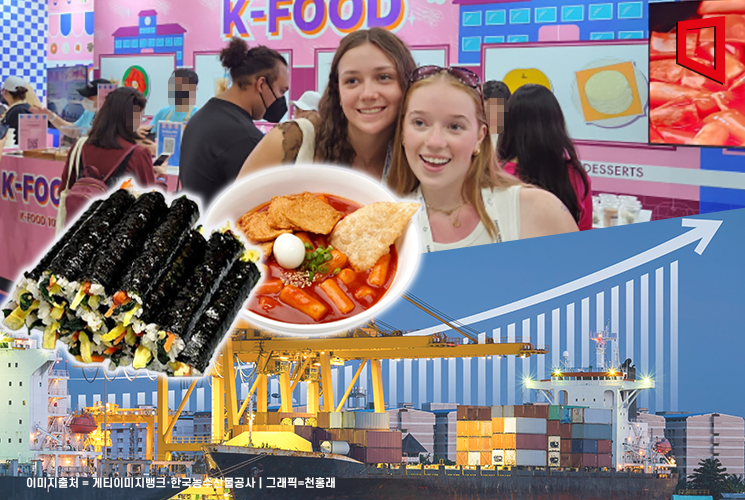
The Golden Age of K-Ramen... Samyang Foods Receives $700 Million Export Tower with the Power of 'Buldak'
K-ramen, once a simple meal for the common people, has now become a beloved food worldwide. According to the Ministry of Agriculture, Food and Rural Affairs, as of the end of October this year, ramen exports reached $1.02 billion, a 30% increase from last year. Since surpassing $210 million in 2014, ramen export figures have continuously set new records. The top contributor is Samyang Foods’ ‘Buldak Bokkeum Myun’ (Hot Chicken Flavor Ramen). Riding the global Buldak syndrome, Samyang Foods received the $700 million export tower award this year. This is their fifth award following $100 million in 2017, $200 million in 2018, $300 million in 2021, and $400 million in 2022. From July last year to June this year, Samyang Foods’ export volume increased by 74% compared to the same period two years ago. Beyond ramen, K-food’s performance this year was impressive. Total K-food exports up to November reached $9.05 billion. Snacks, beverages, frozen gimbap, instant rice, tteokbokki, and other rice-processed foods all achieved record-breaking results.
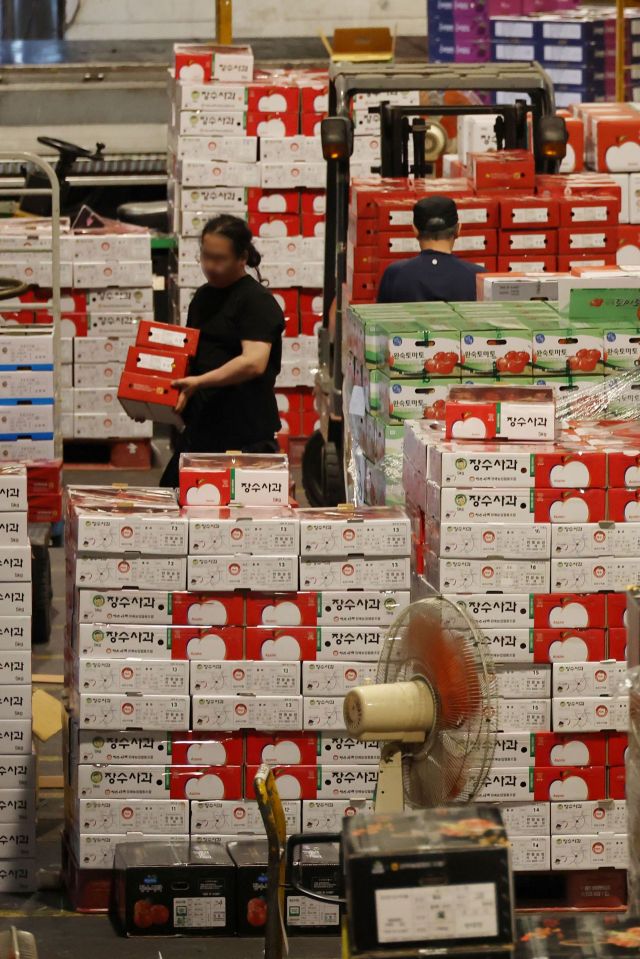 Fruits from production areas are piled up at the fruit auction hall of Garak Agricultural and Marine Products Wholesale Market in Songpa-gu, Seoul. Photo by Jo Yong-jun
"10,000 Won per Apple" Truly Golden Apples
For Koreans who eat apples year-round, the apple crisis earlier this year was truly shocking. Due to abnormal weather and poor harvests, apple prices surged by 71.0% in February. This was the third time in history that the price increase exceeded 70%, following March 1999 (77.6%) and October last year (74.7%). In March, the increase rate reached 88.2%, the largest since statistics began in January 1980. When apples costing 10,000 won each appeared, a new term combining apple and inflation, ‘applelation,’ emerged. The government released about 150 billion won in support funds to stabilize prices and calm public anger, but applelation is also considered to have significantly influenced the ruling party’s defeat in the 22nd National Assembly elections.
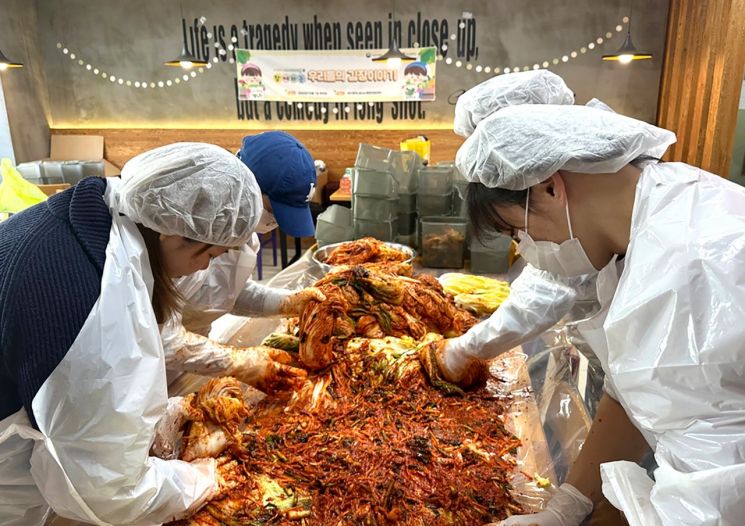
Rising Kimchi-Making Costs Bring About 'Gimpo-jok'... Packaged Kimchi Sold Out
It wasn’t just apple prices that rose due to poor harvests caused by abnormal weather. This summer’s heatwave prevented cabbage and other kimchi-making ingredients from growing properly, causing kimchi-making costs to skyrocket. According to Korea Price Information Service, the cost of making kimchi for a family of four this year was 331,500 won, 10% higher than last year. As a result, a growing number of people called 'Gimpo-jok' (those who give up making kimchi) appeared. A survey conducted by Monthly Nonghyup Matseon of about 500 members found that 72% of respondents said they would not make kimchi this year. The main reasons for not making kimchi were ▲inconvenience (47.2%) ▲decrease in family members (37.6%) ▲lack of time (33.1%) ▲rising prices of kimchi ingredients (30.8%). Among households giving up kimchi-making, 88.7% planned to purchase packaged kimchi.
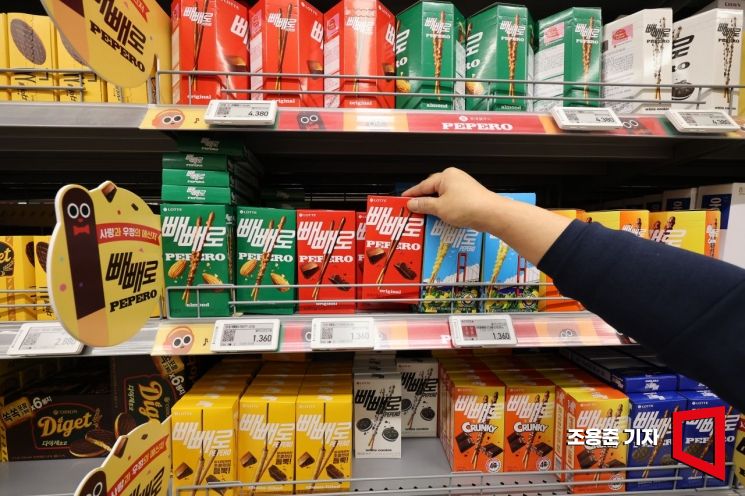 Chocolate-containing products are displayed at a large supermarket in Yeonsu-gu, Incheon. Photo by Jo Yong-jun
From Pepero to Choco Song-i... Chocolate Snack Prices Rise One After Another
The price of cocoa, the key ingredient in chocolate, soared to the highest level in 44 years. Heavy rains and drought in West Africa devastated cocoa farming. Like apples and cabbage, cocoa price increases are a result of climateflation caused by abnormal weather. As raw material costs rose, Lotte Wellfood, followed by Haitai Confectionery and even Orion, which had said "no price increases this year," raised prices. Now, it is difficult to find chocolate snacks in supermarkets that have not increased in price, from the popular daycare snack ‘Choco Song-i’ to ‘Pepero,’ which has entered New York’s Times Square.
Dining Industry Pushed to the Brink Amid High Prices and Martial Law
This year, the food industry struggled due to high prices and domestic demand stagnation caused by the recession. While food companies survived on export strength, the dining-out industry, which relies almost entirely on domestic sales, was pushed to the brink as the emergency martial law situation in December and the impeachment political turmoil wiped out the year-end peak season. Due to political instability, the won-dollar exchange rate soared, causing particular pain for the dining industry that imports raw materials. The Consumer Confidence Index (CCSI) compiled by the Bank of Korea in December was 88.4, a sharp drop of 12.3 points from the previous month. This was the largest decline since March 2020, when COVID-19 spread, and the lowest index since November 2022. Survey respondents indicated they would cut spending on travel, clothing, culture and entertainment, as well as dining out.
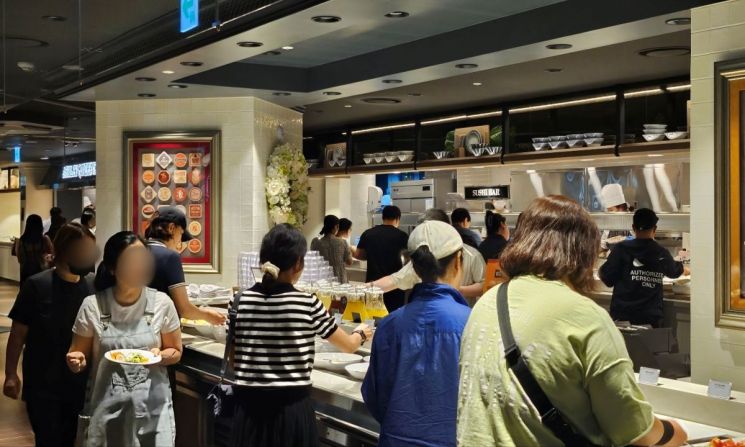
Omakase Declines in Recession, 'Value-for-Money' Buffets Make a Comeback
As high prices tightened wallets and the number of ‘Yono-jok’ increased, buffet restaurants entered a second golden age. ‘Yono’ stands for ‘You Only Need One,’ a trend of buying only what is necessary or mainly low-priced products. With dining prices soaring, Yono-jok enthusiastically flocked to value-for-money buffet restaurants, causing sales at Ashley Queens, Vips, and others to rise steadily. Ashley Queens’ revival is particularly notable. Once at its peak with 155 stores in 2014, Ashley fell to 59 stores in 2022 due to the COVID-19 pandemic. However, while similar brands like CJ Foodville’s ‘Season’s Table’ and Shinsegae Food’s ‘Olban’ withdrew, Ashley made a comeback in two years, gaining a reputation as a ‘buffet worth lining up for.’
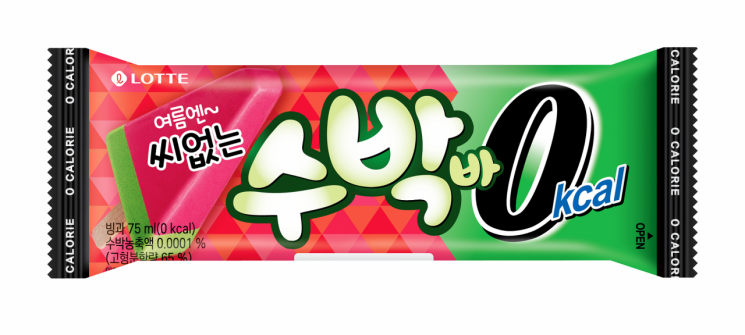
Spreading 'Zero Trend'... Introduction of 0kcal Ice Cream
The zero trend, once limited to alcoholic beverages and drinks, has now spread to ice cream. Products with zero grams of sugar as well as zero-calorie frozen treats have appeared. A representative product is ‘Joke Park (Jaws Bar, Screw Bar, Watermelon Bar) 0 kcal.’ Released in April, Jaws Bar and Screw Bar 0 kcal sold 7.2 million units within a month and over 20 million units within three months. Notably, the main buyers of zero ice cream are not children or teenagers, the traditional consumers, but people in their 20s and 30s and older. Those who had left the frozen dessert market after childhood for calorie or health reasons are returning as zero ice cream products continue to launch.
Netflix’s ‘Chef’s Table: BBQ’ Craze Sparks Star Chef Collaborations
Following the success of Netflix’s ‘Chef’s Table: BBQ,’ a wave of collaborations with star chefs has swept through food and distribution companies. The show ranked first in the ‘Netflix Global Top 10 Non-English TV’ category within its first week, receiving enthusiastic responses. Since then, chefs featured on the program have been receiving love calls for advertising contracts, joint product development, intellectual property (IP) sharing, and event agreements with food, dining, and convenience store sectors. Collaborative products are also very popular. At convenience store GS25, cumulative sales of 13 products co-developed with the show have exceeded one million units.
Baek Jong-won’s The Born Korea Listed on KOSPI
The Born Korea, founded by CEO Baek Jong-won in 1994, was listed on the Korea Composite Stock Price Index (KOSPI). The Born Korea is a franchise company operating 25 dining brands, including Paik’s Coffee, Hong Kong Banjeom, and Saemaeul Sikdang. According to the securities registration statement submitted to the Financial Services Commission, Paik’s Coffee accounted for 37% of total sales in the first half of this year, the highest among the 25 dining brands. With this, CEO Baek became the largest shareholder, holding 8,792,850 shares (60.78%) of The Born Korea. Baek had attempted to list the company in 2018 but postponed due to the COVID-19 outbreak and challenged the listing again this year on the company’s 30th anniversary.
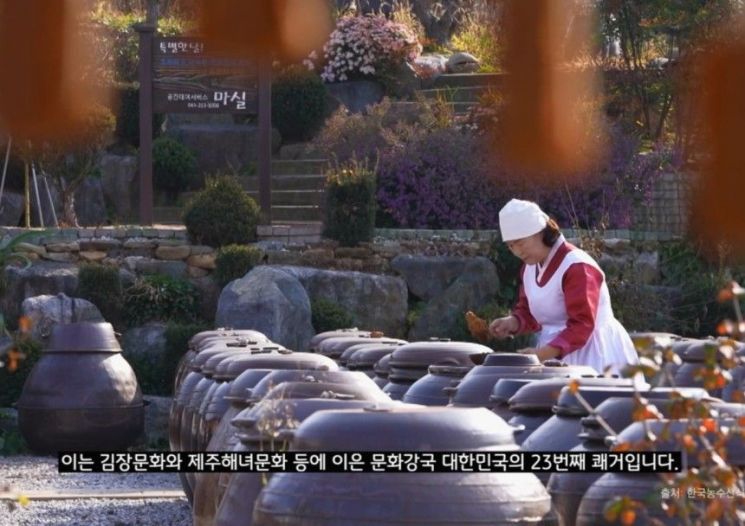
Korea’s ‘Jang Making’ Culture Registered as UNESCO Intangible Cultural Heritage
Korea’s ‘jang making culture,’ which produces doenjang (fermented soybean paste), ganjang (soy sauce), and gochujang (red chili paste), has been registered as a UNESCO Intangible Cultural Heritage. The culture was highly praised for its contribution to cultural diversity by forming community identity through family participation and passing down secret recipes across generations. Jang has long been a staple on Korean tables. Even among cultures that consume fermented soybeans, Korea’s jang is unique. It differs from China and Japan in production methods. The process of fermenting meju blocks to make two types of jang?doenjang and ganjang?and adding new jang to leftover seed soy sauce from the previous year is considered a uniquely Korean tradition. The Intangible Heritage Committee stated, “Jang reflects family identity and promotes solidarity among family members,” and “Through shared practices, it fosters peace and a sense of belonging within the community.”
© The Asia Business Daily(www.asiae.co.kr). All rights reserved.



















