Eased Criteria for Basic Pension and Child Education Expenses
Standard for Alley-type Shopping Districts Lowered from 20 to 15 Locations
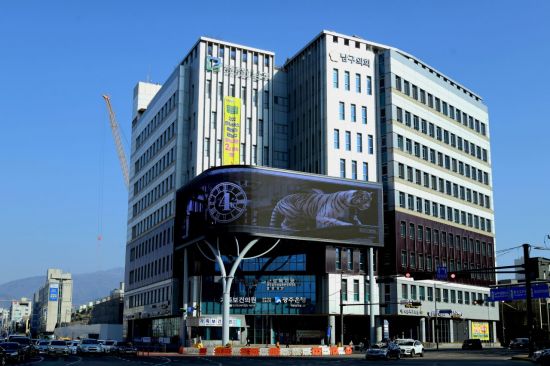
Gwangju Nam-gu has been selected as an outstanding local government in the "2024 Local Regulation Innovation Performance Evaluation" organized by the Ministry of the Interior and Safety, securing a special grant of 100 million KRW.
According to Nam-gu on the 31st, the Ministry of the Interior and Safety evaluated the regulatory innovation achievements promoted by 243 metropolitan and basic local governments nationwide this year.
This evaluation reflected indicators such as central regulation improvement, shadow and behavioral regulation improvement, improvement of regulations closely related to businesses and residents, and efforts to improve regulations.
Nam-gu promoted local commercial revitalization by easing the criteria for the amount of child education expenses used from the basic pension recipient's own consumption in the central regulation improvement and business/resident-focused regulation improvement sectors, as well as lowering the minimum number of stores required for designating alley-type shopping districts.
In particular, Nam-gu judged it unreasonable that, when determining basic pension recipients, pension amounts, and recognized income, only education expenses used for cohabiting children by the recipient or spouse could be deducted, and thus pushed for system improvement at the government level.
This was because, in many cases, residents who live separately from their children due to studies or other reasons were excluded from or had their basic pension payments suspended solely because their children were non-cohabiting, even though they had incurred education expenses.
The Ministry of Health and Welfare accepted Nam-gu's proposal last September and concluded that it was reasonable to expand the deduction criteria for education expenses to include non-cohabiting children.
In addition, Nam-gu boldly revised the "Ordinance on the Designation of Alley-type Shopping Districts in Nam-gu," which had been hindering the expansion of such districts as part of efforts to revitalize the local economy.
According to the ordinance, to designate an alley-type shopping district, there must be at least 30 stores concentrated within an area of 2,000 square meters or less. However, due to the collapse of local commercial areas and the prevalence of single-building stores, only two areas in the district met these conditions.
Nam-gu relaxed the requirement to 15 stores through amendments to local regulations and designated four additional alley-type shopping districts. As a result, merchants in six local alley-type shopping districts now have the opportunity to handle Onnuri gift certificates and participate in government-led public projects, just like traditional market merchants.
Additionally, Nam-gu received positive evaluations for its efforts to eliminate unnecessary regulations in various ways, such as operating a local regulation innovation reporting center that visits business sites, forming joint advisory groups at metropolitan and basic levels, and holding in-depth discussion sessions.
A Nam-gu official stated, "We will continue to actively identify and improve various regulations that do not match the current times, and we will diligently listen to the voices of diverse people to correct any unreasonable aspects."
© The Asia Business Daily(www.asiae.co.kr). All rights reserved.

















