Musk Faces Unified Political Criticism Including Main Opposition Leader Merz for Supporting German Far-Right AfD in Op-Ed
Elon Musk, CEO of Tesla, has sparked a political uproar in Germany by endorsing the far-right Alternative for Germany (AfD) party's early election victory scheduled for February next year. It appears that Musk, who has emerged as a powerful figure in the United States, is aware of the influence he could exert on the German election. The leader of Germany's main opposition party, a leading candidate for the next German chancellorship, fiercely condemned the move as "unprecedented interference in domestic affairs."
Friedrich Merz, leader of the Christian Democratic Union (CDU) and Christian Social Union (CSU) alliance, Germany's main opposition parties, criticized Musk's endorsement of AfD in an interview with Germany's Funke Media Group on the 29th (local time), calling it "intimidating and presumptuous." He added, "I cannot recall any similar case in the history of Western democracy where a friendly nation's election campaign was interfered with (like Musk's involvement)."
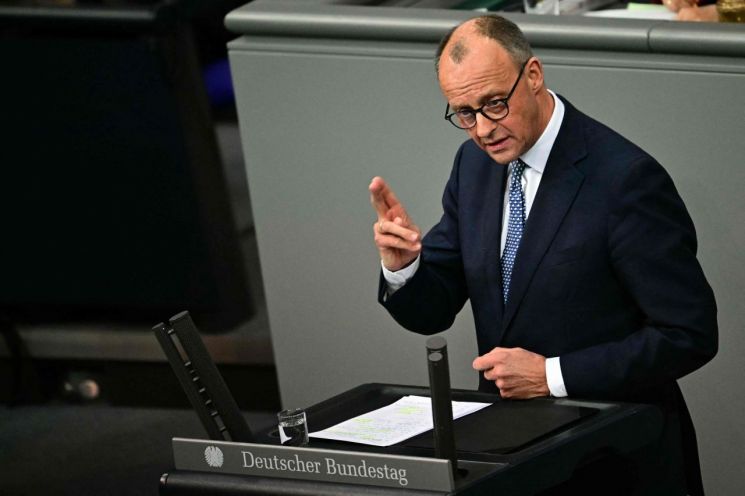
AfD is a far-right party that is pushing radical pledges ahead of Germany's early elections at the end of February, including withdrawal from the European Union (EU), restrictions on immigrant acceptance, abolition of the euro, and revival of the old Deutsche Mark. Musk lent his support in an op-ed published in the German weekly Die Welt am Sonntag the day before, stating, "AfD supports controlled immigration policies that prioritize German culture and security," and "AfD is the last flicker of hope to save Germany." German political parties wary of this have raised concerns about interference in domestic affairs.
Saskia Esken, co-leader of the Social Democratic Party (SPD), to which German Chancellor Olaf Scholz belongs, condemned the endorsement, saying, "Our democracy can defend itself and is not a commodity for sale," and "Anyone trying to influence our elections from outside, or supporting anti-democratic and anti-humanitarian parties like AfD, must be prepared for our fierce resistance." The opinion editor of Die Welt am Sonntag resigned in protest over the publication of Musk's op-ed.
Musk has previously voiced his opinions on foreign political matters, including criticism of German bureaucracy. While there are criticisms within Germany that an outsider without the right to participate in German politics is interfering, Musk argues that he has the right to political participation because he operates a Gigafactory in Berlin that produces up to 500,000 vehicles annually.
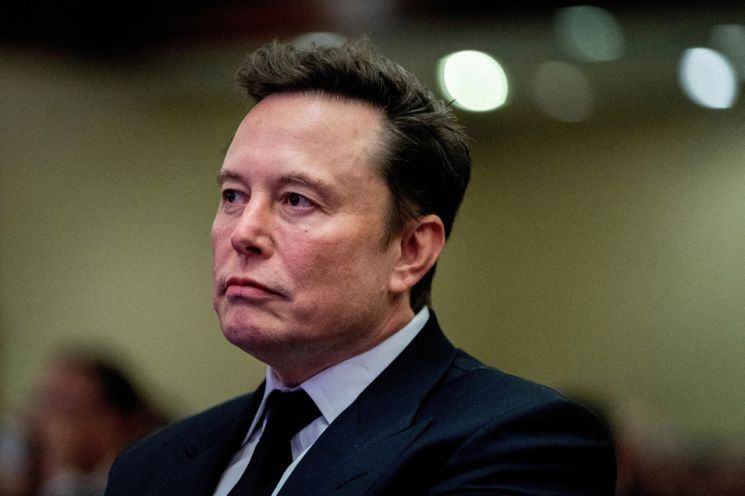
This is not the first time Musk has clashed with progressive European politicians. Musk, who has had several exchanges on social media with UK Prime Minister Keir Starmer of the ruling Labour Party, attacked Chancellor Scholz on the 20th via social media after a vehicle ramming incident at a German Christmas outdoor market caused around 200 casualties, calling him "an incompetent fool" and demanding he "step down immediately." This contrasts with Musk's praise of Italian far-right Prime Minister Giorgia Meloni as "a person whose inner beauty surpasses her appearance." Musk also maintains close ties with the UK Reform Party, known for its hard-right stance.
Meanwhile, Germany's federal parliament rejected Chancellor Scholz's confidence motion on the 16th, moving the next general election forward from September next year to the end of February. Although Scholz's bid for re-election is expected, the outlook is bleak. According to recent polls, the CDU/CSU alliance leads with 32% support. The alliance has nominated Friedrich Merz as their chancellor candidate. The far-right AfD follows in second place with 18.5%, with the SPD at 16% and the Green Party at 13%.
© The Asia Business Daily(www.asiae.co.kr). All rights reserved.
!["The Woman Who Threw Herself into the Water Clutching a Stolen Dior Bag"...A Grotesque Success Story That Shakes the Korean Psyche [Slate]](https://cwcontent.asiae.co.kr/asiaresize/183/2026021902243444107_1771435474.jpg)

















