All 8 Domestic and International Sites Achieve Resource Circulation Rate Over 99.5%
UL 'Platinum' Grade
Samsung Display received the highest rating for resource circulation rate evaluation at all domestic and overseas business sites, including four domestic plants and four overseas subsidiaries.
Samsung Display announced on the 30th that it commissioned UL Solutions (UL), a global organization in the field of applied safety science, to conduct a 'Zero Waste to Landfill' verification, and as a result, all domestic and overseas business sites met the highest 'Platinum' standard.
The 'Zero Waste to Landfill' verification is an international standard that measures a company's resource circulation efforts. UL verifies the resource circulation rate of each business site over the past year, that is, the proportion of waste recycled out of the total waste generated, and awards Silver (90?94%), Gold (95?99%), and Platinum (100%) grades.
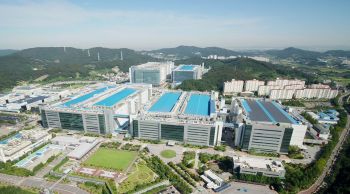
Samsung Display first achieved the Platinum grade at the Asan 1 plant in 2020. The following year, four domestic plants including ▲Asan 2 ▲Cheonan ▲Giheung obtained the Platinum grade, and in 2023, overseas subsidiaries such as ▲SDD (China Dongguan subsidiary) ▲SDT (China Tianjin subsidiary) ▲SDN (India Noida subsidiary) also achieved the Platinum grade. This year, SDV (Vietnam subsidiary) raised its resource circulation rate, resulting in all domestic and overseas business sites holding the Platinum grade.
Samsung Display has been transitioning systems at all business sites to enable recycling of waste that was previously incinerated or landfilled. Waste PVC generated during production line dismantling and replacement is recycled as PVC raw material instead of being incinerated, and waste glass generated during display manufacturing is recycled into high value-added materials such as glass fiber or paving block raw materials. Efforts to increase the recycling rate continue, including discovering new partner companies and jointly developing treatment technologies.
Samsung Display has also achieved remarkable results in waste reduction processes as well as waste treatment. The amount of waste generated at all Samsung Display business sites in 2023 was approximately 150,000 tons, a decrease of more than 20% compared to about 190,000 tons in 2021, two years earlier.
Geonhyung Lee, Vice President and Head of Global Infrastructure at Samsung Display, said, "This achievement of the highest zero waste to landfill rating at all business sites is the result of faithfully implementing our environmental management strategy. Since the transition to a resource circulation system is recognized as an essential element of sustainable management, we will continue to expand efforts to reduce waste and promote recycling."
© The Asia Business Daily(www.asiae.co.kr). All rights reserved.
![Clutching a Stolen Dior Bag, Saying "I Hate Being Poor but Real"... The Grotesque Con of a "Human Knockoff" [Slate]](https://cwcontent.asiae.co.kr/asiaresize/183/2026021902243444107_1771435474.jpg)
















