Four New Rapid Integrated Reconstruction Projects Initiated (Sanggye Jugong 6, Sanggye Boram, Junggye Green, Hagye Jangmi)
District Unit Plan Revision for Sanggye and Junggye Areas to be Officially Announced in Early 2025
Improved Project Feasibility Due to Regulatory Relaxation Including 2030 Seoul Urban and Residential Environment Maintenance Master Plan
Nowon-gu, Seoul (District Mayor Oh Seung-rok) announced that apartment reconstruction is gaining momentum as it promotes the reconstruction of four complexes?Sanggye Jugong 6 Complex, Sanggye Boram, Junggye Green, and Hagye Jangmi?through a rapid integrated planning method.
Rapid integrated planning is a system in which Seoul City provides preliminary consultation at the initial stage of reconstruction and redevelopment projects, specifically during the establishment of maintenance plans. It offers guidelines to balance residents’ profit-oriented ideas with public interest, thereby shortening the project implementation period.
The fastest progressing project currently is the Sanggye Jugong 6 Complex. Although it was submitted under rapid integrated planning last November, a revised plan is being prepared following Seoul City’s suggestion to “link it with the ongoing district unit plan reorganization for the Sanggye and Junggye areas.” The new plan, to be submitted in the first half of next year, will include upgrading some parcels to quasi-residential zones as part of a ‘transit station area complex maintenance zone.’
The reconstruction plan for Sanggye Boram Apartments, with a floor area ratio of 299%, a maximum of 45 floors, and a total of 4,170 households, has been submitted to Seoul City. The maintenance plan will be drafted next year based on the city’s consultation results.
Junggye Green Apartments submitted a reconstruction plan last month to Nowon-gu applying a 1.2 times floor area ratio relaxation for transit station areas, with a floor area ratio of 359.9%, a maximum of 49 floors, and a total of 4,432 households. Hagye Jangmi Apartments submitted a reconstruction plan this month, upgrading part of the transit station area to quasi-residential zones, with a floor area ratio of 454%, a maximum of 49 floors, and a total of 2,775 households. The district office plans to request consultation from Seoul City once the review is complete.
Nowon-gu, a representative apartment-dense area in Seoul, has 63 apartment complexes over 30 years old. Although most complexes have passed safety inspections, recent sharp increases in construction costs and excessive individual contributions have hindered project feasibility, causing delays in project progress.
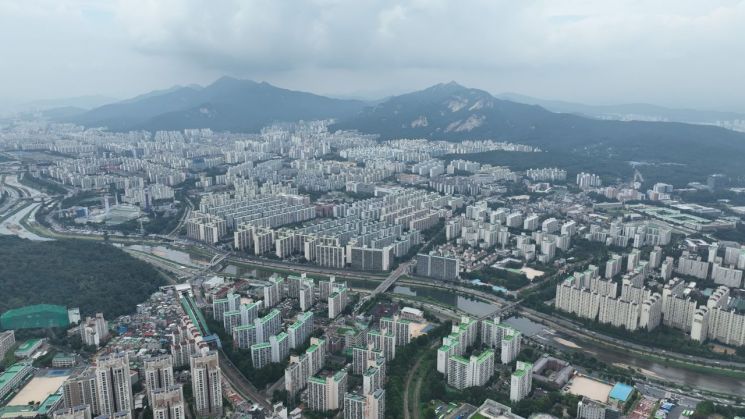
However, along with growing expectations for improved project feasibility, reconstruction efforts are regaining momentum. The district office has consistently proposed institutional improvements to the Ministry of Land, Infrastructure and Transport and Seoul City to expedite reconstruction in Nowon.
The first result was the revision of the 2030 Seoul Metropolitan City Urban and Residential Environment Maintenance Basic Plan announced in September this year. This revision allows upgrading to quasi-residential zones within transit station areas (up to 350 meters), reduces mandatory rental housing ratios through a project feasibility correction factor, and permits applying floor area ratios based on the current status of overcrowded complexes. The district’s greatest effort was focused on applying the project feasibility correction factor. The ‘correction factor’ is a system that grants incentives to the allowable floor area ratio, enabling a reduction in rental housing while increasing general sales, which is expected to directly benefit complexes with many small units.
Additionally, to accelerate reconstruction, the district unit plan reorganization process has been shortened. Although the ‘district unit plan reorganization’ for establishing reconstruction guidelines in the Sanggye and Junggye areas usually takes a long time, it is scheduled to be finalized and announced in the first half of next year, just over two years after initiation.
The relaxation of the resident consent ratio required for drafting reconstruction maintenance plans is also a positive development. According to Seoul City ordinances, consent from more than 60% of landowners is required, but under the currently proposed amendment, drafting maintenance plans will be possible with consent from over 50%. Among the district’s reconstruction complexes, 13 have already secured consent from more than 20%, which is expected to accelerate project progress.
District Mayor Oh Seung-rok said, “We have actively worked to resolve the biggest obstacles to reconstruction, such as individual contributions and district unit plan reorganization,” adding, “We will continue to communicate and support efforts to rapidly improve residential environments.”
© The Asia Business Daily(www.asiae.co.kr). All rights reserved.

















