Montenegro Ministry of Justice US Extradition Decision
Defense Counsel Requests Interim Measures at European Court of Human Rights
The legal team of Kwon Do-hyung, a key figure in the 'Terra·Luna' crash incident, has mobilized all legal means. This is in response to the Montenegro Ministry of Justice's decision to extradite him to the United States. If Kwon is sent to the U.S., he is likely to face severe punishment close to a life sentence.
According to Yonhap News on the 29th, local daily newspapers Vijesti and Pobjeda reported, citing the Montenegro Ministry of Justice, that on the 27th (local time), Minister Bojan Bo?ovi? signed an order to extradite Kwon to the United States.
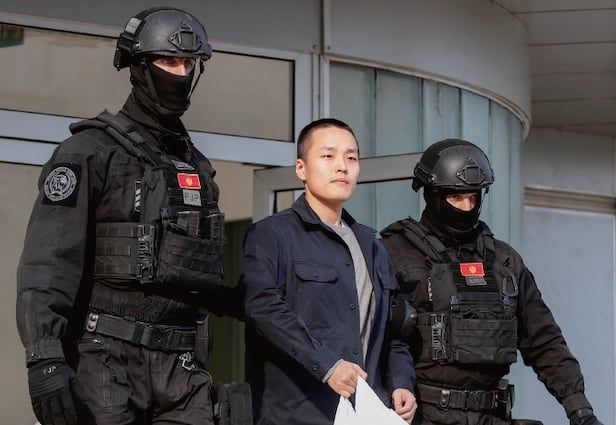 Kwon Do-hyung is being led out of the police station by armed police after being questioned at the police headquarters in Podgorica, the capital of Montenegro, on March 23 (local time). Photo by Reuters Yonhap News
Following the Ministry of Justice's announcement, Kwon's local legal representatives, lawyers Goran Lodi? and Marija Radulovi?, immediately responded by distributing a statement to the media on the same day.
They argued, "Extradition cannot proceed until an official decision document in a language understandable to the client and legal team is delivered." They also stated, "We requested immediate notification once the decision was made, but Minister Bo?ovi? refused." They emphasized, "Such actions by the Ministry of Justice seriously violate the client's fundamental human rights, namely the right to defense and legal remedy." Kwon's side appears to be using the fact that Minister Bo?ovi?'s decision document was not delivered as a reason to delay the execution of the extradition to the U.S., buying time to overturn the decision.
However, shortly thereafter, the decision document was delivered to Kwon's legal team. The two lawyers raised a new issue and took further action. This time, they criticized the timing of the delivery, pointing out that the document was delivered on a Friday, after official office hours, as an attempt to undermine the right to defense.
The lawyers reiterated that their client's fundamental human rights were violated and announced that they had filed a suspension injunction with the Montenegro Constitutional Court and requested interim measures from the European Court of Human Rights (ECHR).
However, it appears difficult to overturn the decision. Previously, Kwon's team filed a constitutional complaint in protest after the Montenegro Supreme Court invalidated a lower court decision that had ordered his transfer to Korea and transferred the authority over extradition decisions to the Minister of Justice, but the complaint was rejected.
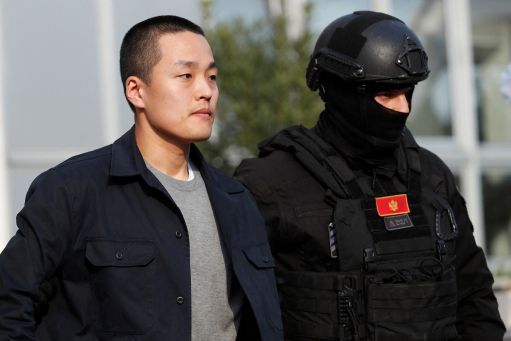
Given that the Constitutional Court has already dismissed Kwon's constitutional complaint, it is expected that the new injunction request will also be unlikely to be accepted. The European Court of Human Rights also lacks binding power, so its ability to effectively halt the extradition process against Kwon is limited.
Some analysts suggest that, given the numerous twists and turns in Kwon's extradition trial, it is necessary to monitor the progress further. The Montenegro Ministry of Justice has not yet disclosed when it will transfer Kwon's custody to the United States.
Kwon was arrested in Montenegro in March last year after evading the law following the 2022 Terra·Luna crash incident. Since then, South Korea and the United States have been competing to secure his custody. Kwon's side has expressed a preference for transfer to Korea, fearing the severe punishment he might face in the U.S.
The United States applies consecutive sentencing for each crime, making it possible to receive a prison term exceeding 100 years, whereas South Korea's maximum sentence for economic crimes is about 40 years, which is lower than that of the U.S.
© The Asia Business Daily(www.asiae.co.kr). All rights reserved.
![Clutching a Stolen Dior Bag, Saying "I Hate Being Poor but Real"... The Grotesque Con of a "Human Knockoff" [Slate]](https://cwcontent.asiae.co.kr/asiaresize/183/2026021902243444107_1771435474.jpg)

















