Medical Reform Special Committee Resumes, Followed by Next Week's 2nd Hospital Revitalization Forum
Ajou University Hospital Added as Pediatric Specialized Emergency Medical Center
Emergency Response Period for Lunar New Year Holidays Operates from Jan 22 to Feb 5 Next Year
As discussions on medical reform, which were temporarily halted due to the emergency martial law situation, have resumed, Cho Kyu-hong, Minister of Health and Welfare, reiterated that "reviving essential and regional healthcare is an unstoppable task" and emphasized that concrete measures will be steadily pursued. The government has designated Ajou University Hospital, equipped with facilities, equipment, and specialists specialized in pediatric emergency patients, as a 'Pediatric Specialized Emergency Medical Center,' and has decided to operate the two-week period from January 22 to February 5 as the 'Lunar New Year Emergency Response Period' in preparation for the upcoming Lunar New Year holiday.
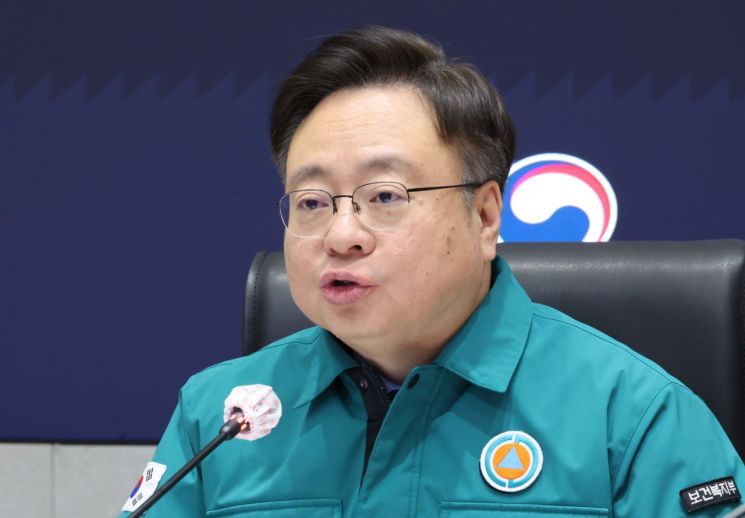
On the 27th, Minister Cho presided over a meeting of the Central Disaster and Safety Countermeasures Headquarters for the doctors' collective action at the Government Seoul Office and stated, "Although there have been difficulties in discussing medical reform measures recently, reviving essential and regional healthcare is a task that cannot stop here," adding, "We are making every effort to advance medical reform discussions by listening to voices from the medical field and gathering opinions from various sectors."
Following the participation of all 47 tertiary general hospitals nationwide in the recent support project for structural transformation of tertiary general hospitals, the government explained that follow-up measures according to the first medical reform implementation plan announced last August are steadily progressing, including discussions on the reform of non-reimbursed private insurance at the Essential Medical Care and Fair Compensation Committee under the Medical Reform Special Committee held the day before. Minister Cho said, "Next week, we will listen to voices from regional and medical fields through a forum on 'Activation Measures for Regional Secondary Hospitals and Primary Care' to improve the medical supply and utilization system."
At the meeting, support policies and operational status such as the expansion of pediatric emergency medical infrastructure were reviewed. First, the government will operate a total of 12 'Pediatric Specialized Emergency Medical Centers' by designating two additional centers this year, up from 10 last year. Following Jeonju Yesu Hospital in Jeonbuk, Ajou University Hospital was designated as a Pediatric Specialized Emergency Medical Center on this day. These hospitals receive budget support to secure dedicated specialists (100 million KRW per specialist) and related health insurance fees (emergency medical management fee surcharge). The government plans to designate two more Pediatric Specialized Emergency Medical Centers next year to continuously strengthen the infrastructure for severe pediatric emergencies.
The number of 'Moonlight Children's Hospitals,' which provide pediatric care during holidays and nighttime, has increased from 57 last year to 100 this year. These hospitals receive additional night care management fees from health insurance, and starting this year, operational expenses (budget) are newly supported for hospitals operating seven days a week. Minister Cho said, "Next year, we will continue to expand Moonlight Children's Hospitals by providing additional operational expenses to medically vulnerable areas with a pediatric population of less than 30,000."
Since August, the government has been piloting a pediatric care network in 20 regions, up from 11, to facilitate rapid admission and treatment of acute pediatric patients through collaborative care among local clinics, (children's) hospitals, and tertiary general hospitals. A total of 177 medical institutions participate in this network. To ensure smooth operation, the government provides additional operational expenses through health insurance for each pediatric care network unit and has newly established a policy fee for pediatric specialists.
In addition, the government is strengthening the pediatric care network that collaborates among local clinics, hospitals, and tertiary general hospitals, and continuously enhancing the capacity for follow-up care such as hospitalization and surgery for emergency patients. Starting next year, hospitals that accommodate pediatric emergency patients and provide appropriate follow-up care will be evaluated for their contribution to maintaining the emergency medical system and will receive incentives accordingly. Minister Cho emphasized, "By continuously supplementing and strengthening the pediatric emergency medical system, which requires more time and manpower and involves more risk factors compared to adult care, we will preserve a pillar of essential medical care and create an environment where both parents and children can feel secure."
Meanwhile, the government has designated the two-week period from January 22 to February 5 as the 'Lunar New Year Emergency Response Period' and pledged to ensure thorough operation of the emergency medical system. Local governments have been requested to establish emergency medical system operation plans, including designating medical institutions and pharmacies open on weekends and holidays.
© The Asia Business Daily(www.asiae.co.kr). All rights reserved.

















