AI Precision Diagnosis for Rare Diseases... 94% Accuracy
Practical Technology for Diagnosing Rare Atypical Parkinsonism Syndrome
AI-powered medical diagnostic technology is opening new possibilities for the precise diagnosis of rare diseases. The advanced technology developed by researchers at Pusan National University and Yangsan Pusan National University Hospital has attracted attention by achieving a high diagnostic accuracy of up to 94% even with limited data.
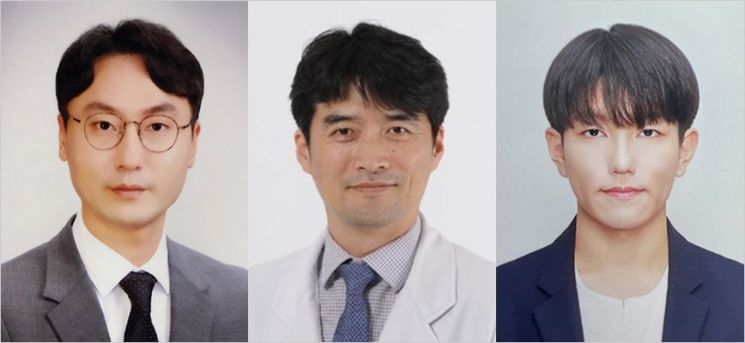
The research team led by Professor Jin-Kyu Gam from the Department of Information and Computer Engineering at Pusan National University (President Choi Jae-won) and Professor Jae-Hyuk Lee from the Brain Neuro Center at Yangsan Pusan National University Hospital announced on the 26th that they have jointly developed an innovative AI-based diagnostic technology boasting high accuracy with small amounts of data.
This study was published in the December 15 issue of NeuroImage, the most prestigious international journal in the field of brain imaging, gaining international recognition for its value.
According to the research team, atypical Parkinsonian syndromes, which show symptoms similar to Parkinson’s disease, are rare neurological disorders and typically include progressive supranuclear palsy and multiple system atrophy. Since the prognosis and treatment methods differ for each disease, accurate diagnosis is essential; however, early symptoms are similar, making differential diagnosis difficult. In particular, for diseases with low prevalence, the lack of available imaging data made it challenging for existing AI-based technologies to overcome these limitations.
To address this issue, the Pusan National University research team developed an AI model combining few-shot learning techniques and hyperbolic embedding.
This model integrates brain MRI sequences to precisely visualize iron accumulation patterns and reflects hierarchical relationships among data, enabling outstanding performance even in data-scarce environments. The technology demonstrated superior performance compared to existing methods, achieving diagnostic accuracy of up to 94%.
Professor Jin-Kyu Gam of Pusan National University stated, “This research is significant in that it enables the direct application of practical AI technology with high diagnostic accuracy even with limited data in medical settings.” He added, “Especially through the convergence of medicine and artificial intelligence, it is expected to greatly contribute to providing optimized treatment to patients by enabling accurate differential diagnosis of rare diseases.”
This research was supported by the National Research Foundation of Korea’s Excellent Young Researchers Program and Basic Research Laboratory Support Project, as well as the AI Convergence Innovation Talent Training and Generative AI Core Advanced Talent projects of the Institute for Information & Communications Technology Planning & Evaluation. The study was led by Professors Jin-Kyu Gam of Pusan National University and Jae-Hyuk Lee of Yangsan Pusan National University Hospital as co-corresponding authors, with Won-Jun Choi, a master’s student majoring in AI at the Department of Information Convergence Engineering at Pusan National University, participating as the first author.
© The Asia Business Daily(www.asiae.co.kr). All rights reserved.
![Clutching a Stolen Dior Bag, Saying "I Hate Being Poor but Real"... The Grotesque Con of a "Human Knockoff" [Slate]](https://cwcontent.asiae.co.kr/asiaresize/183/2026021902243444107_1771435474.jpg)
















