Evaluation of Vacation Usage Days and Flexible Work Introduction Rate
Sejong Ranks 1st as the Best Region for 'Work-Life Balance'
Followed by Incheon and Daejeon... Jeju Ranks Last
The region with the best work-life balance (Work-Life Balance, or WoRaBal) nationwide was found to be Sejong. The place with the worst WoRaBal was revealed to be Jeju.
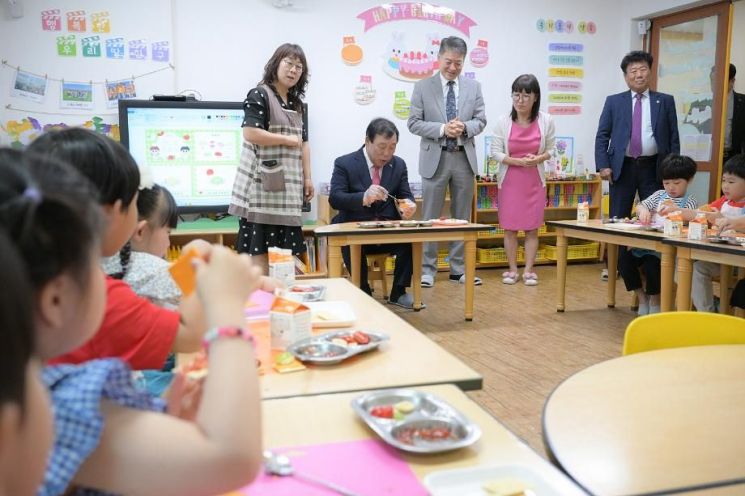 Sejong Mayor Choi In-ho is visiting a local daycare center to encourage children on May 5th, Children's Day. Photo by Sejong City
On the 25th, the Ministry of Employment and Labor announced the "2023 Regional Work-Life Balance Index," stating that Sejong, Incheon, and Daejeon ranked high among metropolitan autonomous districts in WoRaBal. The Work-Life Balance Index is calculated on a 100-point scale by analyzing 24 indicators across four areas: work, life, policies, and local government engagement for each region.
Sejong City scored 67.8 points, emerging as the region with the best work-life balance. Sejong dominated other metropolitan autonomous districts in the installation rate of public childcare facilities and the usage rate of reduced working hours for childcare among small and medium-sized enterprises. It also received the highest evaluation in the local government engagement area, which measures how actively local governments promote, educate, and provide consulting.
Incheon, which took second place by a narrow margin with 67.1 points, scored well due to a relatively high number of vacation days used and high rates of flexible work introduction and utilization. Especially, after newly enacting work-life related ordinances last year, its local government engagement score rose significantly. Daejeon, ranked third with 66.5 points, also showed a decrease in total working hours and an increase in flexible work utilization compared to the previous year.
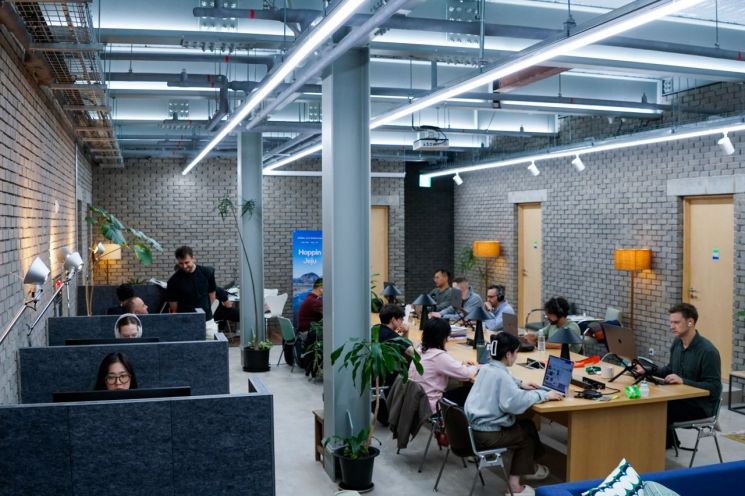 Jeju is attracting workations that combine work and rest, targeting digital nomads. Photo by Jeju Province
On the other hand, Jeju scored 49.1 points, ranking as the metropolitan autonomous district with the lowest score nationwide. It was followed by Gyeongbuk, Daegu, Ulsan, and Gyeongnam in descending order. These regions received average or slightly below-average scores in other areas, but the gap was relatively large in the local government engagement indicator.
Seoul and Busan, which ranked first and second in the previous year, also saw significant drops in their scores, falling to 9th and 10th place respectively. Seoul scored 61.5 points, down 3.3 points from the previous survey, and Busan decreased by 3.4 points to 54.6 points. Particularly, the 'local government engagement' score was relatively low. Seoul's score in this area dropped from 11 points in 2022 to 8.6 points last year, a decrease of 2.4 points. Busan's score fell from 12.8 points to 11.2 points, a drop of 1.6 points.
Lee Jeong-han, Director of Employment Policy at the Ministry of Employment and Labor, stated, "Work-life balance is closely related to overcoming low birth rates," and added, "The government will strengthen policies supporting work-life balance, including a significant increase in childcare leave benefits and expanded support for flexible work next year." Meanwhile, the national average Work-Life Balance Index rose by 2.1 points from the previous year to 60.8 points.
© The Asia Business Daily(www.asiae.co.kr). All rights reserved.


















