Lee Jae-myung's Approval Ratings Higher Than Moon Jae-in During Impeachment
People Power Party: Yoo Seung-min Has Competitive Edge but Faces Internal Challenges
Lee Jun-seok's Influence Varies with People Power Party Presidential Candidate
President Yoon Suk-yeol has been impeached by the National Assembly and is awaiting a ruling from the Constitutional Court. As evidence related to insurrection is being confirmed one after another, political attention is increasingly focused on the possibility of an early presidential election. The collapse of the ruling conservative forces and calls for judgment from the opposition resemble the impeachment crisis of former President Park Geun-hye eight years ago. How will the upcoming early presidential election situation unfold?
Choi Byung-cheon, a strategist from the New Growth Economy Research Institute of the opposition, analyzed the current political situation on the 25th through social networking services (SNS) based on the approval rating trends during the early presidential election phase eight years ago.
Lee Jae-myung's Position Is Better Than Moon Jae-in's Eight Years Ago
Choi analyzed that compared to the early presidential election situation eight years ago, Lee Jae-myung, leader of the Democratic Party of Korea, has a "relatively high" approval rating. Compared to former President Moon Jae-in, who was the final winner of that election, Lee's position is favorable or at least not disadvantageous.
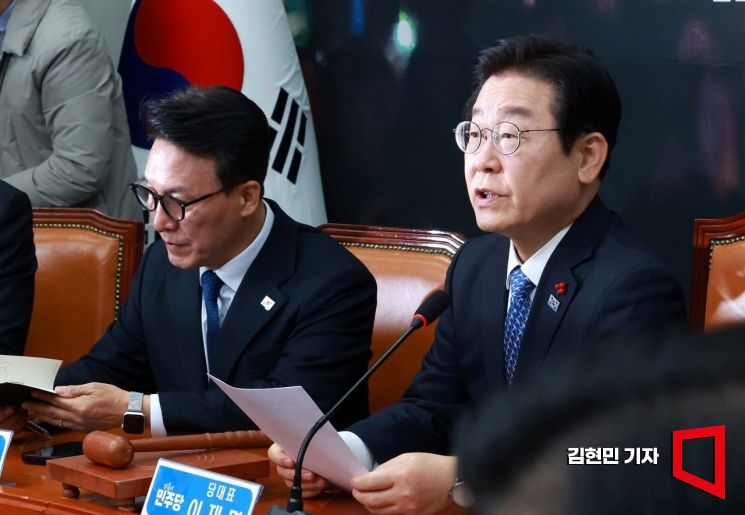 Lee Jae-myung, leader of the Democratic Party of Korea, is speaking at the Supreme Council meeting held at the National Assembly on the 20th. Photo by Kim Hyun-min
Choi stated, "According to the Gallup Korea data from the third week of December, the next presidential candidate support rates were Lee Jae-myung 37%, Han Dong-hoon 5%, Hong Joon-pyo 5%, Oh Se-hoon 2%, Kim Moon-soo 2%, Lee Jun-seok 2%, Yoo Seung-min 2%, Ahn Cheol-soo 1%, and Woo Won-shik 1%." He added, "After the impeachment was passed in the National Assembly on December 9, 2016, former President Moon's (presidential candidate) approval rating was around 31-32% two weeks later." The survey was conducted from the 17th to the 19th among 1,000 voters aged 18 and over nationwide using 100% mobile phone telephone interviews. The confidence level was 95%, with a margin of error of ±3.1 percentage points, and a response rate of 15.5%. For more details, refer to the Central Election Polling Survey website or Gallup.
People Power Party's Internal Competitiveness Differs from General Election Competitiveness
The situation of the People Power Party, which is the subject of judgment, is more complicated. Choi said, "The dilemma of the People Power Party is that the possibility of winning the primary and the possibility of winning the general election are different," adding, "The strongest criterion for general election competitiveness is a conservative who is critical of Yoon Suk-yeol and Kim Keon-hee and supported the impeachment." According to this criterion, among the five presidential candidates of the People Power Party, the strongest candidate is former lawmaker Yoo Seung-min.
Choi diagnosed, "Oh Se-hoon, mayor of Seoul, is a 'conservative who supported impeachment,' so he has relative expansion power, but he has been almost neutral regarding President Yoon and his wife." Regarding Hong Joon-pyo, mayor of Daegu, he said, "He is a 'conservative who opposed impeachment.' While he may be advantageous in the party primary, he lacks expansion power." Considering that opposition to impeachment is surveyed at 21%, Choi predicted, "He is likely to be trapped in the mid-20% support range."
Regarding former People Power Party leader Han Dong-hoon, Choi said, "He is a 'conservative who supported impeachment' with relative expansion power and has criticized President Yoon and his wife," but noted, "His weaknesses are that he has never been a member of the National Assembly and that he is a former prosecutor."
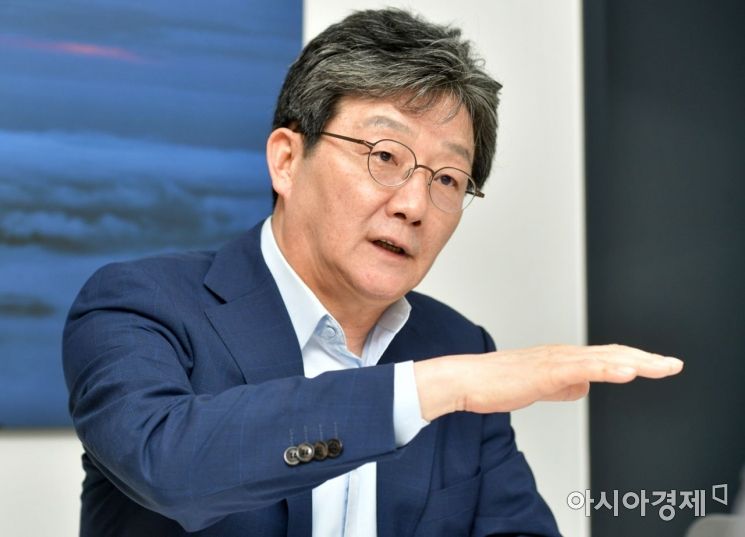
On the other hand, former lawmaker Yoo Seung-min is "a 'conservative who supported impeachment,' critical of President Yoon and his wife, and has an image of an economic conservative," making him "the strongest candidate in terms of general election competitiveness." However, Choi noted, "His chances of winning the party primary are uncertain," and judged that "if the People Power Party focuses solely on 'winning the presidential election,' he is the most competitive candidate."
Lee Jun-seok's Choice as a Presidential Player
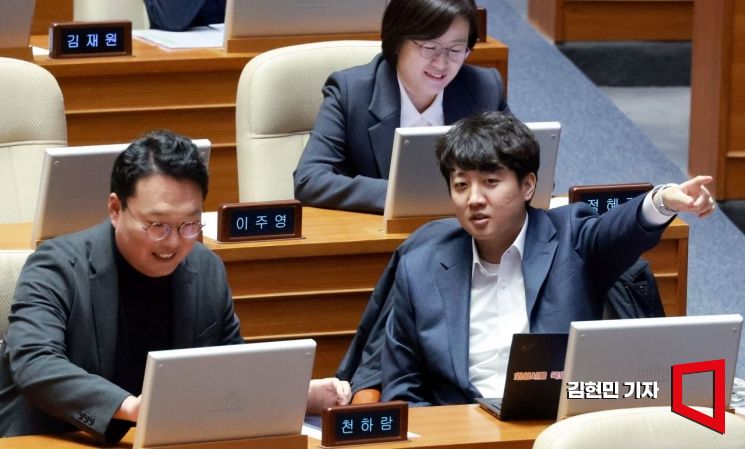 Lee Jun-seok, a member of the Reform New Party, is talking with Cheon Ha-ram at the plenary session held at the National Assembly on the 2nd. Photo by Kim Hyun-min
Choi also paid attention to the potential of Lee Jun-seok, a member of the Reform New Party. However, he said Lee's potential "will be greatly influenced by who becomes the People Power Party candidate." He explained, "The best case for Lee is if Hong Joon-pyo becomes the presidential candidate," predicting that "conservatives who supported impeachment may shift to Lee." Choi also pointed out that in the election eight years ago, such voter groups shifted between multiple candidates. However, he viewed it as the worst case if former lawmaker Yoo or Mayor Oh became the presidential candidate.
For this reason, Choi predicted, "Lee's campaign strategy can be anticipated: he will promote Mayor Hong and check former lawmaker Yoo and Mayor Oh."
© The Asia Business Daily(www.asiae.co.kr). All rights reserved.



















