Banking Sector Loan Process Improvement TF Results
Expansion of Command Leave... Effective from April Next Year
Going forward, internal control items related to loan accident prevention activities will be included in the performance evaluation (KPI) of domestic banks. From the head office's loan supervision, compliance monitoring, and audit departments to branch offices, how well loan-related accidents are prevented will be reflected.
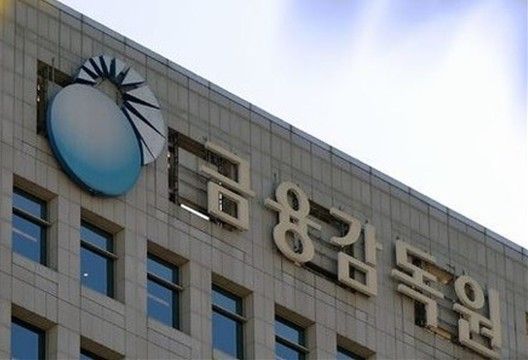
On the 25th, the Financial Supervisory Service (FSS) announced the results of the 'Banking Sector Loan Process Improvement Task Force (TF)' which includes these contents. The TF has been jointly operated by the FSS, domestic banks, and the Korea Federation of Banks since September 3. The improvement plan was prepared with the joint participation of the FSS, Kookmin, Shinhan, Hana, Woori, SC, Nonghyup, Industrial, Suhyup, Busan, Gwangju Banks, and the Korea Federation of Banks, and will be implemented from April next year.
The FSS stated that due to the recent increase in large-scale loan accidents and cases where internal employees lead or collude in improper loans, they have been seeking institutional solutions in addition to individual inspections.
Looking at the main improvements, first, the verification procedures for important documents will be significantly strengthened. When investigating income, employment status, and business operation, electronic official documents or information on official documents directly submitted by customers will be prioritized. In particular, verification of official supporting documents such as income amount certificates and tax payment certificates from the National Tax Service, and insurance premium payment certificates from the National Health Insurance Service will be made mandatory.
The procedures for collateral value assessment and verification will also be completely improved. When requesting external appraisals, random assignment through the computerized system will be the principle, and manual assignment will only be allowed in unavoidable cases such as project financing (PF) or syndicated loans. Additionally, for vulnerable collateral items such as 'long-term unsold commercial properties,' the authority for pre-approval review will be raised and attaching on-site investigation reports will be made mandatory, introducing strengthened verification procedures.
Verification of the authenticity of lease contracts will also be strengthened. When handling loans for real estate rental businesses, verification of lease contracts through official records such as commercial lease status reports will be enhanced, and if verification through official records is difficult, on-site investigations by external specialized agencies such as credit information companies or real estate rights investigation companies will be mandatory. After loan execution, branch managers must collect rent payment records for a certain period and verify their consistency.
The scope of checks for misuse of funds beyond their intended purpose will be greatly expanded. The short-term loan criteria excluded from checks for misuse of working capital will be reduced from within 3 months to within 1 month, and newly established corporations or corporate limit loans of 300 million KRW or more will also be included in the inspection targets.
Along with this, the scope of mandatory leave will be expanded. For loan handling employees who were not previously subject to mandatory leave, a mandatory leave of one or more business days will be implemented considering the results of branch audits and loan handling performance.
An FSS official said, "Through this loan process improvement, the appropriateness of loan handling at frontline branches will be enhanced, and the monitoring activities of second and third lines such as compliance monitoring and audit departments will be strengthened. We expect this to help prevent large-scale loan accidents and greatly contribute to restoring trust in the banking sector."
Meanwhile, the FSS plans to promptly push each bank to develop computerized systems and revise internal regulations related to this voluntary regulation implementation, and will closely monitor each bank's compliance status.
© The Asia Business Daily(www.asiae.co.kr). All rights reserved.
![Clutching a Stolen Dior Bag, Saying "I Hate Being Poor but Real"... The Grotesque Con of a "Human Knockoff" [Slate]](https://cwcontent.asiae.co.kr/asiaresize/183/2026021902243444107_1771435474.jpg)
















