Discussion on Regulatory Improvement Measures at the 5th Biohealth Innovation Committee
Support for Cell and Gene Therapy and mRNA Vaccine Technology Development
Starting next year, a preferential drug pricing policy for national essential medicines using domestic raw materials will be implemented, and the government has decided to include not only new drugs but also already listed drugs in the preferential treatment.
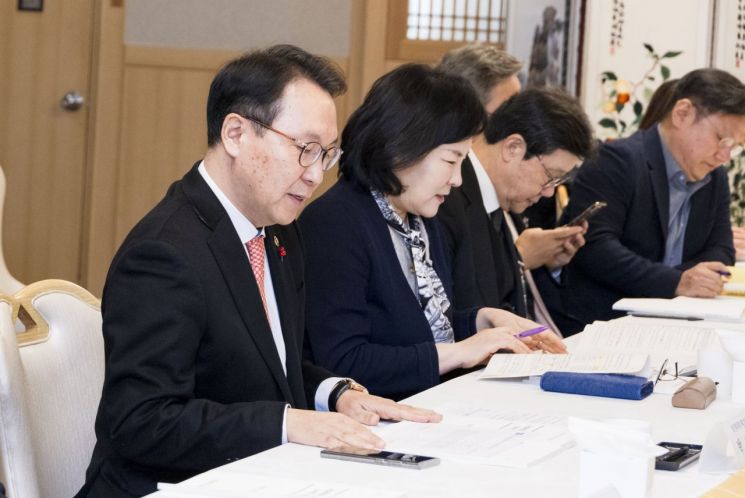
On the 24th, the Ministry of Health and Welfare held the '5th Biohealth Innovation Committee' at the Government Seoul Office, chaired by Kim Young-tae, the private vice chairman (Seoul National University Hospital director), with related ministry officials in attendance, and announced that they discussed improvement measures for three 'killer regulations' in the biohealth sector.
At the meeting, it was decided that in the future, not only newly listed national essential medicines but also generics of already listed essential medicine designated ingredients will have their drug prices adjusted to reflect cost increases if the raw materials are changed from imported to domestic.
National essential medicines are drugs designated separately by the government because they are essential for health care but stable supply is difficult through market functions alone. Currently, 473 items have been designated. According to this regulatory improvement, pharmaceutical companies will be able to apply for an increase in the ceiling price for items where the generic raw materials of already listed national essential medicine designated ingredients are changed to domestic raw materials, and can receive preferential drug pricing after review by the Drug Benefit Evaluation Committee. This will be implemented from February next year after revising the 'Regulations on Evaluation Criteria and Procedures for Drug Benefit Eligibility, etc.'
The meeting also decided to revise the enforcement decree to allow flexible application of risk classification (low risk, medium risk, high risk) stipulated in the Advanced Regenerative Medicine Act, considering safety on a case-by-case basis. Even high-risk clinical research can be reclassified as medium risk for each treatment technology through risk adjustment application and review committee deliberation if it is recognized that safety is high due to sufficient accumulation of research data.
In addition, the Ministry of Food and Drug Safety decided to add a 'Plasma Manufacturing Business Status Survey Application Civil Petition' function to the 'Food and Drug Administration System (NEDRUG)' by February 2026 to ensure stable supply of plasma fractionation products amid increasing dependence on imported plasma due to a decrease in the self-sufficiency rate of domestic raw plasma.
Chairman Kim said, "Since the committee's launch in December last year, we have received 195 regulatory improvement tasks through the Regulatory Reform Plaza and designated 148 tasks requiring regulatory improvement as management tasks, continuously promoting institutional improvement follow-ups," adding, "We will strive to achieve regulatory improvements that can be felt on the ground."
Meanwhile, at the meeting, discussions were also held on identifying the current level of technology in South Korea for successful development of cell and gene therapies as national advanced strategic technologies and on plans to focus investment through future national research and development (R&D). Opinions were also exchanged on the status of domestic companies securing core technologies for domestic production of messenger ribonucleic acid (mRNA) vaccines and cross-ministerial support measures.
© The Asia Business Daily(www.asiae.co.kr). All rights reserved.
![Clutching a Stolen Dior Bag, Saying "I Hate Being Poor but Real"... The Grotesque Con of a "Human Knockoff" [Slate]](https://cwcontent.asiae.co.kr/asiaresize/183/2026021902243444107_1771435474.jpg)
















