Over $500 Billion in 2021
Major Countries Begin Currency Easing Cycle
Large Funds Flow In Targeting Bond Value Increase
This year, a record-breaking amount of over $600 billion (approximately 870 trillion won) flowed into global bond funds. As major central banks, including the United States, initiated a monetary easing cycle this year, investments aiming for rising bond prices (= falling bond yields) significantly increased. However, with the U.S. Federal Reserve (Fed) signaling a slowdown in the pace of rate cuts next year, bond yields have surged, and there are concerns that 'Trumflation' (inflation caused by Trump's policies) could push rates even higher, potentially dealing a blow to the bond market.
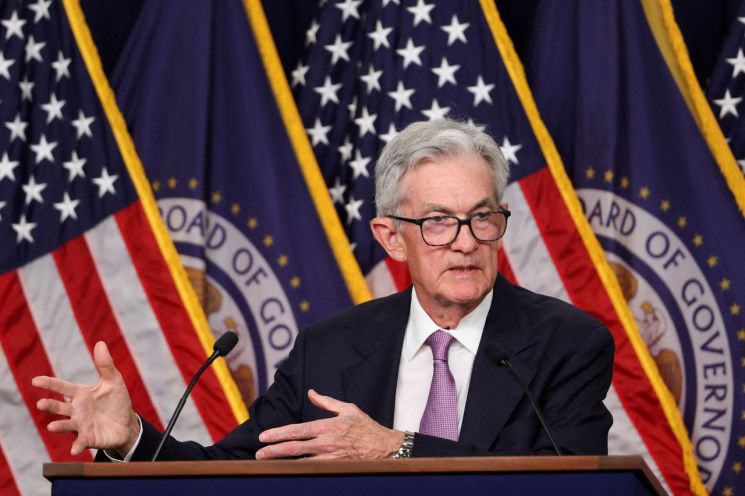
On the 21st (local time), major foreign media outlets reported, citing data from market research firm EPFR, that more than $600 billion flowed into global bond funds this year. This surpasses the previous annual record of $500 billion (approximately 725 trillion won) set in 2021.
The expansion of bond investments is underpinned by the slowdown of previously soaring inflation and interest rate cuts by monetary authorities worldwide. The Fed began cutting rates in September, lowering the benchmark rate from a peak of 5.25-5.5% annually to 4.25-4.5% this month, a 1 percentage point reduction. The European Central Bank (ECB) started rate cuts earlier in June, reducing the benchmark rate from a peak of 4.5% to 3.15% this month, a total cut of 1.35 percentage points. Investors anticipated rate cuts this year and proactively poured funds into the bond market.
Matthias Schaeber, Senior Portfolio Manager at Allspring, analyzed, "Historically, investors have bet heavily this year on a substantial change in monetary policy that supports bond yields," adding, "With growth and inflation slowing simultaneously, investors flocked to bonds seeking high returns."
However, as expectations grew that the pace of rate cuts might slow more than initially anticipated, bond yields have risen and bond prices have fallen. Although the Bloomberg Global Aggregate Bond Index rose in the third quarter, it has plummeted over the past three months, resulting in an annual return of -1.7%. This was largely due to the Fed repeatedly signaling a slowdown in monetary easing. With strong economic growth maintained and recent inflation rebounding, the Fed announced it would slow the pace of rate cuts next year. At the Federal Open Market Committee (FOMC) meeting on the 18th, the expected number of rate cuts next year was sharply reduced from four 0.25 percentage point cuts (total 1.0 percentage point) to two 0.25 percentage point cuts (total 0.5 percentage point). Consequently, U.S. Treasury yields surged, with the 10-year benchmark?an indicator of global bond yields?breaking above 4.5% for the first time in six months, a significant rise from around 3.9% in January.
The market has already begun anticipating a 'hawkish (monetary tightening preference) cut' and started withdrawing funds from the bond market. According to EPFR, investors pulled $6 billion out of bond funds in the week leading up to the last FOMC meeting on the 18th, marking the largest weekly outflow in about two years.
Shaniel Ramsey, Co-Head of Multi-Asset at Pictet Asset Management, explained, "Investors flocked to bond funds out of widespread fear of a U.S. recession and disinflation (a decline in inflation rate)," adding, "Prices have fallen, but no recession has occurred, and U.S. Treasury yields remain high. Many investors likely found the (bond) price losses experienced this year insufficiently compensated."
Additionally, there remains the possibility that bond yields could rise further due to inflationary pressures from policies promised by President-elect Donald Trump, who will take office in January next year, including tariff increases and illegal immigration bans.
On the other hand, some predict that bonds can still be a safe investment. James Acy, Bond Portfolio Manager at Marlboro, said, "While U.S. stocks are absorbing funds as if there is no tomorrow, with rates normalizing, investors are traditionally starting to move back into safe assets," adding, "Inflation has fallen significantly almost everywhere, and growth has weakened substantially almost everywhere, creating a much more favorable environment for bond investors."
© The Asia Business Daily(www.asiae.co.kr). All rights reserved.

















