Kim So-Young, Vice Chairperson, Holds Meeting of Personal Debtor Protection Act Implementation Monitoring Team
Principal and Interest Reduction Tops at 2,623 Cases... Extension of Repayment Period and Debt Refinancing Follow
Late Payment Interest Relief for 61,755 Claims
Urges Employee Training, Know-How Accumulation, and System Promotion
The Financial Services Commission marked two months since the enforcement of the Personal Debtor Protection Act by reviewing the implementation status of the law and discussing future plans for its stabilization. Since the law's enforcement, there have been over 8,068 debt adjustment applications, with more than 7,082 cases completed. It was confirmed that some financial companies are actively engaging in debt adjustments by reflecting debt adjustment performance in their key performance indicators.
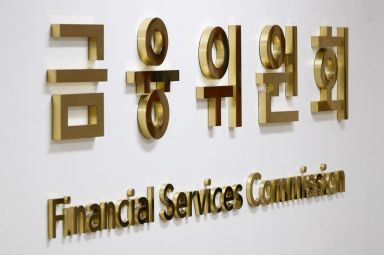
On the 20th, the Financial Services Commission announced that it held a meeting of the Personal Debtor Protection Act Implementation Status Inspection Team (led by the Vice Chairman of the Financial Services Commission, Kim So-young) with related organizations including the Financial Supervisory Service, Credit Recovery Committee, Korea Asset Management Corporation, Korea Federation of Banks, and Korea Housing & Urban Guarantee Corporation. The "Act on the Management of Personal Financial Claims and Protection of Personal Financial Debtors (Personal Debtor Protection Act)" was established to strengthen the protection regulations for personal debtors throughout all processes after delinquency (delinquency-collection-transfer) and was enforced on October 17.
At the meeting, discussions were held on ?the implementation status and future plans of the Personal Debtor Protection Act ?major supervisory matters following the enforcement of the Personal Debtor Protection Act ?the execution status of new systems under the Personal Debtor Protection Act, including debt adjustments by financial sectors.
Vice Chairman Kim So-young emphasized in her opening remarks that the Personal Debtor Protection Act is significant in that it establishes a regulatory framework to protect debtors throughout the entire process they experience after loan delinquency, and stressed the importance of substantial operation of debt adjustments for the law’s stabilization.
She said, "Please ensure thorough education for employees, and consider not just expanding the number of debt adjustment cases but making debt adjustments effective and tailored to each debtor’s situation," adding, "Beyond simple quantitative debt adjustments, actively attempt difficult debt adjustments to accumulate know-how independently."
She also requested active support and promotion of the system so that small businesses can comply well with the law. Vice Chairman Kim said, "Each association should pay special attention to listening to the difficulties of small financial companies and conveying them to the authorities," and added, "Financial companies should also make every effort to promote policies through various channels so that debtors do not miss out on support due to lack of awareness."
According to the Financial Services Commission, as of the 6th of this month since the law’s enforcement, there have been 8,068 debt adjustment applications to financial companies, with 7,082 cases processed. By type, principal and interest reductions accounted for 2,623 cases (36%), extension of repayment periods 2,110 cases (29%), and refinancing loans 1,169 cases (16%), in that order.
Additionally, the burden of overdue interest for debtors was alleviated on 61,755 claims, and future interest was waived on 2,753 claims. The Personal Debtor Protection Act prohibits overdue interest on portions of debt that have not yet matured when the right to defer payment is lost due to partial delinquency. Claims that are unrecoverable or have a significantly low likelihood of recovery, such as those included in bad debt write-offs, are exempted from future interest claims before transfer.
The collection suspension system, which allows for a grace period on collections in cases of disasters or accidents, was utilized 8,672 times. The system restricting collection contact types, which allows debtors to request no collection during certain times or by specific means to protect their daily lives, was used 4,295 times.
Furthermore, some financial companies operate non-face-to-face exclusive channels to handle everything from debt adjustment applications to review and agreements, or actively perform debt adjustments by reflecting debt adjustment performance in branch KPIs. It was also confirmed that the burden of overdue interest was alleviated on 61,755 claims, and future interest was waived on 2,753 claims.
Vice Chairman Kim stated, "We plan to continue operating the implementation status inspection team and the supporting practical inspection team to promptly resolve field difficulties," and added, "Since the debtor’s recovery ultimately enhances the value of claim recovery, we expect the financial sector to play an active role in establishing a ‘virtuous cycle of coexistence’ between debtors and creditors."
© The Asia Business Daily(www.asiae.co.kr). All rights reserved.
![Clutching a Stolen Dior Bag, Saying "I Hate Being Poor but Real"... The Grotesque Con of a "Human Knockoff" [Slate]](https://cwcontent.asiae.co.kr/asiaresize/183/2026021902243444107_1771435474.jpg)











