Japan's central bank, the Bank of Japan (BOJ), kept its benchmark interest rate unchanged for the third consecutive time on the 19th.
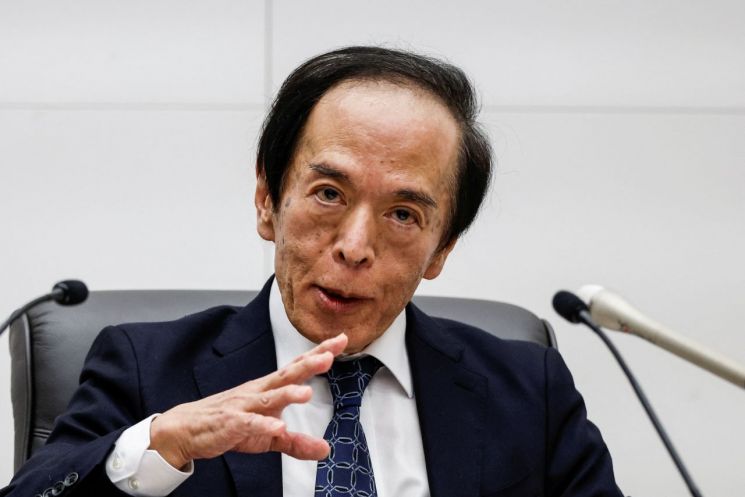
The BOJ held a two-day monetary policy meeting from the 18th to the 19th and decided to keep the short-term policy interest rate, the benchmark rate, at the current 0.25%. In a statement, the BOJ cited "uncertainties surrounding Japan's economic activity and inflation" as the reason for the rate freeze.
Previously, most experts had expected the BOJ to keep rates unchanged at this meeting due to global economic slowdown and uncertainties related to the policies of President-elect Donald Trump of the United States.
Among the nine participants in the decision, eight voted in favor of the freeze. One member opposed, arguing that the rate should be raised to 0.5%. NHK analyzed the BOJ's decision to hold rates, stating that "it appears the BOJ postponed further rate hikes based on opinions that it is necessary to observe the impact of next year's spring wage negotiations and President-elect Trump's policies."
BOJ Governor Kazuo Ueda is scheduled to hold a press conference in the afternoon to explain the meeting results. It is expected that hints about the possibility of rate hikes in January and March next year may be obtained during this session.
In March, the BOJ raised the short-term policy interest rate for the first time in 17 years, ending its negative interest rate policy, and then increased it from 0~0.1% to about 0.25% at the July meeting, but has kept it unchanged since then.
Following the BOJ's rate freeze decision, the Tokyo foreign exchange market saw a sell-off of the yen and a buying spree of the dollar amid expectations of a widening interest rate gap between the U.S. and Japan, pushing the dollar-yen exchange rate above 155 yen for the first time in a month. This indicates a depreciation of the yen.
The U.S. central bank, the Federal Reserve (Fed), on the 18th (local time), after the Federal Open Market Committee (FOMC) regular meeting, lowered the benchmark interest rate by 0.25 percentage points to 4.25~4.50%, but signaled a slowdown in the pace of rate cuts by projecting the number of rate cuts next year to be two instead of the previously expected four.
Meanwhile, the BOJ released a "Comprehensive Review of Monetary Policy" report stating that the large-scale monetary easing policies implemented by the BOJ since the Abe Shinzo administration in 2013 have not produced the expected effects. The BOJ assessed, "Overall at this point, there are positive effects on the economy, but there are also negative effects," and diagnosed that "unconventional monetary policy tools have uncertain effectiveness compared to conventional tools and may cause side effects if sustained on a large scale for a long period."
© The Asia Business Daily(www.asiae.co.kr). All rights reserved.

















