Government Reiterates Request for Medical Sector's Participation in 'Uige Special Committee' Discussions
Designates 9 Additional Regional Emergency Centers to Prepare for Winter Emergency Patient Increase
The government has promised to ensure that applicants for first-year residents (interns) recruitment in the first half of next year are given equal opportunities for selection and that no one is disqualified for unjust reasons. It also emphasized that it will continue to promote medical reforms to revitalize regional and essential medical services, including fostering secondary hospitals, developing specialized hospitals, and innovating primary care.
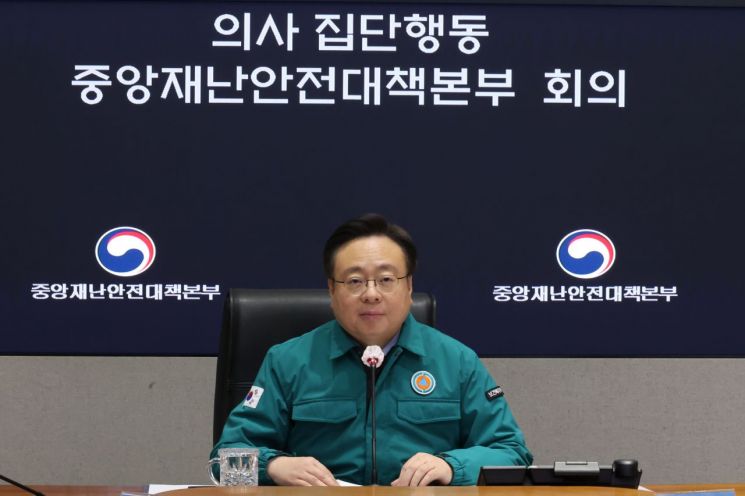
On the 19th, Cho Kyu-hong, Minister of Health and Welfare, stated in his opening remarks at the Central Disaster and Safety Countermeasure Headquarters (CDSCH) meeting regarding the doctors' collective action, "Medical reform is an urgent task that cannot be delayed even for a moment to save regional and essential medical services directly related to the health and lives of the people," and "the government is doing its best in maintaining the emergency medical system and medical reform," he revealed.
Minister Cho explained, "To avoid missing the golden time for reform, we will steadily implement the already announced measures to strengthen regional and essential medical services while continuously listening to the voices from the medical field to supplement and develop them." Specifically, he said, "We will promote the support project for the structural transformation of tertiary general hospitals along with fostering secondary hospitals, developing specialized hospitals with essential treatment capabilities, and innovating primary care for integrated and continuous health management."
To this end, starting with a policy forum on revitalizing secondary hospitals at the end of this month, the government plans to collect opinions from the medical community on reform tasks and subsequently continue discussions through the Medical Reform Special Committee.
Previously, the Presidential Medical Reform Special Committee was scheduled to announce the second implementation plan at the end of the year following the first medical reform implementation plan announced in August. However, discussions were effectively halted due to the medical community's withdrawal from participation in protest against the emergency martial law situation. The public hearing on non-reimbursable and indemnity insurance improvement, originally scheduled for late this month, was also canceled, resulting in the scrapping of the plan to announce the second implementation plan within the year.
Minister Cho requested, "We will also concretize tasks such as reforming non-reimbursable and indemnity insurance and establishing a medical accident safety net," and urged, "We ask the medical community, including hospitals, to rejoin the special committee discussions so that regional and essential medical fields can be revitalized."
Regarding the recruitment of residents for the first half of next year, he said, "There are concerns that the willingness to apply may be discouraged as some hospitals have reportedly informed applicants to withdraw their applications," and emphasized, "We will thoroughly manage the recruitment process to ensure that all applicants are given equal opportunities for selection and that there are no cases of disqualification for unjust reasons."
The CDSCH also discussed measures to maintain the emergency medical system in preparation for the increase in emergency patients during the winter season at the meeting that day.
The Ministry of Health and Welfare announced that it has designated nine additional regional emergency medical centers to reduce the burden on regional emergency medical centers. Since September, 14 regional emergency medical centers have been designated and are operating, and additional centers were designated in Daegu, Daejeon, Sejong, Gangwon?where there were no regional centers?and in Seoul (2 centers), Incheon (1 center), and Gyeonggi (2 centers), where there are many severe emergency patients. Along with this, to prevent overcrowding in emergency rooms, 115 'fever clinics' focused on mild patients have been registered, exceeding the target of 100, and designation is expected to be completed within this month.
© The Asia Business Daily(www.asiae.co.kr). All rights reserved.

















