In the U.S. Congress, the Democratic and Republican leadership reached an agreement on a continuing resolution (CR) through last-minute negotiations, avoiding a government shutdown just before the inauguration of Donald Trump's next administration. However, Elon Musk, CEO of Tesla and the incoming head of the newly established Government Efficiency Department, along with Vivek Ramaswamy, a former Republican presidential primary candidate, are urging lawmakers to reject the continuing resolution.
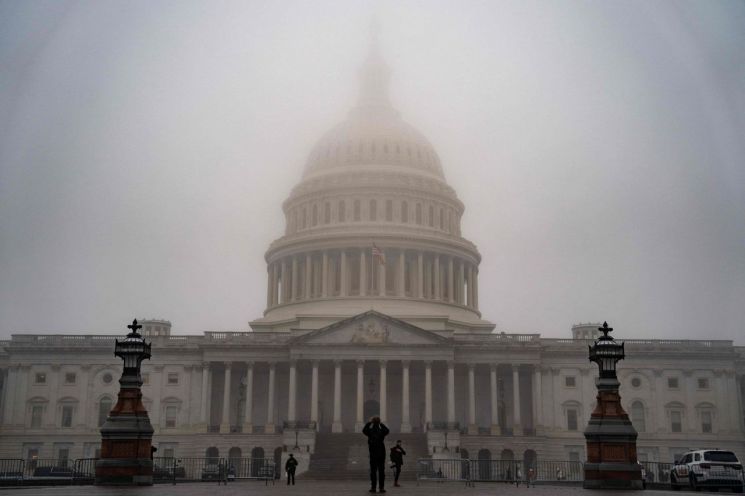
According to Politico and others on the 18th (local time), the congressional leadership agreed on a continuing resolution to fund the government through March 14 of next year. Typically, when Congress fails to pass budget bills for the next fiscal year's government operations on time, it drafts multi-month continuing resolutions to buy negotiation time. However, with the existing continuing resolution set to expire on the 20th, there were concerns about a potential shutdown before the Trump administration's inauguration.
The continuing resolution includes additional funding such as $100 billion for disaster relief and $10 billion for farmer support, exceeding the previous year's budget size. This has sparked opposition among hardline Republicans who advocate for fiscal austerity. Mike Johnson, Speaker of the House and a Republican, explained that the budget increase was unavoidable due to uncontrollable disasters like hurricanes that swept through the southeastern United States. He also emphasized that this continuing resolution is not a so-called "Christmas tree bill" loaded with unrelated provisions ahead of the end of the congressional session.
Elon Musk, who will lead efforts to downsize government organizations and cut budgets in the next administration, expressed opposition to the continuing resolution supported by Speaker Johnson on the morning of the same day. In a post on his social media platform X (formerly Twitter), he stated, "This bill must not pass." Former candidate Ramaswamy also said, "This budget is full of excessive spending, special interest favors, and pork-barrel politics," adding, "If Congress is serious about improving government efficiency, they should vote against it."
© The Asia Business Daily(www.asiae.co.kr). All rights reserved.

















