First Victory in US International Trade Court Lawsuit
Commerce Department Must Revise Basis of Decision and Submit Within 90 Days
The U.S. Court of International Trade (CIT) has ruled that there is insufficient evidence to support the U.S. Department of Commerce's claim that "Korea's cheap electricity rates effectively constitute government subsidies."
On the 17th (local time), the Ministry of Trade, Industry and Energy announced that the U.S. CIT primarily ruled in favor of the Korean government regarding the specificity determination in a lawsuit filed by Hyundai Steel, with the Korean government participating as a third party.
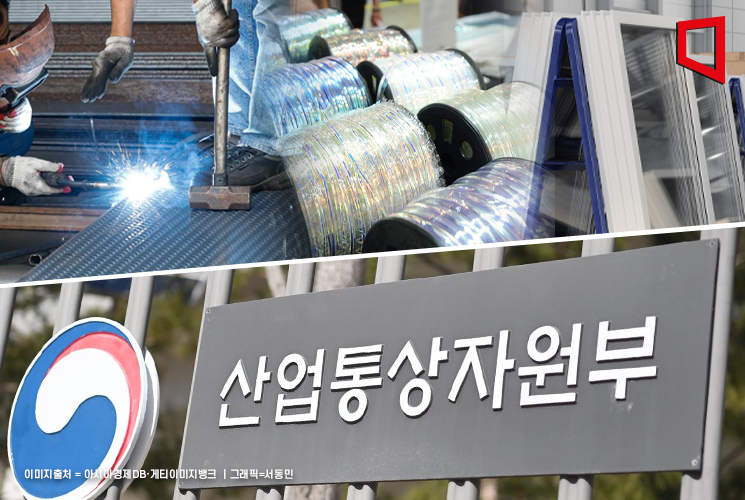
Previously, in September last year, the U.S. Department of Commerce issued a final determination to impose a 1.1% countervailing duty on hot-rolled steel plates (steel plates with a thickness of 6mm or more) exported to the U.S. by Hyundai Steel and Dongkuk Steel, citing Korea's low electricity rates as an issue. In response, in November of the same year, the Korean government, together with the companies, filed a lawsuit with the CIT challenging the Department of Commerce's ruling on the electricity rate issue.
Countervailing duties are measures imposed by an importing country to protect its domestic industry by levying tariffs on certain products when the exporting country provides direct or indirect subsidies or other benefits to those products, causing substantial injury to the importing country's industry. A Ministry of Trade, Industry and Energy official explained, "The Korean government actively developed new defense arguments through close consultations with companies and domestic and international law firms, as well as external advice regarding the lawsuit." He added, "Especially, ten days before the oral arguments, the ministry held four intensive strategy meetings, including mock trials, to meticulously prepare for the oral arguments."
Through this process, the Korean government pointed out that the U.S. Department of Commerce judged imbalance solely based on electricity consumption volume, but it is necessary to consider the overall situation, including relative figures. The ministry official said, "The CIT accepted our arguments," and explained, "There is insufficient evidence to regard Korea's electricity rates as subsidies as claimed by the Department of Commerce, and they have been asked to present evidence again."
The Department of Commerce must revise its existing determination related to specificity and resubmit it to the Court of International Trade within 90 days following this ruling. The Ministry of Trade, Industry and Energy plans to respond with full force to the countervailing duty issue on electricity rates throughout the upcoming procedures.
© The Asia Business Daily(www.asiae.co.kr). All rights reserved.
![From Hostess to Organ Seller to High Society... The Grotesque Scam of a "Human Counterfeit" Shaking the Korean Psyche [Slate]](https://cwcontent.asiae.co.kr/asiaresize/183/2026021902243444107_1771435474.jpg)
















