Office of Assemblyman Kang Seon-woo, Analysis of First-Year Resident Applicants for Next Year
Psychiatry Application Rate 27.6% · Plastic Surgery 24.7%
Next year's recruitment for first-year residents at training hospitals nationwide showed a low application rate in the 8% range, with only 2 applicants for thoracic surgery and just 1 for obstetrics and gynecology. Concerns are rising that the future supply of specialists in essential medical fields will face a severe shortage of personnel.
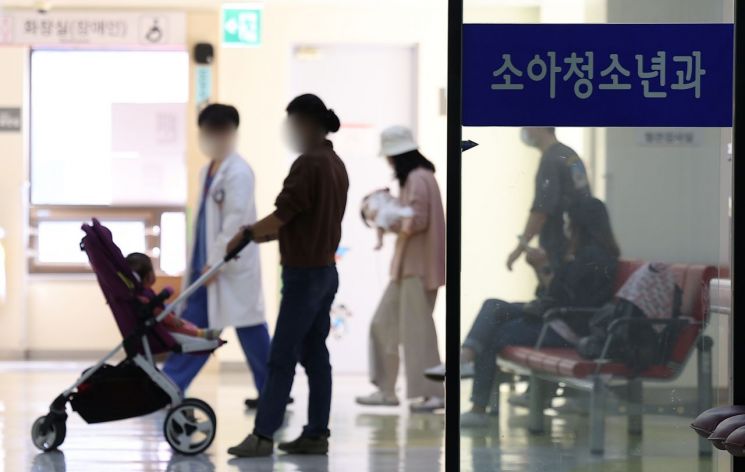
According to data on 'Resident Application Status by Medical Specialty' received on the 18th by the office of Kang Sun-woo, a member of the National Assembly's Health and Welfare Committee from the Democratic Party, from the Ministry of Health and Welfare, a total of 314 applicants applied for the first-year resident recruitment for the first half of 2025 at training hospitals nationwide, which closed on the 9th. Based on the originally planned total recruitment of 3,954, the overall application rate was 7.9%.
A resident refers to a doctor who, after graduating from medical school and completing a one-year internship rotating through various medical departments, undergoes additional clinical training in a specialized field to obtain specialist qualifications. Amid ongoing conflicts between the medical community and the government, the total number of resident applicants was very low, but among them, applications for essential medical specialties such as internal medicine, surgery, obstetrics and gynecology, and pediatrics were particularly low.
In obstetrics and gynecology, only 1 person applied for 188 recruitment spots. Pediatrics announced 206 recruitment spots but only 5 applied, resulting in an application rate of 2.4%. Internal medicine had 27 applicants out of 700 spots, an application rate of 3.9%, and surgery had 10 applicants out of 215 spots, recording 4.7%.
The lowest application rate was in radiation oncology, with zero applicants for 26 recruitment spots. Emergency medicine had an application rate of 3.1% (7 applicants out of 224 spots), and cardiovascular thoracic surgery had 3.0% (2 applicants out of 65 spots). Among essential medical specialties, neurosurgery had a relatively higher number of applicants, with 14 applicants out of 119 spots, an application rate of 11.8%.
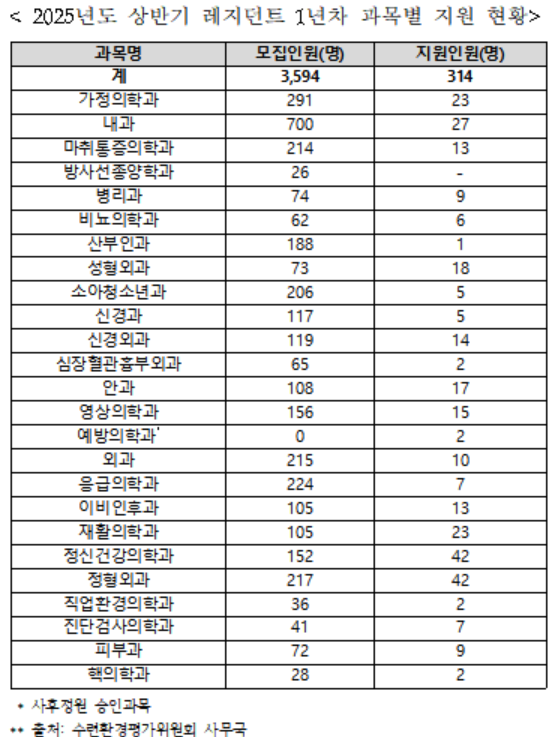
On the other hand, popular specialties had application rates exceeding 20%. Psychiatry, which attracted the most residents, had 42 applicants for 152 recruitment spots, showing an application rate of 27.6%. The plastic surgery residency, considered a representative popular specialty, had an application rate of 24.7% (18 applicants out of 73 spots), rehabilitation medicine had 21.9% (23 applicants out of 105 spots), and dermatology had 12.5% (9 applicants out of 72 spots).
Assemblyman Kang said, "The conflict between the current government and the medical community due to the emergency martial law and internal turmoil has become so entangled that it is difficult to resolve, only prolonging harm to the public." He added, "The shortage of residents in essential medical fields is directly related to the health and lives of the people, so parliamentary efforts such as strengthening support for essential medical care, establishing public medical schools, and introducing a regional doctor system are more important than ever for a prompt resolution."
© The Asia Business Daily(www.asiae.co.kr). All rights reserved.
![Clutching a Stolen Dior Bag, Saying "I Hate Being Poor but Real"... The Grotesque Con of a "Human Knockoff" [Slate]](https://cwcontent.asiae.co.kr/asiaresize/183/2026021902243444107_1771435474.jpg)

















