$617 Billion Invested in Advanced and Emerging Market Bond Funds
$500 Billion Surpassed 2021 Record
Bond Purchases Surge Ahead of Interest Rate Cuts
Uncertain Popularity in the 'Trump Era' Next Year
Funds Flowing into US Stock Market After Presidential Election
This year, nearly 900 trillion won flowed into global bond funds, marking an all-time high. As major countries around the world, including the United States, entered a monetary easing cycle, investors rushed to buy bonds.
However, it is uncertain whether bonds will continue to enjoy the same popularity next year. With expectations that the U.S. will pursue a policy of America First, global funds have already been moving quickly into the relatively more attractive U.S. stock market.
This Year, $617 Billion Net Inflow into Developed and Emerging Market Bond Funds
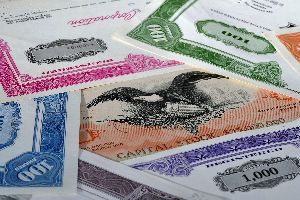
According to financial data provider EPFR's tally on the 17th (local time), a total of $617 billion (approximately 887 trillion won) flowed into developed and emerging market bond funds from the beginning of this year through mid-month. This far surpasses the previous record high of $500 billion in 2021.
This year has been called the "year of the global pivot" as many countries with stabilized inflation consecutively lowered their benchmark interest rates. Consequently, investors quickly purchased bonds. Typically, bond investment yields rise during periods of interest rate cuts. Bonds are financial products that pay fixed interest and have prices that fluctuate; when interest rates fall, demand for previously issued bonds with higher rates increases, leading to price appreciation. This effect is considered the main driver of this year's bond investment boom.
Specifically, passive exchange-traded funds (ETFs) that track "underlying indices" such as government bond prices attracted the largest inflows of $350 billion, marking a record high. According to Morningstar Direct, through October this year, BlackRock and Vanguard bond funds received $111 billion and $120 billion respectively.
Demand for corporate bonds was particularly higher than for government bonds. The bond yields of the ICE Bank of America (BoA) corporate bond index hit their lowest levels compared to risk-free government bonds, including U.S. Treasuries, since the 2007 financial crisis. This indicates that investors bought corporate bonds, supported by reduced corporate borrowing costs and strong earnings expectations. Willem Sels, Global Chief Investment Officer at HSBC, said, "Before interest rates rose a few years ago, many companies had to lock in funds for long periods."
Next Year Is Uncertain
However, it is unclear whether bonds will continue to be popular next year. The flow of funds moving into the stock market has already been observed following the announcement of America First policies by President-elect Donald Trump, who will take office next month.
According to TD Securities, $117 billion flowed into U.S. equity funds in the four weeks following the U.S. presidential election last month. This amount is more than four times the $27 billion that flowed into global bonds during the same period.
Moreover, if President-elect Trump's economic policies, such as large-scale tariffs, reignite inflation, the Federal Reserve's (Fed) interest rate cuts could be hindered, potentially damaging the bond market. A recent survey conducted by the University of Chicago Booth School of Business of 47 U.S. economists found that most expect the U.S. benchmark interest rate to be above 3.5% by the end of next year. In a September survey, most predicted it would fall below 3.5%, but with the so-called "Trump risk," expectations shifted to the Fed not cutting rates significantly.
Meanwhile, the balance of U.S. money market funds (MMFs), considered standby funds, also reached an all-time high. According to the Investment Company Institute (ICI), MMF assets totaled $6.47 trillion in October. More than $5 trillion flowed in this year alone. MMFs are funds primarily used to manage short-term funds and invest in short-term bonds and various financial products.
© The Asia Business Daily(www.asiae.co.kr). All rights reserved.
![Clutching a Stolen Dior Bag, Saying "I Hate Being Poor but Real"... The Grotesque Con of a "Human Knockoff" [Slate]](https://cwcontent.asiae.co.kr/asiaresize/183/2026021902243444107_1771435474.jpg)
















