Order Volume Halved Amid Trade Environment Uncertainty
Considering the Possibility of a Vance Administration in 10 Years
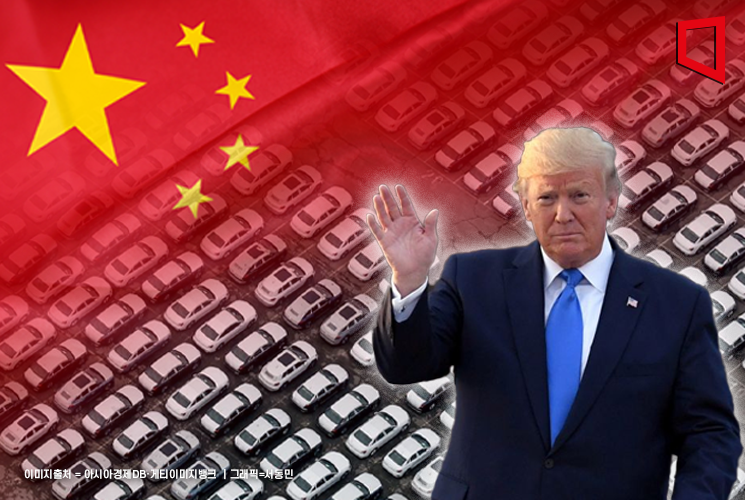
Chinese companies, alarmed by the 'tariff bomb' threat from President-elect Donald Trump, are seeking to fend for themselves by relocating production facilities and expanding their shares in European and domestic markets.
Bloomberg reported on the 17th that "as the self-proclaimed 'Tariff Man' Trump returns to the White House, Chinese company executives and factory managers are preparing for a second US-China trade war." During his campaign, Trump pledged to impose a 60% tariff on Chinese imports, and last month he announced an additional 10% tariff on China until issues such as fentanyl and other drug problems are resolved.
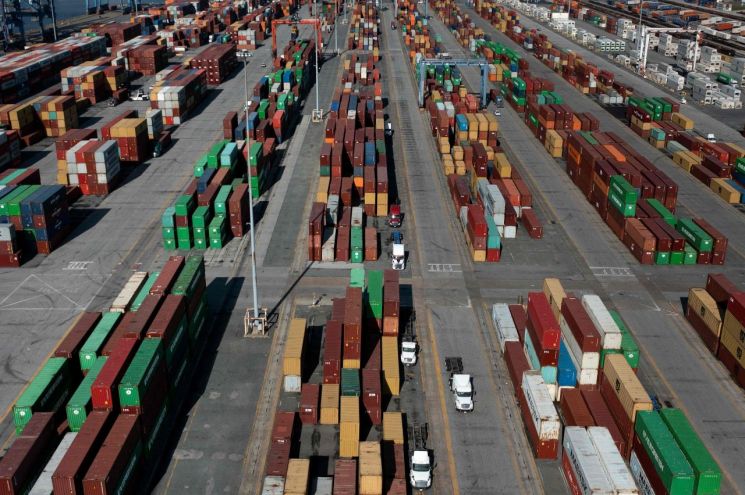
Superb International, a Chinese clothing manufacturer producing and selling hats, scarves, and gloves, is turning its attention to Europe in preparation for sales impacts in the US market, which accounts for 30-35% of its total exports. The company reported that US clients, who usually order around 10,000 to 20,000 products, have already halved their order volumes due to uncertainty.
It typically takes about two months from when a hat is produced to when it is shipped and delivered, and by then, it is difficult to predict how large a tariff President-elect Trump will impose after his inauguration. The company emphasized, "This is a harsh environment for our US customers with too many variables," adding, "Therefore, we need to pay more attention to Europe."
Some companies have chosen to expand their domestic market share instead of going overseas. Dawang Metal, a metal casting company with half of its sales in the US, stated, "Currently, overseas profits are higher, so we mainly export, but if the situation worsens, we can refocus on Chinese customers who are willing to place large orders."
Metal casting is an energy-intensive manufacturing process, and since raw materials like metal and casting sand must be sourced in China, relocating production facilities is considered less advantageous. Bloomberg noted that tariff increases could actually reduce the price competitiveness of US companies reliant on Chinese raw materials, highlighting "the limitations of Trump's plan to encourage companies to open stores in the US through tariff barriers."
There are also cases of reluctant offshoring. An anonymous Chinese sports goods manufacturer planned a factory in Vietnam during Trump's first administration, which is scheduled for completion next year. A company representative said the factory will produce products for export to Europe and the US, adding, "We have the means to fight against tariffs." However, they also noted, "Considering the possibility of far-right forces gaining power in major European countries such as France, Germany, Italy, and the Netherlands, leading to protectionist measures, we are preparing for the worst-case scenario and seeking the best solution."
A health products company, which lost market share after not lowering prices despite tariffs during Trump's first term, is building a new factory in Eastern Europe. The company is also considering relocating production facilities to the US in response to Trump’s proposed 10-20% universal tariffs and is preparing to explore sales in Southeast Asia and South America.
An executive responsible for investment and development at the company emphasized that the company is planning not only for the next four years but also for the "decade ahead," taking into account the possibility that JD Vance, the vice-presidential candidate, might succeed Trump’s torch in 2028.
© The Asia Business Daily(www.asiae.co.kr). All rights reserved.


















