"Immunity Privilege Applies to Guilty Verdict" Trump Claim Dismissed
Sentencing Schedule Still Uncertain
The court has put a stop to the claim that the guilty verdict received by U.S. President-elect Donald Trump in the 'hush money for sexual misconduct' trial was nullified by the federal Supreme Court's recognition of immunity.
According to the Associated Press and others on the 16th (local time), Judge Juan Merchan of the New York Manhattan Criminal Court dismissed the Trump camp's argument that the jury's guilty verdict against President-elect Trump in the 'hush money for sexual misconduct' trial should be invalidated due to the federal Supreme Court's recognition of immunity.
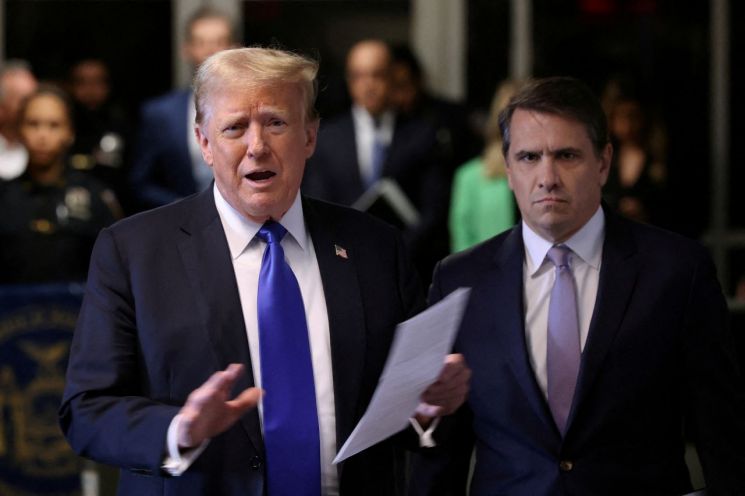
The court explained the reason for its decision, stating that the criminal prosecution against President-elect Trump was "based on clearly personal acts of falsifying business records, which pose no risk of interfering with the authority and functions of the executive branch." This means the prosecution's argument that falsifying business records is a personal act unrelated to the president's official duties and therefore not subject to immunity was accepted.
Earlier, President-elect Trump was tried on charges of falsifying company records related to paying $130,000 (about 170 million won) to former adult film actress Stormy Daniels through his personal lawyer to prevent the disclosure of a past sexual relationship just before the 2016 presidential election, and in May, the jury unanimously found him guilty.
However, after President-elect Trump won the election on the 5th of last month, the prosecution requested a suspension of the trial to review the legal implications of the changed circumstances, and the court accepted this. After the election, the New York State prosecution requested the state court to uphold the guilty verdict in this case but to refrain from sentencing imprisonment so as not to interfere with President-elect Trump's performance of presidential duties. The court has indefinitely postponed sentencing.
President-elect Trump is the first former president to be found guilty of a felony in a criminal trial and the first person to be elected president despite a guilty verdict. Besides the 'hush money for sexual misconduct' trial, three other criminal trials were pending, but two cases?'attempt to overturn the 2020 election results' and 'leak of classified documents'?had their indictments withdrawn on the 25th of last month. The case regarding 'pressure on Georgia's 2020 election vote count' remains, but it is also likely to fizzle out.
In July, the U.S. Supreme Court, during the review of President-elect Trump's federal law violation case, recognized broad immunity, stating that not only is the president not criminally liable for official acts, but also that evidence related to official acts should not be presented to jurors even in trials concerning the president's personal acts.
Based on this, President-elect Trump's side has argued that immunity should be recognized for all four criminal cases pending in state and federal courts. Trump has claimed that the criminal charges against him are 'political purges' and threatened to dismiss Special Counsel Jack Smith "within 2 seconds" after taking office. The Attorney General has the authority to dismiss criminal cases pending in federal courts.
© The Asia Business Daily(www.asiae.co.kr). All rights reserved.

















