Research on Improving Intertidal Zone Environment Using Oyster Shells
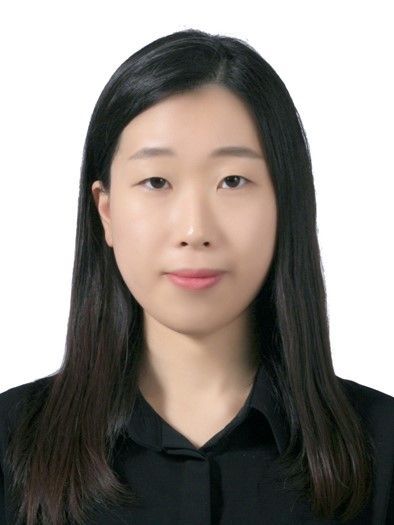
Dr. Hee-Eun Woo, a postdoctoral researcher at Pukyong National University (President Sang-Hoon Bae) in the Department of Ocean Engineering and the LAMP Project Group, received the Paper Award from the Korean Society of Marine Environment & Energy for her research on environmental improvement of clayey sediments using oyster shells.
Researcher Woo was recognized for her paper titled "A Study on the Changes in the Specificity of Clayey Intertidal Sediments Covered with Oyster Shells," presented at the Korean Society of Marine Environment & Energy Autumn Conference held recently at the Ramada City Hotel in Jeju, and received the Paper Award.
In this study, conducted with co-author Professor Jong-O Kim (Department of Microbiology) and corresponding author Professor Kyung-Hoe Kim (Department of Ocean Engineering), she revealed the results of permeability tests on clayey sediments covered with oyster shells to investigate the effect of oyster shells on improving the permeability of clayey coastal sediments.
The intertidal zone is a space where surface water and groundwater interact due to tidal influences, causing periodic changes in water quality. Clayey sediments have low permeability, which hinders groundwater flow, leading to the accumulation of pollutants and environmental pollution in clayey intertidal zones. To improve this, methods to increase sediment permeability and activate groundwater flow have been studied.
Researcher Woo prepared samples by covering the sediment surface with crushed oyster shells and sand, then calculated the permeability coefficient by injecting deionized water onto the samples.
The experimental results showed that the permeability coefficient of oyster shells was more than twice as high as that of sand. This was analyzed to be due to the increased cohesion of clay particles caused by calcium ions eluted from the oyster shells.
Additionally, applying oyster shells was found to chemically affect the sediments by changing pH, redox potential, and nutrient concentrations along with the increase in permeability.
She stated, "Although South Korea ranks second in the world in oyster production, the rapid growth of the oyster farming industry has made the disposal of oyster shells left along the coast a critical issue. This research confirmed the potential to utilize oyster shells for environmental improvement."
© The Asia Business Daily(www.asiae.co.kr). All rights reserved.
![Clutching a Stolen Dior Bag, Saying "I Hate Being Poor but Real"... The Grotesque Con of a "Human Knockoff" [Slate]](https://cwcontent.asiae.co.kr/asiaresize/183/2026021902243444107_1771435474.jpg)
















