President Yoon Suk-yeol has become the first sitting president in history to receive a summons notification from an investigative agency as a suspect. President Yoon is being identified as the 'ringleader of the rebellion' responsible for the December 3 emergency martial law incident.
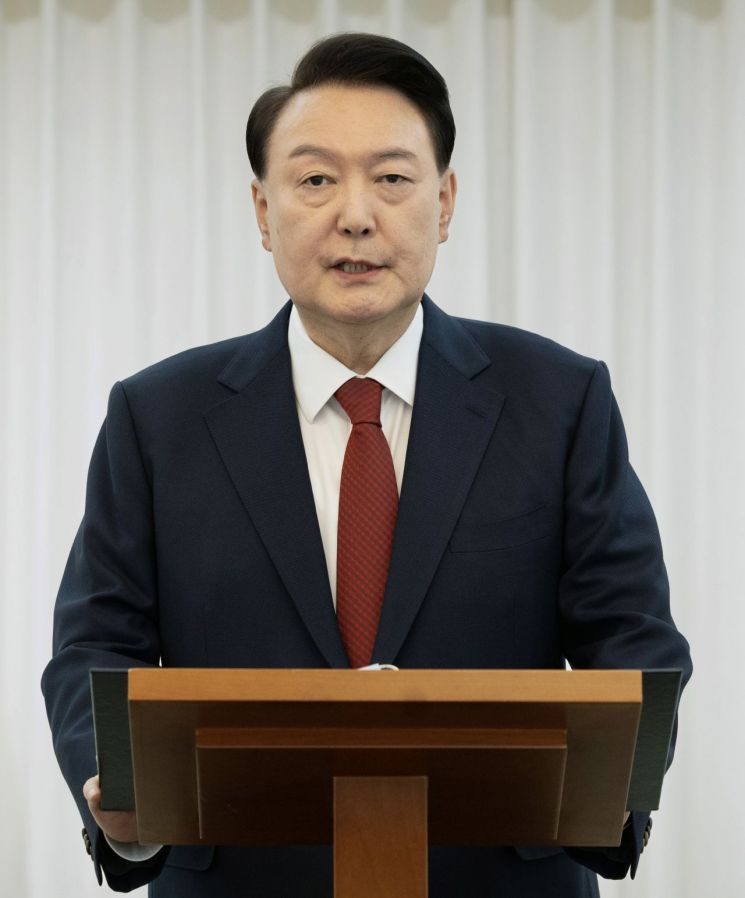
On the 15th, the Special Investigation Headquarters for Emergency Martial Law (headed by Park Se-hyun, Seoul High Prosecutors' Office Chief Prosecutor) notified President Yoon to appear at 10 a.m. on the 15th, but stated that President Yoon did not comply. President Yoon is a complainant and suspect accused of rebellion under the Criminal Act and obstruction of the exercise of rights by abuse of authority.
This is the first time in constitutional history that prosecutors have issued a suspect summons to a sitting president. Including former presidents, this is the sixth case following former Presidents Roh Tae-woo, Chun Doo-hwan, Roh Moo-hyun, Park Geun-hye, and Lee Myung-bak. In the case of former President Park, the summons was issued after the Constitutional Court's dismissal decision on March 10, 2017, and the actual investigation took place 11 days later on March 21.
President Yoon’s duties were suspended after the impeachment motion was passed in the National Assembly on the 14th, but he still retains the status of president. Protocols such as security and ceremonial honors for the president remain unchanged.
Notably, the prosecutors sent the summons to President Yoon on the 11th, before the impeachment motion was passed in the National Assembly. On the 12th, the day after the summons, President Yoon issued a statement asserting that "the president's authority to declare emergency martial law is not subject to judicial review," which can be interpreted as his refusal to comply with the prosecutors' summons.
The prosecution plans to issue a second summons as early as the 16th. Considering security, protection, and his current residence, they plan to summon President Yoon to the Seoul Central District Prosecutors' Office for investigation. President Yoon previously served as the chief prosecutor of the Seoul Central District Prosecutors' Office during his tenure as a prosecutor.
It is uncertain whether President Yoon will comply with the prosecution’s summons. The prosecution refrained from commenting on whether President Yoon provided reasons for his absence. If he refuses to appear without a valid reason, it is highly likely that the prosecution will obtain an arrest warrant to forcibly secure his custody.
Meanwhile, the Special Investigation Unit of the National Police Agency is also considering requesting President Yoon’s appearance, and the debate over investigative authority concerning the charge of rebellion remains unresolved. If multiple investigative agencies simultaneously request President Yoon’s appearance, it could lead to controversy, as President Yoon might appear to be 'choosing' which investigative agency to respond to.
© The Asia Business Daily(www.asiae.co.kr). All rights reserved.

















