Amid increasing uncertainty in the martial law and impeachment political situation, financial authorities announced that more than 27 trillion won of funds remain sufficient as of the end of last month to stabilize the bond and short-term money markets. There have been calls for the need to swiftly implement policy support for key industries such as semiconductors and petrochemicals in the challenging global trade environment to strengthen industrial competitiveness.
According to the Financial Services Commission on the 15th, a financial market issue review and communication meeting, chaired by Vice Chairman Kim So-young, was held on the afternoon of the 13th at the Korea Federation of Banks in Jung-gu, Seoul. At the meeting, experts from the financial sector, credit rating agencies, and academia reviewed prospects for major industries next year and macroeconomic conditions, exchanging opinions.
Vice Chairman Kim said, "There has been some increase in financial market volatility since December," but added, "The recent series of events are exceptional and temporary shocks rather than structural problems of the Korean economy, so the financial market is expected to gradually stabilize."
The meeting participants also agreed that the financial market is stabilizing. They noted that although volatility increased somewhat due to recent events, the KOSPI index rose 2.73% last week, recovering to the level at the end of last month. They also diagnosed that volatility in the foreign exchange market is easing and foreign capital is not showing any significant signs of withdrawal.
They collectively stated, "Because our economy and financial market have solid fundamentals and sufficient resilience, the impact of this temporary shock is expected to be fully overcome." They advised that future focus should be placed more on fundamental economic issues such as ▲stable management of national debt ▲revival of domestic demand and economic vitality ▲responding to demographic changes and improving potential growth rates.

Vice Chairman Kim also mentioned, "After overcoming the immediate shock, it is important to address downside risks to the economy and structural economic issues," adding, "In this regard, 2025 will be a very important year for the Korean economy." Many institutions are raising concerns about downside risks to the economy next year, and overcoming these risks and operating the macroeconomy and financial markets stably is a top priority.
Accordingly, Vice Chairman Kim stated, "The government is doing its best to carry out what it must and can do without any setbacks." Regarding the currently operating bond and short-term money market stabilization program worth a total of 40 trillion won, he said, "In November, measures were taken to operate related programs until the end of next year," and "Liquidity is being supplied through these programs when there is market demand." He also said, "If necessary, the government will promptly expand the scale of existing programs and operate market stabilization programs in line with the government's announced liquidity supply policy."
According to the Financial Services Commission, as of the end of last month, more than 27 trillion won of funds remain for stabilizing the bond and short-term money markets, including about 14.4 trillion won in the Bond Market Stabilization Fund (Cha-an Fund) and about 8.1 trillion won in policy financial institutions' corporate bond and commercial paper (CP) purchase programs. Recently, the bond and short-term money markets have maintained stability, so the demand for program utilization is not large, and the programs are being operated at a normal level. When the 2.8 trillion won '2025 Primary Collateralized Bond Obligation (P-CBO) Supply Program' is launched early next year, the available supply funds are expected to increase further.
Vice Chairman Kim said, "The important aspect of market stabilization programs is not the execution performance but whether sufficient supply capacity can be secured to help during crisis phases and how flexibly the programs can respond to market demand," adding, "Going forward, programs will be operated under the principle of maintaining normal market functions while having sufficient response capacity in times of crisis." He also mentioned, "There has been significant progress in important tasks such as recent benchmark interest rate reform, and the policy financial supply plan for next year will be announced before the end of the year."
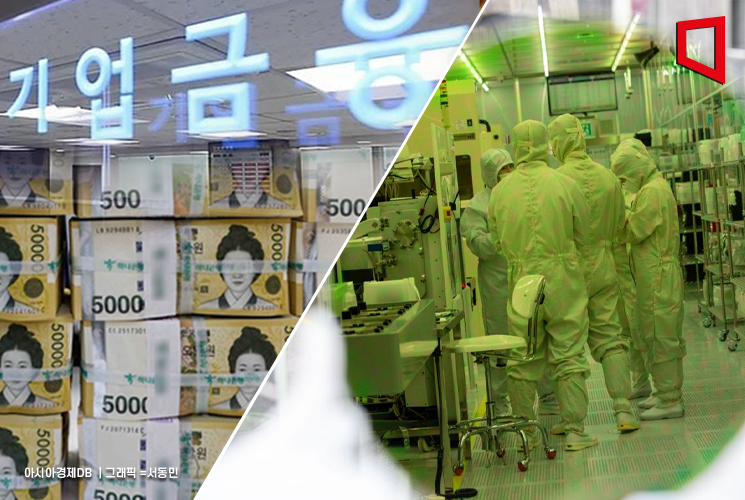
Following Vice Chairman Kim's identification of strengthening industrial competitiveness as one of next year's important tasks, meeting participants discussed the outlook for major industries such as semiconductors and petrochemicals next year. Regarding the semiconductor industry, they evaluated that artificial intelligence (AI) will be a major driving force leading the global semiconductor market next year. Considering that Korean companies hold technological leadership in the high-bandwidth memory (HBM) market and the possibility of demand recovery for general-purpose products such as smartphones and PCs due to China's government stimulus, the Korean semiconductor industry is expected to maintain a favorable trend next year. However, some risk factors exist, such as the possibility that the Trump administration might withdraw semiconductor subsidies and intensified competition with Chinese memory semiconductors.
For the petrochemical industry, it was explained that the business conditions have recently been sluggish. This is due to China expanding its facilities and increasing self-sufficiency, as well as the emergence of new competitors from the Middle East. However, it is expected that Korean companies may regain price competitiveness next year due to changes in geopolitical situations. With new markets such as India and Southeast Asia growing rapidly, there are opportunities for the petrochemical industry to recover from recent sluggishness.
Meeting participants forecast that ▲changes in Trump’s second-term economic policies such as tariff imposition and subsidy elimination ▲intensified competition with China in Korea’s key industries will significantly impact the performance of major industries in the future. They expressed the opinion that the government needs to continuously communicate with the industrial sector and swiftly implement necessary policy support so that Korean companies can respond nimbly to these factors.
Additionally, the participants emphasized that for the Korean economy to achieve sustainable growth in the mid to long term, idle funds should flow into productive sectors such as advanced and venture industries rather than unproductive areas like real estate, thereby strengthening industrial competitiveness. They advised that consistent continuation of capital market advancement efforts such as the value-up program promoted by the government, as well as macroprudential policies like debt management, is necessary, along with actively pursuing more bold regulatory reforms.
Vice Chairman Kim said, "We are deeply considering what more finance can do to strengthen industrial competitiveness," adding, "The opinions presented at the meeting will be sufficiently reflected in policy decision-making." He continued, "Next year, we will continue to hold issue review and communication meetings to gather diverse opinions from various sectors and communicate with market participants, so we hope for candid advice."
© The Asia Business Daily(www.asiae.co.kr). All rights reserved.
![Clutching a Stolen Dior Bag, Saying "I Hate Being Poor but Real"... The Grotesque Con of a "Human Knockoff" [Slate]](https://cwcontent.asiae.co.kr/asiaresize/183/2026021902243444107_1771435474.jpg)












