Korean Film Archive Revisits History of Cinematheque Culture
Documenting Filmmakers' Experiences and Organizing Based on Collected Materials
The heyday of cinematheques was in the 1990s. They captivated young movie enthusiasts. Representative examples include Yeonghwa Gonggan 1895, Xiangxi?, Munhwa School Seoul, Yeonghwa Sarang, Shin Pyohyeon, Yeonghwa Yeonguso OFIA, Cheonan Yeonghwa Gongbang, Busan Cinematheque 1/24, and Yeonghwa-ro Sesangbogi. Many directors such as Bong Joon-ho and Ryu Seung-wan studied films and exchanged information while encountering monumental movies.
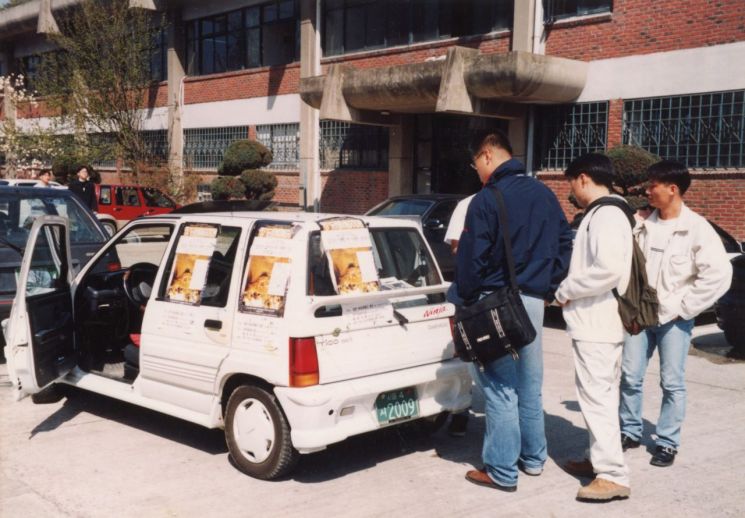
On the 10th, the Korean Film Archive revisited the history of cinematheque culture by releasing a collection on the Korean Movie Database (KMDb). This includes 'Changes in Film Culture and Activities of Private Cinematheques,' which records cinematheque experiences through interviews with filmmakers, and the '1990s Film Culture Movement Collection,' organized mainly from materials held by the Korean Film Archive. It reflects on the film culture movement that became the foundation of K-content and highlights the cinematheque activities at its core.
'Changes in Film Culture and Activities of Private Cinematheques' involved nine film professionals, including popular culture researcher Lee Young-mi, Ha Young, CEO of Haha Films, writer Son Ju-yeon, and Kim Young-duk, chairman of the Asia Contents & Film Market at the Busan International Film Festival. It reviews cinephile culture formed through cultural centers in the late 1970s, private cinematheques that emerged in the 1980s, and the operation and screening programs of cinematheques in the 1990s. A representative from the archive explained, "It shows that cinematheques were more than just places for film screenings; they were starting points for independent film production and distribution and catalysts for new film culture."
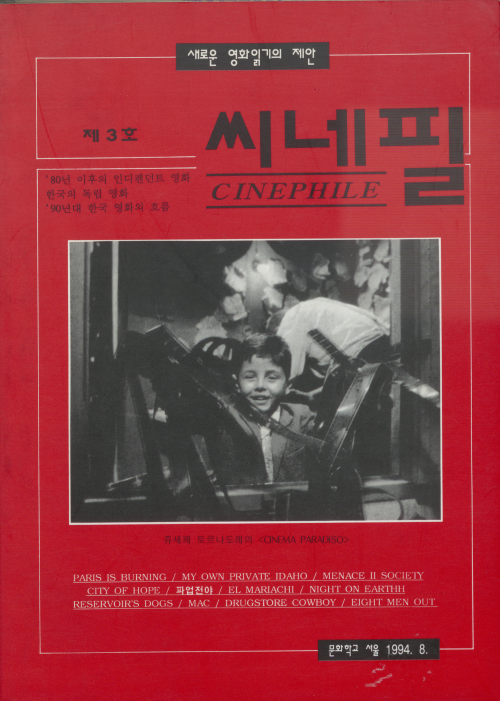 Director Ryu Seung-wan donated the bimonthly cultural school Seoul critique magazine 'Cinephile' to the Korean Film Archive.
The '1990s Film Culture Movement Collection' highlights Munhwa School Seoul and Daejeon Cinematheque Cult. The former was a cinematheque operating from 1991 to 2003. It began as an educational organization. The late Choi Jeong-woon, a Korean medicine doctor, registered it as an 'academy business.' As young people interested in short film production frequented the place, it gradually developed into a film study group. By introducing films from various directors such as Leos Carax, Jim Jarmusch, and Ang Lee, word of mouth spread, and the cumulative membership grew to 3,500. A representative from the archive said, "It was a sacred place for film maniacs and truly like a 'school' where people studied and discussed films."
The latter was a screening space created with the help of Cheonan Yeonghwa Gongbang. It grew larger as the nationwide film club 'Yeonghwa Sesang,' based in Daejeon, took over operations. Members exchanged information and held regular film screenings, attracting attention. The archive representative added, "It contributed to the development of film culture in the Daejeon area, having premiered Lars von Trier's 'The Kingdom' in Daejeon in 1998."
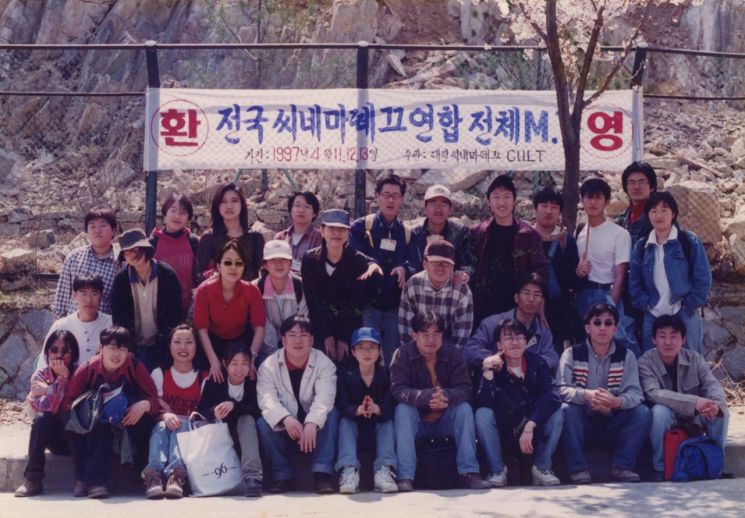
The Film Archive will continue to collect various materials related to the Korean film culture movement next year. Although it was only 30 to 40 years ago, the culture of theaters, cinematheques, and viewing has changed faster than expected, increasing the need for documentation and preservation. A representative from the archive said, "The materials released this time are close to an interim settlement," adding, "We hope that more materials will be gathered to create a bigger picture."
© The Asia Business Daily(www.asiae.co.kr). All rights reserved.
![Clutching a Stolen Dior Bag, Saying "I Hate Being Poor but Real"... The Grotesque Con of a "Human Knockoff" [Slate]](https://cwcontent.asiae.co.kr/asiaresize/183/2026021902243444107_1771435474.jpg)


















