Donald Trump, the President-elect of the United States, is reportedly considering military actions, including airstrikes, to prevent Iran's nuclear development.
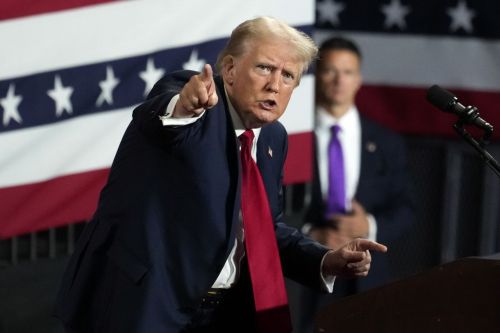
The American daily The Wall Street Journal (WSJ) reported on the 13th (local time), citing multiple sources, that a faction within Trump’s transition team is seriously considering options such as airstrikes on Iran’s nuclear facilities.
These discussions appear to have gained momentum recently as Iran’s nuclear development progress has become known and Iran’s regional influence has weakened due to the collapse of the Syrian Bashar al-Assad regime.
Currently, two options are reportedly under discussion. One is to increase pressure by deploying more U.S. troops, fighter jets, and naval vessels in the Middle East. The U.S. may also choose to sell advanced weapons to Israel sufficient to neutralize Iran’s nuclear facilities. Combined with economic sanctions, this could instill the perception in Iran that there is no alternative but a diplomatic solution.
The other option is to combine economic sanctions with military threats to bring Iran to the negotiating table. However, WSJ noted that the first Trump administration used this strategy with North Korea but ultimately failed.
Some argue that the first month after Trump’s inauguration is a rare opportunity to respond to Iran’s nuclear program. They suggest taking advantage of the weakened “axis of resistance” due to war with Israel and the collapse of the Assad regime in Syria, which has reduced Iran’s regional influence. Mark Dubowitz, head of the conservative American think tank Foundation for Defense of Democracies (FDD), said, “If you are actually going to do something to neutralize the nuclear threat, this (military option) would be it.”
The Israeli government did not respond to requests for comment on this matter, but it is known that Trump expressed concerns during a phone call with Prime Minister Benjamin Netanyahu about the possibility of an Iran nuclear crisis occurring during his term. Until now, Israel has refrained from attacking Iran’s nuclear facilities due to U.S. restraint, but this stance could change during Trump’s second term.
The Trump transition team’s consideration of military options appears to be influenced by the possibility of assassination attempts by Iran. The transition team has already declared that the next administration will implement a “maximum pressure 2.0” policy against Iran. In this context, the revelation that Iran attempted to assassinate Trump has led to calls for measures stronger than economic and financial pressure.
However, WSJ pointed out that once the next Trump cabinet gains access to classified intelligence and discussions with allies such as Israel progress, the options regarding Iran could change. It also suggested that Trump might prefer plans that avoid triggering a new war involving U.S. troops.
Iran’s response is also a factor to consider. Iran has long declared that its response to attacks would be to expel UN inspection teams and withdraw from the Nuclear Non-Proliferation Treaty (NPT).
© The Asia Business Daily(www.asiae.co.kr). All rights reserved.

















