Victor Cha, CSIS Korea Chair, Interview
"Leadership Vacuum to Face Trump"
Criticism of Yoon's Diplomacy, Opposition Impeachment Proposal: "Not Grounds for Impeachment"
An analysis by U.S. experts on the Korean Peninsula suggests that the political turmoil and leadership vacuum caused by South Korea's emergency martial law situation and impeachment crisis could negatively impact the South Korea-U.S. alliance after the inauguration of U.S. President-elect Donald Trump in January next year.
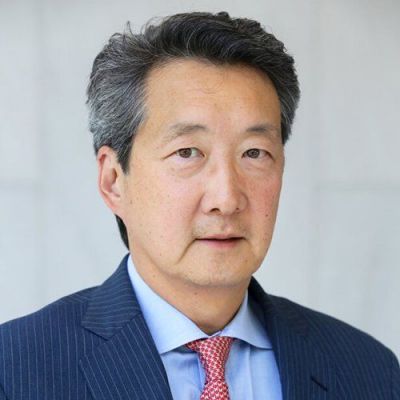
Victor Cha, Korea Chair at the Center for Strategic and International Studies (CSIS), expressed concern on the 12th (local time) during an online discussion hosted by CSIS, stating that the current situation in South Korea could represent "the worst-case scenario for the start of the Trump administration's second term and the South Korea-U.S. alliance."
Cha mentioned that he met with former aides of President-elect Trump the previous day and said, "They indicated that many issues could arise affecting South Korea not in Trump's first 100 days, but within the first 100 hours," adding, "This could relate to the U.S. Forces Korea, tariffs, and the CHIPS and Science Act (CSA)." He further noted, "Personal bonds between leaders are very important, but South Korea lacks someone to handle these matters, and this situation could persist for a long time," forecasting, "It could extend beyond summer, which would be a very bad scenario."
He predicted that President-elect Trump would impose tariffs on South Korea, which has a large trade surplus with the U.S., shortly after taking office. Previously, Trump pledged to impose a universal tariff of 10-20% on all imports.
Cha stated, "This combination (universal tariff pledge and South Korea's trade surplus with the U.S.) almost certainly means tariffs of over 10% on South Korea," and predicted, "Tariffs will definitely be imposed before South Korea regains leadership." He added, "Everyone is going to Mar-a-Lago or the White House to attempt individual negotiations, but the problem is that South Korea has no one capable of doing that."
He also expressed concern about the diplomatic and security policy confusion and decline in South Korea's standing caused by the current martial law situation. The U.S. has long regarded South Korea, which shares democratic values, as a key ally in the Indo-Pacific region to counter China. President Yoon Suk-yeol has especially achieved improvement in South Korea-Japan relations, which the U.S. has strongly desired, thereby establishing a South Korea-U.S.-Japan trilateral cooperation system.
Cha pointed out, "South Korea has been a very important player in the region, but without leadership, its standing could easily disappear and revert to a few years ago," adding, "This would make the region economically and security-wise vulnerable and is generally bad for South Korea and its alliances." Regarding the opposition party's criticism of President Yoon's foreign policy in the impeachment motion, he remarked, "I'm not a constitutional expert, but that is not a valid reason for impeachment."
Earlier, Sid Saylor, former North Korea director at the U.S. National Intelligence Council (NIC), noted that if the opposition party comes to power due to this situation, South Korea-U.S.-Japan cooperation could be shaken, and the new government might attempt a mediator role in North Korea-U.S. relations, calling it "an unsettling sign hinting at the worst-case scenario."
© The Asia Business Daily(www.asiae.co.kr). All rights reserved.
![Clutching a Stolen Dior Bag, Saying "I Hate Being Poor but Real"... The Grotesque Con of a "Human Knockoff" [Slate]](https://cwcontent.asiae.co.kr/asiaresize/183/2026021902243444107_1771435474.jpg)











