#. Mr. A, who moved into a new apartment in Seoul, experienced a dispute with the construction company over repairs in the laundry room. Mr. A found it difficult to place a dryer in the narrow laundry room and requested the construction company to install the necessary laundry facilities on the master bedroom balcony, which is wider than the laundry room. The construction company proposed a method to widen the laundry room, leading to differing opinions between Mr. A and the company. The Defect Inspection and Dispute Mediation Committee mediated that the construction company should widen the laundry room as proposed, and also pay damages to Mr. A for the losses incurred due to being unable to use the dryer.
On the 13th, the Ministry of Land, Infrastructure and Transport announced the publication of the "Defect Inspection and Dispute Mediation Casebook (2024 Edition)" containing cases of defect disputes in multi-family housing. The casebook aims to facilitate the resolution of defect issues between residents and managers.
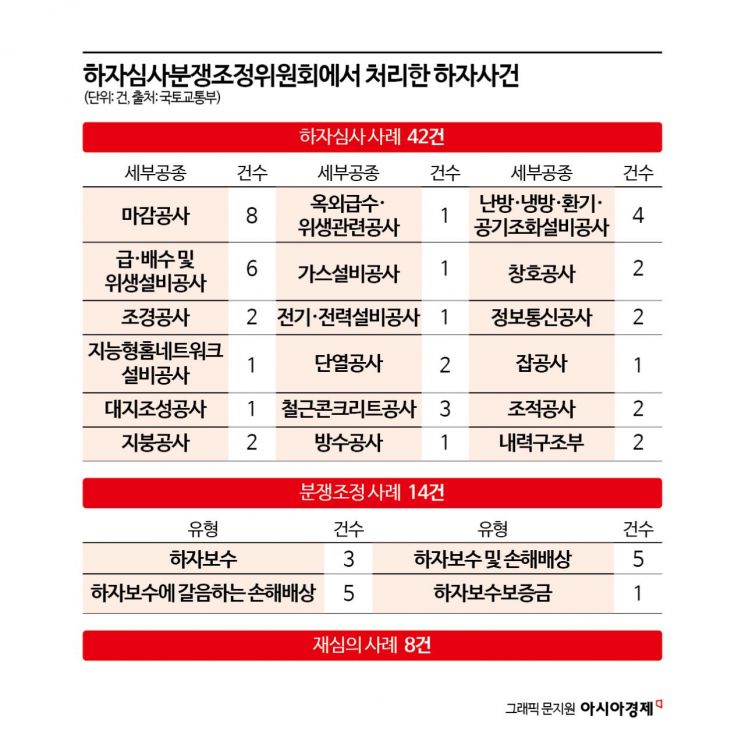
The casebook includes 64 cases resolved by the Defect Inspection and Dispute Mediation Committee since 2022, comprising 42 defect inspections, 14 dispute mediations, and 8 re-examinations. It covers major defect types and detailed resolution processes. Notably, defects are categorized into 18 detailed construction processes, and photos are included to help readers easily understand the cases.
Through this publication, the Ministry plans to encourage parties involved in defect disputes to apply to the Defect Inspection Committee instead of pursuing court litigation. Residents can use the casebook as a reference during pre-move-in inspections of new apartments. Additionally, construction companies can prevent defects by thoroughly addressing vulnerable areas based on the cases.
For example, bathroom tiles are a common defect item. Infrared camera inspections by the committee revealed that the mortar area was smaller than the tile area, causing tiles to sag or fall off frequently. Also, kitchen sinks in rooms are judged defective if the water pressure is below the minimum standard.
The committee generally sets a repair period within 60 days for cases judged as defects. If the project entity fails to fix the defects within this period, local governments impose fines of up to 10 million KRW on the project entity.
Starting from the 13th, the Ministry will distribute the casebook to the Korea Housing Builders Association, Housing Management Association, local governments, and others. The casebook is also easily accessible to anyone via the Ministry’s website (Policy Data → Policy Information → Housing and Land) or the Defect Management Information System (Information Plaza → Notices).
© The Asia Business Daily(www.asiae.co.kr). All rights reserved.

















