As winter break approaches, American universities are advising international students to return to campus before January 20 next year (local time), the inauguration day of President-elect Donald Trump. This is due to concerns that a renewed travel ban, similar to the one imposed on certain countries during Trump's first term, could make it difficult for students who visit their home countries to re-enter the United States.
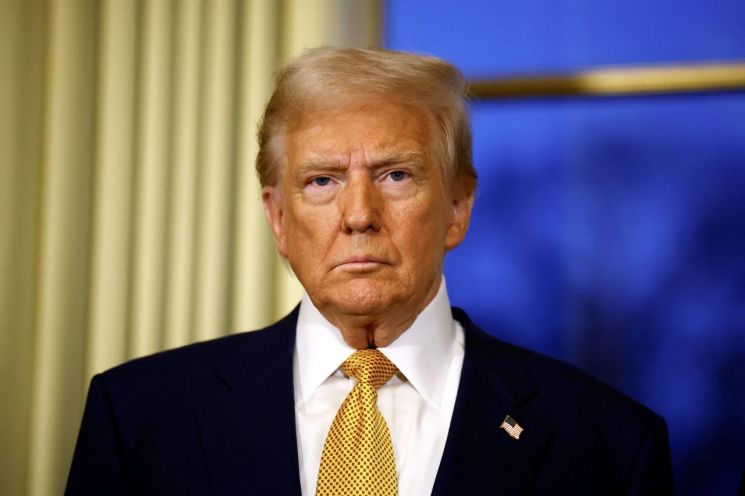
According to the New York Times (NYT) and others on the 11th, universities including Harvard University, University of Southern California (USC), Cornell University, University of Massachusetts Amherst, Massachusetts Institute of Technology, University of Pennsylvania (UPenn), and Wesleyan University have issued such advisories or guidelines ahead of the winter break, when many international students travel home.
The Cornell Global Learning Office stated on its website at the end of last month that "there is a high possibility that a travel ban will take effect immediately after the (Trump) inauguration," and advised students to return to the U.S. before the spring semester classes begin on January 21. The office mentioned that the ban is likely to include nationalities targeted during the first term, such as Kyrgyzstan, Nigeria, Myanmar, Sudan, Tanzania, Iran, Libya, North Korea, Syria, Venezuela, Yemen, and Somalia. It also warned that China and India could be added to the list.
Harvard University also noted on its website's "Essential Information for Winter Travel" page that "since the last message in early November (after the election), many have asked about potential changes in immigration policy. We are closely monitoring the situation," and emphasized, "For those concerned about possible disruptions in returning to campus after the break, our repeated advice is to allow enough time before Martin Luther King Jr. Day." Martin Luther King Jr. Day is observed on the third Monday of January each year, which in 2025 coincides with Trump's inauguration day, January 20. Harvard also added that undergraduate dormitories will all open from January 17.
Prior to this, USC, UPenn, and Wesleyan University also strongly urged all international students, faculty, and staff holding student or visitor visas to seriously consider returning to the U.S. before the inauguration through travel advisories. USC stated, "The new administration inaugurated on January 20 may issue one or more executive orders affecting U.S. travel and visa policies," and emphasized, "While it is uncertain what executive orders will be issued, the safest approach is to be in the U.S. beforehand."
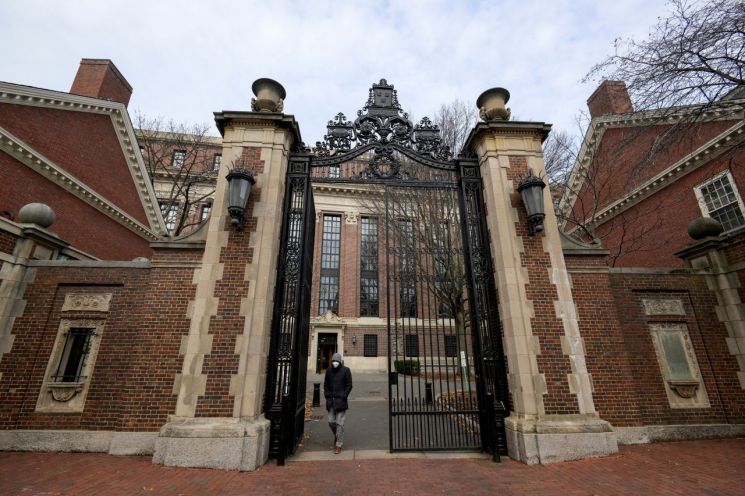
This reflects the significant concerns on campuses ahead of the inauguration of President-elect Trump, who has advocated for stricter immigration policies. During Trump's first term in 2017, the U.S. banned entry from countries with large Muslim populations, including Iran, causing chaos at airports. Thousands of the approximately 17,000 international students studying in the U.S. at the time were unable to enter. The executive order was temporarily halted by lawsuits and was rescinded after President Joe Biden took office in 2021.
Notably, President-elect Trump has pledged during this year's campaign to reinstate these policies if re-elected. Professor Chloe East of the University of Colorado Denver told BBC, "All international students are worried right now," adding, "Many students are concerned about their visas and whether they can continue their studies." Currently, universities in the U.S. are also advising international students to prepare for the possibility of related paperwork processing delays.
According to the Open Doors data project supported by the U.S. Department of State, over 1.1 million international students were enrolled in U.S. universities for the 2023?2024 academic year. By nationality, India ranked first with 331,602 students, followed by China with 277,398. The NYT noted that Indian and Chinese students combined account for about half of all international students. South Korea ranked third with 43,149 students, followed by Canada, Taiwan, Vietnam, Nigeria, Bangladesh, and Brazil.
© The Asia Business Daily(www.asiae.co.kr). All rights reserved.
![Clutching a Stolen Dior Bag, Saying "I Hate Being Poor but Real"... The Grotesque Con of a "Human Knockoff" [Slate]](https://cwcontent.asiae.co.kr/asiaresize/183/2026021902243444107_1771435474.jpg)

















