KDCA Reports 29 Cold-Related Illness Cases This Month
This year, there has been the first death due to cold-related illness.
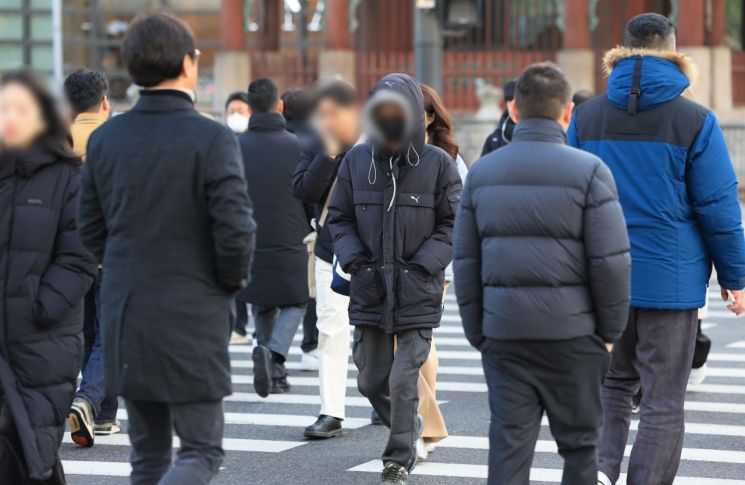 On the morning of the 29th of last month, when morning temperatures across most of the country dropped below freezing, citizens dressed in thick clothing were crossing the crosswalk at Sejong-daero Intersection in Seoul. Photo by Yonhap News
According to the 'Cold-related Illness Emergency Room Surveillance System' of the Korea Disease Control and Prevention Agency (KDCA) on the 11th, a man in his 60s in Pocheon, Gyeonggi Province, was reported and presumed to have died from cold-related illnesses such as hypothermia on the 9th.
Currently, the KDCA operates a cold-related illness surveillance system in over 510 emergency rooms nationwide to monitor health damage caused by winter cold waves, including hypothermia and frostbite.
Since the surveillance system was activated this month until the 9th, a total of 29 cold-related illness cases have been reported, with one presumed death. At the time of the first death, the lowest temperature in Pocheon was minus 8 degrees Celsius, and the highest was 6 degrees Celsius.
Among the 29 cold-related illness cases so far, 19 (65.6%) were aged 65 or older. The largest group was those aged 80 and above with 11 cases (37.9%), followed by 6 cases (20.7%) in their 70s, 5 cases (17.2%) in their 50s, and 4 cases (13.8%) in their 60s.
By type of illness, hypothermia accounted for 27 cases (93.1%), with the remainder being superficial frostbite.
The time when cold-related illnesses occurred most frequently was between 6 a.m. and 9 a.m., with 8 cases (27.6%) occurring during this period. Regarding location, 17 cases (58.6%) occurred outdoors and 12 cases (41.4%) indoors. Among indoor cases, 10 occurred at home.
The KDCA urged the elderly and children, who are more vulnerable to maintaining body temperature than the general adult population, to refrain from outdoor activities during cold waves and to pay close attention to keeping warm. For those with chronic diseases such as cardiovascular and cerebrovascular diseases, diabetes, and hypertension, rapid temperature changes can cause a sudden rise in blood pressure and worsen symptoms, so caution is needed to avoid sudden exposure to cold.
© The Asia Business Daily(www.asiae.co.kr). All rights reserved.

















