Quick Approval of Subsidies Before Trump Takes Office in January Next Year
The U.S. administration under Joe Biden has finalized the payment of approximately 9 trillion won in semiconductor support law (CSA) subsidies to the American semiconductor company Micron ahead of the expiration of its term next month.
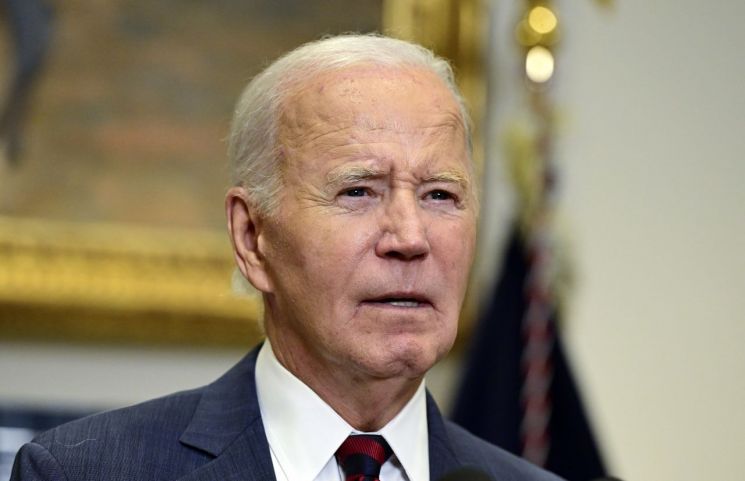
On the 10th (local time), the Department of Commerce announced that it would provide Micron with subsidies amounting to $6.165 billion (about 8.8 trillion won).
Earlier, in April, the Department of Commerce signed a preliminary memorandum of transaction (PMT) with Micron outlining this support, and this time, the contract was completed and the subsidy payment was confirmed.
Micron plans to invest a total of $125 billion (about 179 trillion won) in New York and Idaho, creating 20,000 jobs. The subsidies will be paid in stages according to the progress of the project.
Additionally, Micron will receive up to $275 million (about 400 billion won) to support the expansion and modernization of its Virginia facilities. The company plans to invest more than $2 billion (about 2.9 trillion won) over the coming years in its DRAM production facility in Manassas, Virginia.
The Biden administration is accelerating the payment of CSA subsidies ahead of the inauguration of President-elect Donald Trump on January 20 next year. In recent weeks, the Department of Commerce has confirmed semiconductor subsidies of $11 billion (15.8 trillion won) to U.S. Intel and $6.6 billion (about 9.5 trillion won) to Taiwan's TSMC. Since President-elect Trump is negative about subsidy payments and may review them after taking office, the administration is moving quickly to execute the payments.
During his presidential campaign, President-elect Trump described semiconductor subsidies as a "very bad deal," arguing that instead of providing subsidies, tariffs should be imposed on imported semiconductors to encourage foreign companies to build manufacturing plants in the U.S. Vivek Ramaswamy, who is expected to lead the newly established "Department of Government Efficiency" under the Trump administration, has also hinted at reviewing subsidies. Therefore, even if semiconductor companies finalize contracts with the Biden administration, there is a possibility that these will be reviewed during a second Trump term.
Among domestic companies, Samsung Electronics and SK Hynix have signed PMTs with the Biden administration and have been decided to receive subsidy benefits of $6.4 billion (about 9.2 trillion won) and $450 million (about 650 billion won), respectively, but final contracts with legal binding force have not yet been signed. In the case of U.S. Microchip, due to worsening performance and management difficulties, it voluntarily suspended receiving semiconductor subsidies from the Biden administration, effectively giving up the subsidies.
© The Asia Business Daily(www.asiae.co.kr). All rights reserved.
![Clutching a Stolen Dior Bag, Saying "I Hate Being Poor but Real"... The Grotesque Con of a "Human Knockoff" [Slate]](https://cwcontent.asiae.co.kr/asiaresize/183/2026021902243444107_1771435474.jpg)
















