Manufacturing Process, Smart Management with Limited Information... AI Infers Manufacturing Equipment Data Limits
Joint Research by Prof. Han Junhee's Team at Pusan National University... Proposing AI-Based Production Planning Optimization Framework
A joint research team from Pusan National University, Kangwon National University, and Ulsan National University announced research results that use AI to infer insufficient manufacturing equipment data in limited environments and provide optimal production schedules.
Pusan National University (President Choi Jae-won) reported on the 10th that a team led by Professor Han Jun-hee of the Department of Industrial Engineering proposed a production planning optimization framework using AI through joint research with Professor Lee Joo-yong of Kangwon National University and Professor Hwang Kyu-seon of Ulsan National University.
In a paper titled “Machine learning-based dispatching for a wet clean station in semiconductor manufacturing,” the research team presented an algorithm that predicts the production volume of equipment using minimal information provided by manufacturing equipment producing various products through an AI model, and establishes an optimal production schedule to optimize production planning.
The experiment was conducted in the semiconductor cleaning process. It studied ways to make the process of cleaning thin wafers, the basic material for making semiconductor chips, faster and more efficient.
Wafer cleaning is a process of washing with various chemicals and water to remove dust, contaminants, and stains on the surface to improve the performance and quality of semiconductors. In this process, a robotic arm moves the wafers, and since the cleaning time and order vary for each product, optimizing these can improve productivity. However, the problem is that detailed information such as time or order for optimizing the cleaning process is difficult to know. The given information is only logs recording when wafers entered and exited the cleaning equipment.
The research team used AI technology to utilize this limited data. They trained an AI model to predict how wafer cleaning times vary and developed a method to arrange wafers most efficiently based on this.
Experimental results confirmed that this method provides a faster and more practical solution than the existing mathematical calculation method (CPLEX). This allows more wafers to be cleaned, which is expected to improve factory productivity.
Not only the semiconductor cleaning equipment targeted in this study but also various manufacturing equipment used in the manufacturing industry rely heavily on utilizing data provided by the equipment to derive optimal production schedules.
Previous studies mainly assumed that all necessary data for production optimization were available and conducted research based on that. However, in actual field conditions, not all data required for production are collected, limiting the use of existing research methodologies. This study predicts the production volume of equipment through an AI model using minimal information provided by manufacturing equipment producing various products. Through this, it establishes an optimal production schedule to maximize productivity.
This method can be applied in various situations where data collection is limited. It is significant in that it can also be applied to manufacturing equipment with complex internal movements or to manufacturing equipment of small and medium-sized enterprises with limited data collection.
Professor Han Jun-hee of the Department of Industrial Engineering at Pusan National University said, “This study is meaningful in that it developed an AI-based algorithm that infers insufficient information from equipment with limited data collection and improves productivity based on it,” adding, “The developed algorithm will greatly help establish more effective production plans by applying it to various manufacturing environments where data collection is insufficient.”
This research was conducted with support from the Smart Manufacturing Technology Development Project funded by the Ministry of SMEs and Startups. The paper was published in the December issue of the Journal of Manufacturing Systems, a top international journal in the fields of Operations Research & Management Science, Engineering, and Industrial.
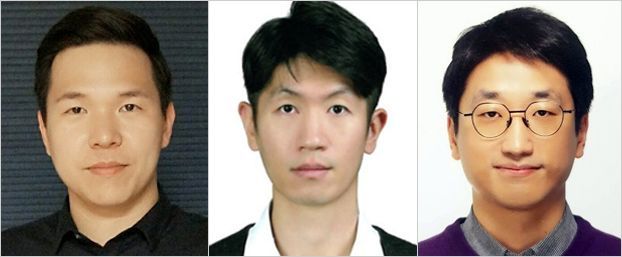 From the left, Professor Han Junhee, Professor Lee Jooyong, Professor Hwang Gyuseon. Provided by Pusan National University
© The Asia Business Daily(www.asiae.co.kr). All rights reserved.
![Clutching a Stolen Dior Bag, Saying "I Hate Being Poor but Real"... The Grotesque Con of a "Human Knockoff" [Slate]](https://cwcontent.asiae.co.kr/asiaresize/183/2026021902243444107_1771435474.jpg)











