Financial Services Commission Holds 5th Benchmark Interest Rate and Short-term Financial Market Council Meeting
Vice Chairman Kim So-young: "An Opportunity to Put Benchmark Interest Rate Reform on the Right Track"
Expansion of KOFR 'Floating Rate Bonds' Issuance Centered on Policy Financial Institutions and Banks
The Financial Services Commission and the Bank of Korea will increase the proportion of interest rate swap transactions based on KOFR (Korea Overnight Financing Rate, the overnight repo rate secured by government bonds and monetary stabilization bonds) from 10% next year, raising it annually to expand it to over 50% by 2030. Additionally, policy financial institutions and banks will also procure 10% of next year's issuance of floating rate notes (FRNs) based on KOFR.
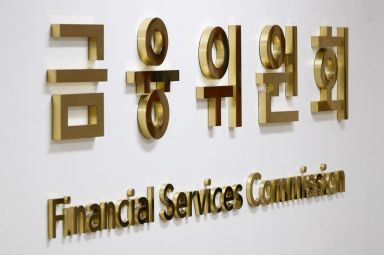
On the 10th, the Financial Services Commission and the Bank of Korea held the 5th Benchmark Interest Rate and Short-term Financial Market Council together with related organizations such as the Financial Supervisory Service, Korea Securities Depository, Korea Exchange, as well as academia and market experts, to discuss the '2025 Benchmark Interest Rate Reform Promotion Plan' including these details. At the meeting, Vice Chairman Kim So-young said, "Thanks to the efforts of the government, the Bank of Korea, various related organizations, and the active participation of the financial sector, an opportunity has been created to put the benchmark interest rate reform on the right track," adding, "This benchmark interest rate reform will serve as a turning point to strengthen the stability of our financial system."
Benchmark interest rates refer to the reference rates used to determine the value of money or financial products to be paid or exchanged as a result of financial transactions. They function to determine the profit and loss of financial transactions and evaluate investment performance, and generally include rates such as the yield on negotiable certificates of deposit (CDs) and LIBOR rates, which represent the short-term funding costs of financial companies.
In major overseas countries, following the global benchmark interest rate reform process triggered by the LIBOR manipulation scandal in June 2012, risk-free reference rates (RFRs) based on actual transactions have been firmly established as benchmark interest rates for derivative transactions and other purposes. In South Korea, following recommendations from international organizations such as the Financial Stability Board (FSB), the Act on the Management of Financial Transaction Indicators was enacted in 2020, and in 2021, KOFR was selected as an important benchmark and its calculation began. However, since 2022, amid the global liquidity tightening process prioritizing financial market stability, the spread of KOFR has been somewhat slow.
Accordingly, the government and the Bank of Korea have formed a public-private joint task force based on stable market conditions and strengthened communication with market participants to actively discuss KOFR activation and decided to fully implement the KOFR expansion strategy starting in 2025.
KOFR proportion in interest rate swap transactions to expand from '10% next year' to '50% by 2030'
First, the government, the Bank of Korea, and related organizations agreed to increase the KOFR proportion in the derivatives market by requiring that a certain portion of newly concluded interest rate swap derivative transactions from next year be based on KOFR, and plan to implement this KOFR-OIS expansion plan starting July next year. OIS refers to interest rate swaps using overnight rates as the reference rate.
A Financial Services Commission official said, "Next year, about 29 financial companies with large transaction volumes in the interest rate swap market will participate first, and they plan to conclude at least 10% of interest rate swap transactions from July 2025 to June 2026 based on KOFR," adding, "The KOFR target proportion will be flexibly increased by about 10 percentage points (P) annually, and by 2030, the KOFR proportion in the interest rate swap market is expected to expand to over 50%."
Furthermore, the government, the Bank of Korea, the Financial Supervisory Service, the Korea Exchange, and the Korea Securities Depository plan to simultaneously promote various support policies to expand KOFR-OIS. To facilitate market participants' easier participation in KOFR-OIS transactions, a central clearing infrastructure will be established. Currently, the Korea Exchange is developing a central clearing system for KOFR-OIS, and central clearing services will commence in October 2025.
The Bank of Korea plans to reflect KOFR-based derivative transaction performance, issuance and purchase performance of spot bonds, and loan handling performance when selecting institutions for open market operations to secure initial liquidity and support market formation for KOFR-linked products. To raise financial sector interest in KOFR and promote the gradual transition from CD yields to KOFR, efforts are underway to unify the emergency substitute benchmark for OTC derivatives based on CD yields to KOFR.
KOFR-based floating rate note issuance led by policy financial institutions and banks expected to reach 3 trillion won next year
From next year, the use of KOFR is also expected to increase when the financial sector raises funds through the bond market. Starting in 2025, policy financial institutions (Korea Development Bank, Industrial Bank of Korea, Export-Import Bank of Korea) and banks will procure at least 10% of their funding through floating rate note (FRN) issuance based on KOFR and will gradually increase the KOFR proportion step by step. Accordingly, the annual KOFR FRN issuance amount is expected to be around 3 trillion won next year and expand to 4 to 5 trillion won or more in the medium to long term.
A Financial Services Commission official said, "We plan to continue discussions through the public-private joint task force to ensure KOFR FRNs are actively utilized in the financial market," adding, "Since KOFR FRNs have characteristics different from existing products, the task force will continuously check and discuss whether there are any obstacles to the issuance, trading, and investment of KOFR FRNs to promote their activation."
Bank of Korea Deputy Governor Yoo Sang-dae said, "KOFR activation will be an important opportunity for the development of the domestic financial market in terms of securing global consistency and strengthening the stability of financial transactions," and added, "Next year, we will work more actively with policy authorities to ensure that efforts to transition benchmark interest rates centered on KOFR lead to tangible results."
© The Asia Business Daily(www.asiae.co.kr). All rights reserved.
![Clutching a Stolen Dior Bag, Saying "I Hate Being Poor but Real"... The Grotesque Con of a "Human Knockoff" [Slate]](https://cwcontent.asiae.co.kr/asiaresize/183/2026021902243444107_1771435474.jpg)
















