Due to the political turmoil caused by the declaration of martial law and the push for the president's impeachment, the financial sector has entered an emergency state amid heightened tension.
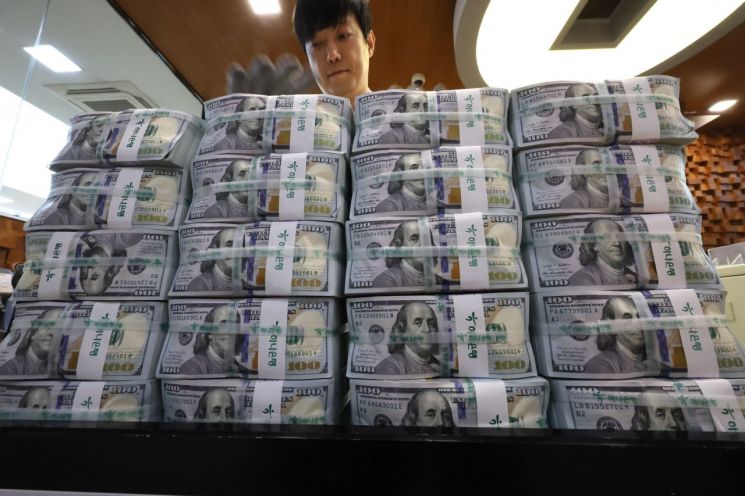
The biggest concern in the financial sector is the weakening of the Korean won. On the day martial law was declared, the won-dollar exchange rate surged to the 1,440 won level before stabilizing somewhat, but it still fluctuates between 1,410 and 1,430 won, showing signs of instability.
The rise in the exchange rate carries several risk factors. Corporate foreign currency purchases are increasing, and large corporations are withdrawing foreign currency deposits, which could lead to a shortage of foreign currency liquidity in banks. Additional collateral demands related to derivatives are also identified as potential risk factors. An increase in risk-weighted assets (RWA) could reduce the overall Basel III capital adequacy ratio of financial groups.
Moreover, if external creditworthiness declines, the situation could become more severe. Concerns are emerging that if overseas investors grow skeptical of Korea's corporate governance and credit ratings fall, it could lead to a sharp rise in the exchange rate and weakness in stocks and bonds.
Following President Yoon Seok-yeol's declaration of martial law and the National Assembly's resolution to lift it on the night of the 3rd, the five major financial holding companies and commercial banks immediately took action. From midnight on the 4th, emergency meetings were held chaired by holding company chairpersons and bank CEOs, followed by additional inspections by each financial group starting at 7 a.m.
Yang Jong-hee, chairman of KB Financial Group, instructed at an emergency executive meeting to strengthen risk management of customer assets and expand communication with clients. Jin Ok-dong, chairman of Shinhan Financial Group, urged enhanced internal controls and support for market stabilization through the Group Crisis Management Committee, while Ham Young-joo, chairman of Hana Financial Group, emphasized risk checks related to exchange rate and liquidity fluctuations.
Accordingly, financial groups are monitoring key financial market indicators such as foreign exchange, stocks, and bonds in real time, and checking the impact on liquidity coverage ratios and capital adequacy ratios daily at 4 p.m. At the holding company level, an 'Emergency Response Council' has been convened to operate an emergency inspection and management system.
© The Asia Business Daily(www.asiae.co.kr). All rights reserved.
![Clutching a Stolen Dior Bag, Saying "I Hate Being Poor but Real"... The Grotesque Con of a "Human Knockoff" [Slate]](https://cwcontent.asiae.co.kr/asiaresize/183/2026021902243444107_1771435474.jpg)
















