Meeting Attendees Reveal 'Martial Law Reasons, Requirements Met, and Unconstitutionality'
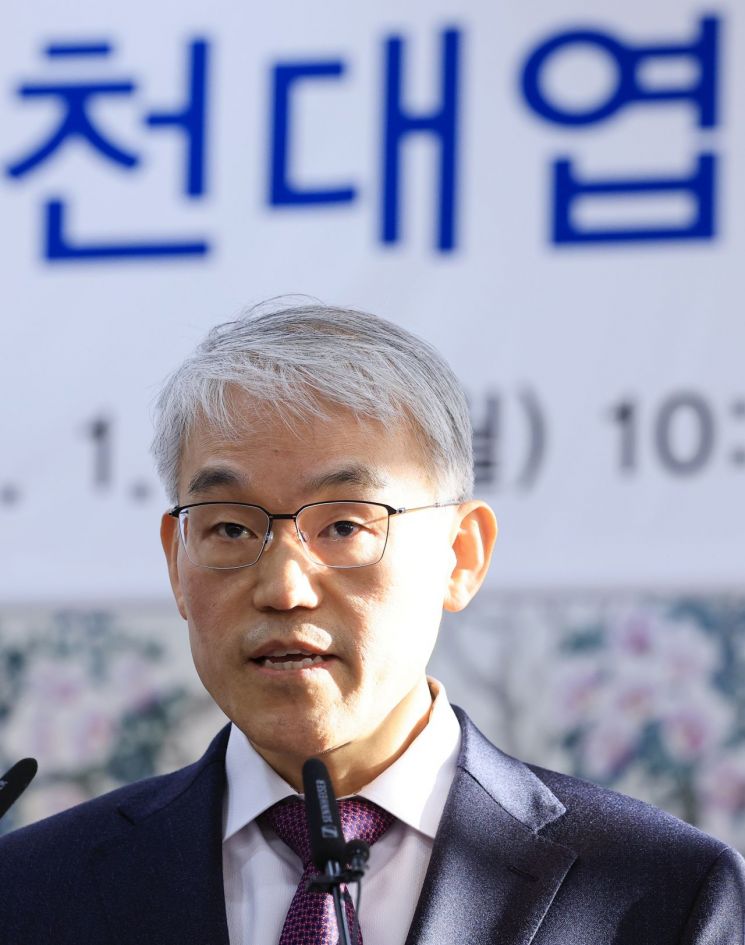
Cheon Dae-yeop, Chief of the Court Administration Office (Supreme Court Justice), revealed on the 6th that significant doubts were raised during a Supreme Court executive meeting held immediately after President Yoon Seok-yeol declared martial law on the night of the 3rd.
At the plenary session of the National Assembly's Legislation and Judiciary Committee that day, Chief Cheon conveyed the atmosphere at the time, saying, "There were many opinions raising considerable doubts about whether the extreme disruption of social order made it markedly difficult to perform judicial functions, whether the judicial system was paralyzed due to intimidation of judges, whether the judicial system was paralyzed due to legislative dictatorship, and whether restricting the functions of the National Assembly violated explicit constitutional provisions."
He continued, "During the discussion, fortunately, the National Assembly passed a resolution to lift the martial law, and according to the Constitution, the president is obliged to accept such a resolution, so we regarded the situation as concluded."
Regarding the refusal to comply with the Court Administration Office's request to dispatch court clerks from the Martial Law Command, he introduced the timeline of events that unfolded every hour. Following the declaration of martial law, the Court Administration Office convened an emergency meeting late at night on the same day, and Chief Cheon attended the meeting around 12:50 a.m. on the 4th. At approximately 12:55 a.m., the Martial Law Command called the safety management officer of the Court Administration Office to request the dispatch of clerks. At around 12:56 a.m., the safety management officer who received this report informed the executive meeting around 1 a.m. There was no separate official document from the Martial Law Command.
He added that at around 12:47 a.m., Speaker Woo Won-shik convened a meeting at the National Assembly to begin the process of lifting martial law, and the Court Administration executives were aware through television that the procedure to lift martial law was underway.
When asked by Jeon Hyun-hee, a member of the Democratic Party of Korea, whether this constituted the crime of rebellion, Chief Cheon said, "That was one of the points we had significant doubts about," but refrained from giving a definitive answer, stating, "Since we may be involved in the trial, we cannot ultimately say whether it applies or not."
When Representative Jeon asked again, "Is it correct that during the December 12 incident, the National Assembly was blockaded by military forces, preventing members of the National Assembly from entering and exercising their powers, and that there is a precedent where former Presidents Chun Doo-hwan and Roh Tae-woo were criminally punished as ringleaders of rebellion for this disruption of the constitutional order?" Chief Cheon answered, "That is clear."
© The Asia Business Daily(www.asiae.co.kr). All rights reserved.
![Clutching a Stolen Dior Bag, Saying "I Hate Being Poor but Real"... The Grotesque Con of a "Human Knockoff" [Slate]](https://cwcontent.asiae.co.kr/asiaresize/183/2026021902243444107_1771435474.jpg)
















