Central District Prosecutors' Office Strongly Considering Injunction on Article 50 of the Constitutional Court Act
Legal Block Against Frequent Impeachments Aimed at Job Suspension
Same as Constitutional Injunction... Possibility of Approval Divided
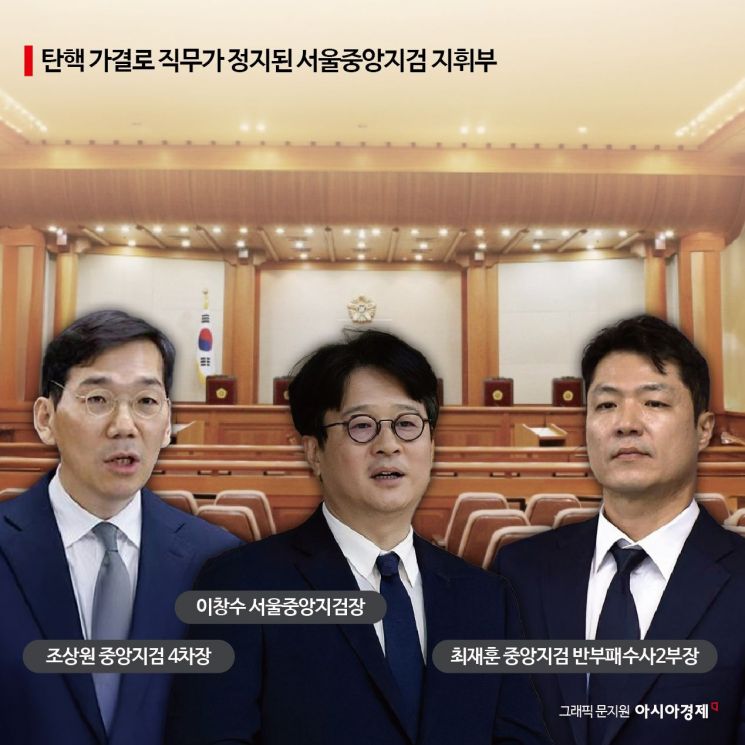
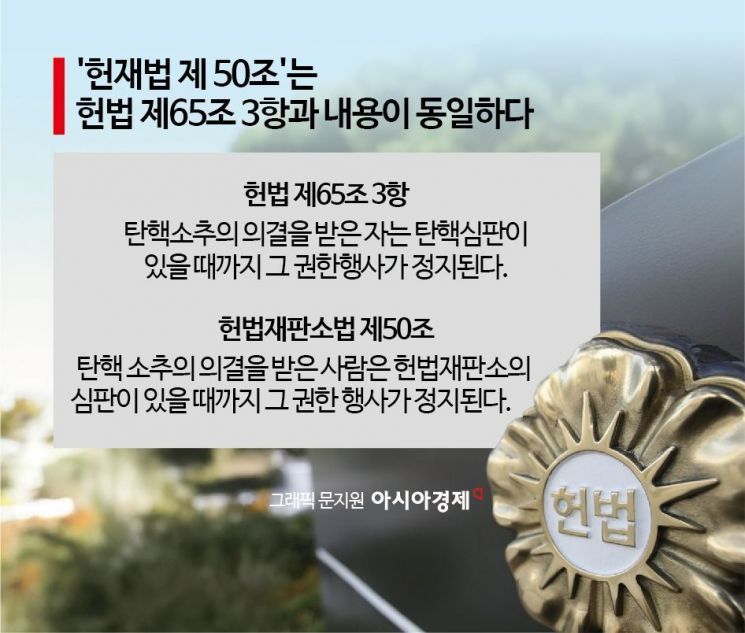
The leadership team, including Lee Chang-soo, the Chief Prosecutor of the Seoul Central District Prosecutors' Office whose duties were suspended following the National Assembly's passage of the impeachment motion, along with Jo Sang-won, the 4th Deputy Chief Prosecutor of the Central District Prosecutors' Office, and Choi Jae-hoon, Head of the Anti-Corruption Division 2, is reviewing the possibility of filing a provisional injunction to suspend the effect of Article 50 of the Constitutional Court Act. Although it is obvious that the motion will be dismissed, this legal response is aimed at addressing the excessive issuance of prosecutor impeachments solely for the purpose of 'suspension of duties.' Article 50 of the Constitutional Court Act stipulates that 'a person against whom an impeachment motion has been passed shall have their authority suspended until the impeachment trial is held.' They intend to seek a temporary suspension of this provision's effect.
The issue is that Article 50 of the Constitutional Court Act essentially replicates Article 65, Paragraph 3 of the Constitution, making it difficult for the Constitutional Court, which adjudicates unconstitutional laws, to grant such a provisional injunction. This injunction concerns a law identical to a supreme law provision. For the Constitutional Court, the guardian of the Constitution, to accept this would itself be a 'contradiction.' Attorney No Hee-beom, a former researcher at the Constitutional Court, stated, “Article 50 of the Constitutional Court Act is merely a reiteration of a constitutional provision with caution, so it is essentially a constitutional rule,” adding, “The Constitutional Court judges the constitutionality of laws based on the Constitution, so on what basis would it judge a substantive constitutional provision?” Another constitutional scholar also emphasized, “Article 50 of the Constitutional Court Act represents the constitutional sovereign's decision to ensure the effectiveness of the impeachment system,” and “a provisional injunction against Article 50 is equivalent to a provisional injunction against the Constitution itself, so logically it cannot be established.”
On the other hand, given that public official impeachments are excessively issued for political reasons, there is a perspective that it is worth attempting a legal challenge with proper legal grounds. Professor Cha Jin-ah of Korea University Law School said, “The constitutional legislators only considered the suspension of authority of the impeachment subject, but did not anticipate the abuse of impeachment rights,” adding, “If the legislature attempts public official impeachments solely aiming for the 'suspension of duties effect,' it is worth trying to restrain this through a provisional injunction.” Although a minority view, there are also claims that the repeated impeachment motions by opposition parties, the Constitutional Court's dismissals, and the paralysis of state functions caused by duty suspensions meet the requirements for the crime of false accusation. While members of the National Assembly have immunity from prosecution during their term, this is considered a serious abuse of power warranting limitation. One constitutional scholar said, “Repeatedly issuing disciplinary actions to public institutions despite knowing there are no grounds for discipline substantively falls under the requirements for the crime of false accusation.”
Meanwhile, since the Yoon Seok-yeol administration, a total of 10 prosecutors have had impeachment motions filed against them, including three from the Central District Prosecutors' Office leadership: Andong-wan, Deputy Chief Prosecutor of the Busan District Prosecutors' Office; Lee Jeong-seop, Deputy Chief Prosecutor of the Suwon District Prosecutors' Office; Son Jun-sung, Deputy Chief Prosecutor of the Daegu High Prosecutors' Office; Eom Hee-jun, Head of the Bucheon Branch of the Incheon District Prosecutors' Office; Park Sang-yong, Deputy Chief Prosecutor of the Suwon District Prosecutors' Office; Kim Young-cheol, Deputy Chief Prosecutor of the Seoul Northern District Prosecutors' Office; and Kang Baek-shin, Deputy Chief Prosecutor of the Seongnam Branch of the Suwon District Prosecutors' Office. Based on precedents involving Prosecutors Ahn and Lee, whose motions were dismissed by the Constitutional Court, it is expected that the Constitutional Court's decision will take at least 8 to 9 months to be finalized.
© The Asia Business Daily(www.asiae.co.kr). All rights reserved.


















