Professor Kim Yujin's Team Develops Gene Editing Technology Using DNA-Coated Nanoparticles
Simplifies Genetic Modification Process, Expected to Aid Cucumber New Variety Breeding Without Tissue Culture
Gene modification technology using DNA-coated nanoparticles is expected to change the landscape of agriculture.
A research team at Pusan National University has succeeded in gene modification by developing an innovative technology that delivers foreign genes to pollen for the first time in cucurbit crops such as cucumber.
This opens up new possibilities for improving agricultural productivity, simplifying the genetic modification process, and is expected to enable the development of new varieties without going through tissue culture.
Pusan National University (President Choi Jae-won) announced on the 5th that Professor Kim Yoo-jin's research team from the Department of Life and Environmental Chemistry successfully delivered foreign DNA to pollen using nanoparticles, proposing a more direct and efficient method for plant transformation.
Plant transformation is a biotechnology technique that artificially modifies plant genes or inserts foreign genes to obtain new traits in plants.
The traditional gene delivery method using Agrobacterium, a soil bacterium that transfers genes into plant cells, often encounters various obstacles that limit success rates in certain plant species. In contrast, magnetofection, an innovative DNA delivery method using magnetic nanoparticles, is gaining attention as a promising alternative to these conventional approaches.
Previous magnetofection attempts have been made in a few crops such as cotton and corn, but since pollen characteristics vary by plant species, using the same magnetofection experimental method previously reported sometimes failed to deliver foreign DNA into pollen. Therefore, it was necessary to optimize the gene delivery method using nanoparticles according to the characteristics of each plant.
Professor Kim Yoo-jin's team at Pusan National University optimized the magnetofection experimental method for cucumber and succeeded in delivering foreign DNA to pollen using nanoparticles for the first time in cucurbit crops, acquiring genetically modified seeds more quickly and efficiently.
Professor Kim Yoo-jin's team achieved a groundbreaking result in plant biotechnology by genetically modifying cucumber using a magnetically induced pollen gene delivery system. This advanced technique generates genetically modified seeds without traditional tissue culture or regeneration stages by injecting foreign genes into pollen using DNA-coated magnetic nanoparticles. This is expected to open a new path to greatly simplify and accelerate the genetic modification process of crops, enhancing agricultural productivity and resilience.
The research paper titled “Magnetofected pollen gene delivery system could generate genetically modified Cucumis sativus” was published in the June issue of the world-renowned horticultural journal Horticulture Research.
This study was conducted with Professor Kim Yoo-jin of the Department of Life and Environmental Chemistry at Pusan National University as the corresponding author, graduate student Park Chan-woo as the first author, and research scientist Choi Jun-young from Nongwoo Bio as a co-researcher.
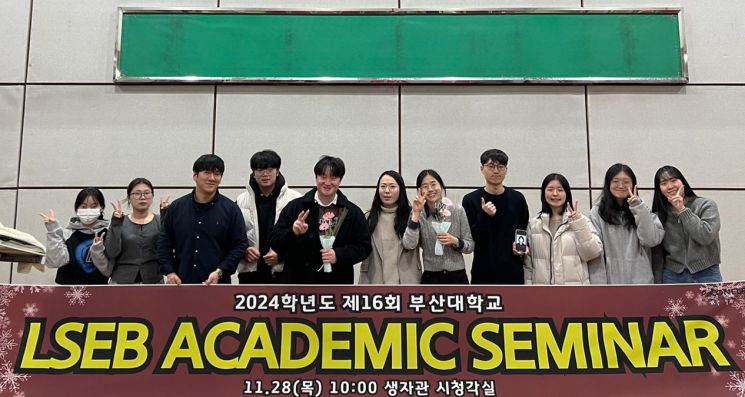
 Professor Kim Yujin and master's student Park Chanwoo from the Busan National University research team. Provided by Busan National University
The research was supported by the Pusan National University Practical Problem Research Group project, and student Park Chan-woo, who served as team leader, along with students Son Ye-jin and Kim Do-hyun who participated in the paper research, received the Grand Prize (Korea Research Foundation President’s Award) at the X-Corp Festival held on November 26.
This study was conducted at Pusan National University's LMO (Living Modified Organism) isolation field facility, the first nationally certified facility at a national university in Korea.
Professor Kim Yoo-jin, who led the research, stated that the core significance of this study is demonstrating that pollen magnetofection is a flexible and efficient approach for performing gene modification in cucumber. He explained, “This technology provides a way to bypass the limitations of traditional tissue culture and produce transformed plants faster and more easily.”
Professor Kim added, “We are conducting follow-up research to produce LMO-free crops through targeted gene editing. Future studies will expand the application of this technology to other major crops and offer innovative solutions for sustainable agriculture.”
© The Asia Business Daily(www.asiae.co.kr). All rights reserved.


















