KDCA, Runny Nose and Pharyngitis Symptoms
"Must Follow Personal Hygiene Rules"
As the number of infants and young children hospitalized with acute respiratory infection 'Respiratory Syncytial Virus infection (RSV)' increases, health authorities have emphasized the importance of following personal hygiene guidelines to prevent infection.
 Children and parents waiting for medical treatment at a pediatric and adolescent clinic in Seoul. Photo by Yonhap News
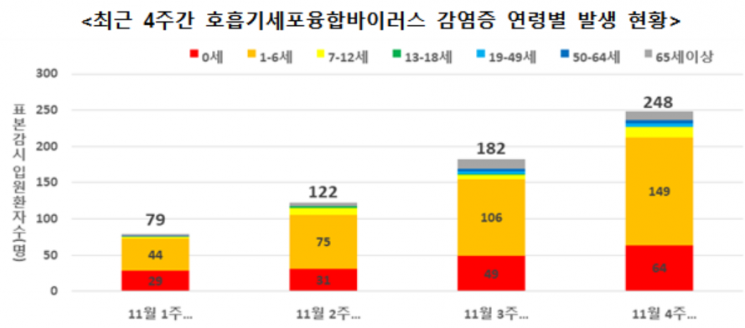
On the 4th, the Korea Disease Control and Prevention Agency conducted sample surveillance targeting 220 medical institutions nationwide with 200 or more beds. From October 27 to November 23, a four-week period, the number of RSV hospitalizations in South Korea was recorded at 631. Although this is fewer than the 1,897 cases during the same period in 2019 before the COVID-19 pandemic, it is somewhat higher than the 581 cases during the same period last year.
Among all RSV patients over the four weeks, infants and young children aged 0 to 6 accounted for 86.7% (547 patients), making up the majority. The number of infant patients has been steadily increasing over the past month: 73 in the first week of November, 106 in the second week, 155 in the third week, and 213 in the fourth week.
RSV occurs annually in South Korea, mainly circulating between October and March. Major symptoms include fever, headache, runny nose, and sore throat. In infants and young children, symptoms start with a runny nose and pharyngitis, followed by coughing and wheezing after 1 to 3 days. While it generally resolves naturally, some infants, immunocompromised individuals, and the elderly may develop lower respiratory tract infections such as pneumonia, so early diagnosis and appropriate treatment at medical institutions are necessary.
RSV spreads through respiratory droplets or contact from infected individuals, so to prevent infection, workers or infants with respiratory symptoms in postpartum care centers or infant daycare facilities should refrain from going to work or attending and rest at home.
Ji Young-mi, director of the Korea Disease Control and Prevention Agency, stated, "Respiratory infectious diseases are more likely to progress to severe complications in younger children," and urged, "Please strictly adhere to personal hygiene and infection control guidelines in postpartum care centers and neonatal wards."
© The Asia Business Daily(www.asiae.co.kr). All rights reserved.
![Clutching a Stolen Dior Bag, Saying "I Hate Being Poor but Real"... The Grotesque Con of a "Human Knockoff" [Slate]](https://cwcontent.asiae.co.kr/asiaresize/183/2026021902243444107_1771435474.jpg)

















