Last Year, 6,504 Inmates Aged 60 and Over
Increased 2.8 Times Over 10 Years
Amidst the serious low birthrate and aging population, South Korea is on the verge of entering a super-aged society, and the number of elderly inmates in correctional facilities is also increasing.
On the 2nd, Yonhap News cited the Ministry of Justice's Correctional Statistics Yearbook, reporting that the number of inmates aged 60 and over, commonly classified as elderly, increased from 2,350 in 2013 to 6,504 last year, a 2.8-fold rise. As the number of elderly inmates grows, there are opinions that correctional facilities, like society, need to newly establish the criteria for 'elderly inmates.' The proportion of inmates aged 60 and over among the total inmate population rose from 7.3% to 17.1%, a 2.3-fold increase during the same period. This means that one out of every six inmates is an elderly person aged 60 or older.
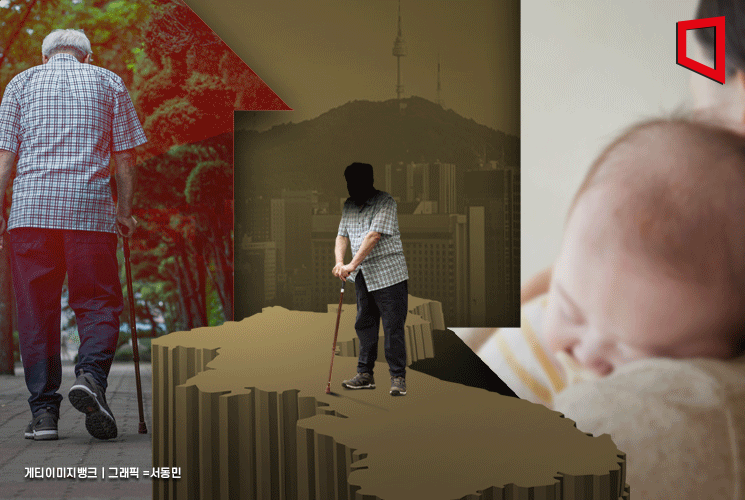
Elderly inmates require more attention and support compared to general inmates. They are physically and psychologically vulnerable, necessitating careful health management due to aging and cognitive and functional impairments. Moreover, many find it difficult to properly perform prison labor imposed as punishment, leading to calls for specialized correctional policies targeting elderly inmates, different from those for other inmates. It is also pointed out that since many elderly inmates face difficulties in social activities after release, there should be separate assistance to help them settle without isolation.
Park Sun-yong, Deputy Director of the Classification Center at Daejeon Regional Correctional Office, recently analyzed the situation of elderly inmates in Japan and proposed new domestic correctional policies in a short paper titled "Current Status and Challenges of Elderly Inmate Treatment in Japan," published in the monthly journal "Correction." Deputy Director Park revealed that correctional officers feel considerable burden due to elderly inmates' health management and communication difficulties, and that psychologically and emotionally unstable elderly inmates often cause conflicts within prisons.
Japan, which has undergone the fastest aging process in the world, had 22% of its inmates aged 65 or older as of 2022. This means one in five inmates is elderly. Elderly inmate treatment has already become a major issue in Japan. Consequently, Japan undertook a major overhaul of its criminal justice system. Japan plans to implement a revised penal code next June that unifies the traditional penal system of imprisonment with labor and imprisonment without labor into a single "detention" category. Imprisonment requires labor, while imprisonment without labor does not. Deputy Director Park explained that concerns grew that the existing penal system could not meet societal demands amid the increase of elderly inmates in a super-aged society, leading to the emergence of the need for detention aimed at effective rehabilitation and recidivism prevention.
Deputy Director Park suggested that South Korea also needs to prepare for the increase in elderly inmates by ▲ redefining the definition of elderly inmates ▲ establishing prisons exclusively for the elderly ▲ training specialized correctional officers ▲ developing tailored educational programs. He added, "Social consensus is necessary to redefine the definition of elderly inmates," but also said, "Practically, it is necessary to raise or subdivide the age criteria." He wrote, "The establishment of prisons exclusively for the elderly is required for specialized medical treatment and efficient operation of correctional programs," but noted that "overcoming concerns about the medicalization of correctional facilities remains a challenge."
Meanwhile, a super-aged society refers to a society where the population aged 65 and over accounts for more than 20% of the total population. According to the "2024 Elderly Statistics" released by Statistics Korea last September, South Korea's elderly population aged 65 and over was 9,938,000, accounting for 19.2% of the total population. Due to the rapid increase in the elderly population, Korean society is expected to enter a super-aged society next year, with one in five people being elderly. The elderly population is projected to exceed 30% by 2035 and 40% by 2050.
© The Asia Business Daily(www.asiae.co.kr). All rights reserved.
![Clutching a Stolen Dior Bag, Saying "I Hate Being Poor but Real"... The Grotesque Con of a "Human Knockoff" [Slate]](https://cwcontent.asiae.co.kr/asiaresize/183/2026021902243444107_1771435474.jpg)
















